Cooking with Kale

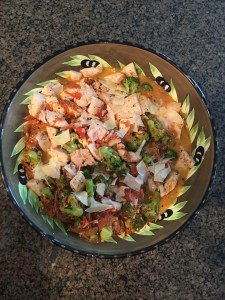
Honeyed Lime Kale with Ground Turkey

honeyed/lime kale with ground turkey

This series displays my relaxed creations with greens.  A close friend from my church blesses me with an abundance of fresh produce from her organic garden; I am wowed by its bountiful beauty.  She grows several species of kale; thus, I am always creating new recipes incorporating this health-giving vegetable.

Here I spell out detailed steps of preparation for cooking this green.  It’s easy to follow these directions.  Vibrant health results!

My recent series of posts on 19th century French foods defines Classic French Cuisine (see Chicken a la Oignon, 2016/07/04, Carrots au Beurre, 2016/07/11 and Meringues a la Ude, 2016/07/18).  These posts expound on that culinary period following the French Revolution in 1775.  The main cooking procedure in my kale series is sautéing, which originated during this culinary age.

Cooking methods changed at the end of the 18th century, as Esther B. Aresty described in The Delectable Past: fireplaces gave way to ranges with built-in ovens; French cooks quickly invented the sauté pan.  The word sauté means to jump-when the fat “jumps” in the pan it is ready for cooking. 1

Here I give instructions for employing this cooking method properly.  First heat the oil; then, add a small piece of food.  It is time to begin sautéing, when it sizzles or “jumps” in the pan.  This allows swift frying of food for optimum preservation of nutrients, as it inhibits the overcooking of vegetables and meats.

The following, easy recipe brings proficiency with cooking nutritious kale.  Next week I will share a shortcut, where this procedure is simplified even further, with prepared sauces and/or meats.

I pray this dish brings the same pleasure to you as it does me.  To our health!

  1. Esther B. Aresty, The Delectable Past (New York: Simon and Schuster, Inc., 1964), p. 126-127.
  2. https://en.wikipedia.org/wiki/Saut%C3%A9ing
Food processor assembled with wide-blade, chopping attachment

optional food processor assembled with straight-edged, chopping attachment

Honeyed/Lime Kale with Beef or Turkey  Yields: 4-6 servings.  Prep time: 1 1/4 hours.

2 tbsp oil  (Coconut oil is best here for quality and flavor; olive oil is carcinogenic, when heated to high temperatures.)

1 med yellow onion, halved at root, and cut in even 1/8 inch slices

1 lb ground turkey or beef  (Natural is best; Foster Farms’ natural ground turkey is inexpensive.)

Generous amounts of salt and pepper  (Himalayan, pink, or Real Salt is critical for optimum health; an inexpensive fine grind Himalayan salt is available at Costco.)

1-1  1/2 lbs of fresh kale  (Organic is best.)

4 carrots, thinly sliced at a diagonal  (Organic carrots are very inexpensive.)

Juice of 2 limes

2 tbsp honey

avocado, cut in thick slices

  1. beginning stages of caramelization

    Heat 1 teaspoon oil in a frying pan over medium heat, until a small piece of onion sizzles in pan; lower heat to med/low; add the rest of onions and caramelize-cook until dark brown.  Stir every two minutes, until color starts to form (see photo); then, stir every minute until dark brown.  Be sure to watch carefully, while going to next steps.

  2. Place 2 teaspoon oil in large saute pan, over medium temperature; test for readiness by putting a small piece of meat in hot oil; the temperature is right when it sizzles or “jumps”.  Add rest of turkey; salt and pepper heavily, before browning.  Set aside in a  bowl when cooked; save pan for cooking vegetables.
  3. Meantime spray carrots and kale with produce spray (a mixture of 97% distilled white vinegar and 3% hydrogen peroxide is a safe, cheap, and effective cleaning solution).  Let sit three minutes; rinse well in a sink full of water three times.
  4. May cut stems out of wet kale and chop into small bite-size pieces by hand-this is time-consuming.  Better yet prepare it with a food processor by using the straight-edged, chopping attachment.  (This is the large, round disk that fits onto the provided “stem”; place this tall, assembled cutting disk in the food processor where you normally put the smaller blade; see photo at top of recipe.)  If using a food processor, it is not necessary to cut stems out, but be sure to carefully pick out pieces of stems, after processing.  Set aside chopped kale.
  5. caramelized onions at mid-point

    Scrape cleaned carrots with a sharp knife (this preserves the vitamins just under the skin); slice carrots thinly at a diagonal; set aside.

  6. Heat lime juice and honey in a small saucepan, just until blended, set aside.
  7. Heat 1 tablespoon of oil over medium heat in the large saute pan; when a piece of carrot sizzles in hot oil, add carrots and cook for 2 minutes.
  8. Add 1/2 the kale, distributing the oils well and checking again for any pieces of stem left from processing.  Cover pan and cook kale down; repeat this step with remaining kale, when there is room.  Cook covered for 10 minutes, or until kale is totally limp, stirring occasionally.
  9. When onion is caramelized, mix this and meat into cooked kale; blend in the honeyed/lime juice; adjust seasonings.
  10. Enjoy topped with fresh avocado slices.
 

Tomato/Feta Chicken

Tomato/feta chicken

tomato/feta chicken

An explosion of creativity occurred in my sister’s upscale kitchen this month: my siblings and I collaborated over one of my recipes during a trip home for my mother’s 93rd birthday.  Our three strong cooking minds worked together to perfect a dish I created years ago.

Nearly a decade has passed since I helped a friend every Monday, for she was bogged down in her professional responsibilities.  Aromatic ailments filled pots and pans, as I prepared her family’s nourishment for each upcoming week.

This particular friend had been to cooking school in Italy; her excellent input and feed-back sharpened my skills, while I was helping her family.  At her home, I created this recipe for tomato/feta chicken, which my siblings Maureen and Paul helped perfect recently.

One thing I learned from my friend was to add the garlic at the close of the sautéing process; she said this keeps it from burning.  I was adding it before this, as I was cooking the meat.  My friend’s ingenious tongue could taste the burnt garlic; thus, she suggested that I add it at the very end, which is how I had cooked with this herb since.

However, my siblings suggested that adding it early on allows for more flavor.  My brother explained the proper process: when you add garlic, while sautéing, cook only until you can smell it; then, immediately add the liquid for the sauce, to keep it from burning.

My sister employs an even more advanced method: she roasts lots of whole peeled cloves on a cookie sheet, in a preheated 300 degree oven, for at least an hour (or until golden brown). She stores this in the refrigerator, adding about three tablespoons per four-serving dish, while the dish is cooking-only cook briefly, however, if dish is dry.

After tasting our finished work, I am sold on cooking this herb longer, employing these safe ways.  The following recipe reflects this new directive; here the fresh garlic is cooked for a lengthy time in the wet tomatoes.

There was another point I learned from my siblings’ expertise.  Both urged me not to bother with washing pieces of cut meat; it is only necessary to clean the inside of the carcasses of fowl, where blood has collected.  This has made cooking easier for me.

This tomato/feta chicken recipe is exceptionally good; enjoy it!

Tomato/Feta Chicken  Yields: 4-6 servings.  Total prep time: 1 1/4 hr.

1 med/lg yellow onion, halved and cut in even 1/8″ slices

5 tsp oil  (Coconut or avocado oil is best, as olive oil is carcinogenic when heated to high temperatures.)

8 chicken tenderloins, thawed in water  (The frozen ones at Trader Joe’s are all natural and a good price.)

Salt and pepper to taste  (Himalayan, pink, or Real Salt is critical for optimum health; a fine grind Himalayan salt is available inexpensively at Costco.)

4 ripe tomatoes, chopped  (These must be ripe; organic is best.)

3/4 tsp dried oregano  (Organic is available at Trader’s; it is of excellent quality and very inexpensive.)

1 tsp dried basil

3-5 lg cloves of garlic, chopped fine  (2 cubes of frozen garlic from Trader’s is a much easier prep.)

1-16 oz package frozen broccoli florettes  (An inexpensive, organic variety is available at Trader’s.)

4 oz feta cheese  (This is best, when purchased in an 8-oz block, rather than the pre-crumbled version, which has been treated.)

Shaved or grated Parmesan cheese

Steamed brown rice (I prefer basmati brown rice)

  1. Take frozen broccoli out of freezer; it cooks better when partially thawed.  (Better yet, leave it in the refrigerator over night.)
  2. If chicken tenderloins are frozen, you may thaw them in warm water.  Pat dry with paper towel.
  3. caramelized onions

    In a large heavy-bottom frying pan, heat 1 tsp oil over med/low heat. Add onion and caramelize, cook slowly until dark brown.  Note: do not crowd onions in pan, or they will sweat and it takes longer to caramelize them.  Stir every few minutes for about the first 30 minutes; then, stir every minute afterwards, as onions begin to stick to pan and browning process accelerates; see photo. (For more details on caramelizing, see Caramelized Onions and Carrots-2017/06/19.)  Meanwhile go to next step.

  4. Chop tomatoes and garlic; set each aside separately.
  5. Heat remaining 1 1/2 tbsp oil in another large skillet.  Salt and pepper tenderloins generously; place chicken in hot oil, sautéing over medium heat quickly.  Cut tenderloins with spatula, as cooking, to check for doneness (should be slightly pink in center as they will cook more later).   As pieces are done, place in a bowl, saving juices in pan.  May add onions to this bowl, when they are done.
  6. Add tomatoes to hot pan in which you cooked the chicken; simmer over med/low heat for 10 minutes. Add dried herbs and garlic; cook down to a chunky sauce, about 20 minutes more.  Season with salt and pepper to taste.
  7. When onions, chicken, and tomatoes are cooked, may set all aside and finish recipe just before serving, if desired.
  8. When you are ready to serve, add thawed broccoli to pan of tomatoes and simmer over medium heat; cook until vegetables are tender and hot.
  9. Distribute chicken and onions in tomato sauce/broccoli; heat mixture.  Stir in feta, crumbling it with your fingers; adjust seasonings.  Cook briefly, so feta doesn’t completely melt.
  10. Serve over rice; top with shaved Parmesan cheese.

Chicken a l’Oignon

Preparation of Chicken a l'Oignon

preparation of Chicken a l’Oignon

I will be giving easy recipes for a complete 19th century French dinner over the next three posts.  The main entrée for this meal is Chicken a l’Oignon (chicken with onion); this receipt was created by Louis Eustache Ude, chef to King Louis XVI, at the time of the French Revolution.

Our chef of renown escaped France during the tumult and moved to England; here he wrote the cookbook The French Cook, published in 1813.  His English was poor; thus, he lapsed into his native tongue when he couldn’t recall the proper English words; the title Chicken a l’Oignon demonstrates this trait of Ude.

His food preparations tended to be very simple and exceptionally elegant, of which the following is a perfect example.  Here thinly sliced onion is stuffed under the skin over the breast meat of a roaster; you do this by gently making a cavity under the skin with your hand; hence, the onion juices seep into this succulent meat, as it is roasted to perfection.  The results are tantalizing!

The ease with which you make this dish will astound you. Trust me it will become a family favorite.

Be sure to save the carcass for bone broth; instructions for this are given in Tortellini Sausage Soup; meanwhile freeze your leftover carcasses, until you have the needed three for the recipe.

Note: Bone broth is a power food, extremely high in protein; it is packed with nutrients that aid the digestive system and build up your adrenal glands; one cup of regular chicken stock has one gram of protein, while one cup of bone broth has nine grams of this essential food item!  The manner of preparation makes all the difference in producing these two diverse broths.  Buying prepared bone broth is highly expensive, while making your own is practically free!

Chicken a l’Oignon   Adapted from a recipe in Esther B. Aresty’s The Delectable Past (New York: Simon and Schuster, 1964).  Yields about 5 servings.  Total prep time: about 2 1/4 hr/  active prep time: 10 min/  cooking time: about 1 3/4 hr/  inactive prep time: 15 min.

4 ½-5 pound chicken  (Foster Farms is all-natural and inexpensive.)

1 large yellow onion, halved and sliced thinly

Spray oil

Salt and pepper  (Real Salt is best; available in the health section of your local supermarket.)

Steamed brown rice  (I prefer basmati brown rice.)

  1. Preheat oven to 450 degrees.
  2. Wash the inside of the chicken.  (Note: it isn’t necessary to wash meat, which is cut; only whole fowl, where blood is caught inside the carcass.)
  3. Cut off excess fat at neck; salt and pepper inside of chicken.
  4. Gently working your hand under the skin, make a cavity between the skin and the breast meat.  Go down into the thigh meat with your fingers, being careful to not tear skin.
  5. Gently stuff onion slices in the cavity over the breast meat, pushing them down over the thigh meat area by the legs.
  6. Using a cheap, canola spray oil, thoroughly spray the inside and top (also the underside of upper rack and edges) of a broiler pan; this makes cleaning extremely easy!
  7. Place chicken on pan, salt and pepper generously.
  8. Put in oven, reducing heat to 350 degrees immediately.  Bake for 20 minutes for each pound; temperature should be 165 degrees when done-legs should move fairly freely and juices should come forth, when skin is pierced.
  9. Remove from oven and let stand for 15 minutes before carving.
  10. Serve with steamed brown rice.