Power-Packed Cream of Broccoli Soup

cream of broccoli soup

Let’s examine the benefits of low-carb diets, utilizing real food, as well as low-protein diets, recommended for those with kidney disorders.  In addition, experience this healthy cream of broccoli soup, rich in bone broth and eggs.

Real-Food-Low-Carb Diet

Personally, my approach to food is summed up with the word balance, for this best fits my individual health requirements.  Today there are many diets available to meet people’s varying needs.  With our diverse health challenges, we must seek that which is suitable to our unique bodies.

As an example of the often stark opposition in these approaches, two such recommendations for nutrition stand out.  Recently I ran across a low-carb diet that promotes using real food; among its standard suggestions are high quantities of meat, fish, eggs, nuts, seeds, as well as high-fat dairy, calling for whole milk yogurt and heavy whipping cream.  I too utilize these high caloric dairy foods, accepting the proposal of some experts that low-fat foods and artificial sweeteners can actually cause weight gain, rather than loss; also such whole foods satisfy the body, with a need to eat less of them.

Dietary Recommendations for Those with Kidney Disorders

Directly opposed to this proclaimed low-carb diet is one limiting protein, due to the special requirements of those dealing with kidney disease and kidney stones; it holds that too much of high protein foods may interfere with the body’s ability to eliminate, through one’s urine, the resultant large quantities of the waste products urea and uric acid.

These two by-products are produced by the breakdown of proteins and nucleic acids respectively.  When their levels are too high, urea and uric acid cause significant stress on one’s kidneys; thus, those facing kidney problems must eat meal plans exactly opposite to those of the low-carb dieters.  (See Healthy Date/Apricot Bars, for additional information on low-carb diets.)

May I encourage us to patiently listen to our bodies, by seeking trusted expert medical help, in discerning our individual physical make-ups.  In this way, we each may discover our ideal plan for nourishment.

My Inspiration for this Healthy Soup

A beloved one from my church was just pronounced cancer-free; it has been my heart to minister to her during this trial; in doing so, I have made this broccoli soup several times, hoping to please her palate.

It is our joy to touch each others lives, with the bounty with which we are supplied.  For some this means material blessings, for others it is the labor of their hands.  My number one gift, which is always at my disposal, is feeding my friends with food; I also love to exercise my limbs-actually the Lord’s hands and feet-with cleaning.  These two offerings thrill me, and  I have used both in helping this friend.

Sometime ago, Toni’s husband mentioned her preference for cream of broccoli soup.  Though the vicious enemy cancer tried to steal this chemo patient’s taste buds, I and many others at our church have encouraged resurrected life in her tongue, with the recalling of her soft memories for fond foods.

This High Protein Broccoli Soup Meets Needs

Soups have gone down the easiest for her, but they often don’t have enough required protein.  The inspiration for this particular broccoli soup resulted from Toni’s needs for this compound, as this recipe is fortified with added protein, utilizing bone broth and eggs; I also find it beneficial for my diet, with my preference for meatless dishes.

With my proclivity toward vegetables, fruits, grains, beans, seeds, and nuts, like my recovering sister, who can only tolerate soups presently, I must watch my protein intake carefully, neither getting too little, nor too much of it.  Indeed, this broccoli soup fits the prescription for both Toni’s and my needs.

Together We Stand!

Our church body and the McFaddens have stood unified as one in her fight against cancer; as a miraculous result, Toni has overcome it; this is what belonging to the Christ’s glorious Church is all about.  May we all humble ourselves, by accepting each others proffered blessings; thus, we receive our Father’s abundant grace.

References:

https://www.healthline.com/nutrition/low-carb-diet-meal-plan-and-menu

https://articles.mercola.com/sites/articles/archive/2016/02/15/foods-for-kidney-health.aspx
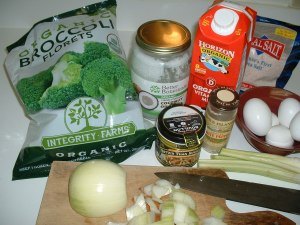
ingredients for soup

Power-Packed Cream of Broccoli Soup  Yields: 2 1/2 quarts.  Total prep time: 1 hr/  active prep time: 20 min/  cooking time: 40 min.

2 tbsp oil  (Coconut or avocado oils are best; olive oil is carcinogenic when heated to high temperatures.)

1 lg yellow onion, chopped

2 celery stalks, cut in small 1/4″ dice

24 oz frozen broccoli florettes  (Best thawed ahead of time for faster preparation; SAVE JUICES.)

5 tbsp parsley, minced  (Organic parsley is only slightly more expensive; so much healthier.)

2 c chicken broth  (Bone broth is best; for its benefits and easy recipe, see Tortellini Sausage Soup.

1 qt whole milk

sweating onions and celery

5 lg chicken eggs, beaten  (May substitute 3 duck eggs, which are bigger; for facts about eggs, go to Rosemary Eggs.)

3 tbsp butter

3 tbsp flour

1 tbsp Chicken Flavored Better than Bouillon, or to taste

1 1/2 tsp salt, or to taste  (Himalayan, pink, or Real Salt is critical for optimum health; an inexpensive fine grind Himalayan salt is available at Costco for $4.95/5 lbs.)

1 tsp white pepper, or to taste

  1. Spray celery and parsley with a effective, inexpensive produce spray: combine 97% distilled white vinegar with 3% hydrogen peroxide in a spray bottle.  Let sit for 3 minutes, rinse well.
  2. Heat oil in a stock pot over medium heat; sweat chopped onions and celery, or cook until translucent, for about 10 minutes, stirring occasionally (see above photo).
  3. cooking roux

    Mince parsley, set aside.

  4. Add broth and milk to onions/celery; stir in thawed broccoli, its juices, and parsley.  Cover pot and bring to a soft boil, over medium heat, watching closely; then, uncover, reduce heat, and simmer softly for 20-25 minutes; check to be sure soup is simmering gently.
  5. Meantime make roux by melting butter in a small sauté pan; blend in flour; cook until golden brown, about 2 minutes, stirring constantly (see photo above).  Set aside.
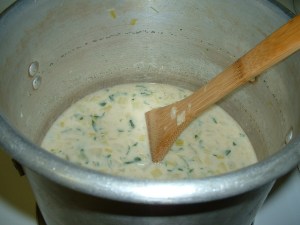
  6. After soup has cooked for nearly 25 minutes, beat eggs in a large bowl; mix 1 c of hot broth into bowl of eggs; stir in a second cup of broth; blend this egg mixture into soup, using a wooden spatula or spoon.
  7. Season with Better than Bouillon, salt, and pepper; continue to simmer for 15 minutes, stirring occasionally.
  8. finished product

    Finally thicken soup, by beating in the prepared roux with a wooden spoon; cook until desired consistency.  Adjust seasonings.

  9. Serve immediately, or let sit for a day to meld flavors; if reheating soup, avoid boiling, as this will cause it to separate.  This dynamite soup is packed with protein!

Wholesome Rosemary Bread

rosemary loaves

Here we examine the best parings for rosemary, its botanical make up, and its past and present culinary, medicinal, and other purposes.  A great recipe for rosemary bread completes all!
Of all the abundant gifts of produce that come my way, the most popular herb I receive is rosemary; thus, I created my simple Rosemary Eggs.  Now, as bread-baking weather is upon us, I offer a wholesome loaf featuring this sweet, piney flavor.

Foods Best Complimented by Rosemary

In Culinary Artistry, Andrew Dornenburg and Karen Page describe how certain food combinations best heighten pleasure in our palates.  In their pages, they list meat as the number one compliment to rosemary.  When I think of these two substances together, I immediately go to lamb, with childhood memories from my mother’s kitchen.  According to Dornenburg and Page, this herb also magnifies the savor found in suckling pigs, pork, game, steaks, veal, chicken, salmon, and oily fish (e.g., mackerel, sardines); I also find it strengthens egg dishes.

When considering uniting rosemary with a vegetable, potatoes are paramount, though our authors also couple it with onions, peas, mushrooms, spinach, and beans, among which dried and fava beans are best; those of us that prefer a vegetarian diet can benefit from this knowledge, using it liberally in our bean dishes.

I was a vegetarian for most of my twenties; moving to Tokyo changed this proclivity, for I didn’t want to offend my Japanese hosts by refusing proffered meat dishes; in part, this herbivorous preference in my youth still rests with me today, for my daily caloric intake includes mostly meatless dishes, though I am not afraid in the least to partake of animal flesh.

Botanical Makeup of Rosemary

Rosemary, Rosmarinus officinalis, our evergreen shrub, is native to the Mediterranean, a member of the mint family; it is a woody perennial herb that grows quickly and without much effort in temperate climates, such as that of the Pacific N.W.  It’s scent is strong, which is made up of woody, pine, floral, eucalyptus, and clove notes.  Rosemary’s aroma is exceptionally well preserved by drying. Its Latin name means “dew of the sea”.

Rosemary’s Past and Present Culinary and Medicinal Purposes

The Greeks and Romans cultivated it for both culinary and medicinal purposes; today it is still utilized in these two ways: among a number of medicinal intents, its antioxidant effects are known to reduce inflammation (rosemary was used as a remedy for gout in the 1500’s), and presently some also apply it as a homemade insect repellent-for this recipe, see homeguides.sfgate.com/homemade-rosemary-mosquito-repellent-recipe-73124.html.

Other Ways the Ancients Used this Herb

The ancients made use of this herb in weddings, funerals, and ceremonies of all sorts.  In days past, brides often entwined it into head-wreaths, as it symbolized for them: fidelity, love, abiding friendship, and remembrance of the life each woman had led prior to her marriage.  Some sources claim that men of antiquity believed it improved memory, though this can only be partially substantiated.

With its sweet, lemony, slightly piney taste, rosemary is traditionally found in Mediterranean cooking-especially with the meats mentioned above-where its potent flavor is liberally applied.  Culinary Artistry states that grains also provide a powerful union with this herb; my present recipe employs this dynamic duo.

I made this rosemary bread for my church friend Charity, who was first in line this summer, supplying me with this garden treat; her strong response was that I should sell these loaves at farmer’s market.  Nevertheless, with my passion for writing, I don’t have time to regularly bake for the public, but oh how I love to cook for my friends!

References:

Andrew Dorenenburg & Karen Page, Culinary Artistry (Hoboken, NJ: John Wiley & Sons, Inc., 1996), p. 205.

https://www.thespruce.com/history-of-rosemary-1807655

health.bastyr.edu/news/health-tips/2011/09/rosemary-herb-history

www.ourherbgarden.com/herb-history/rosemary.html

https://www.botonical.com/botanical/mgmh/r/rosema17.html

Harold McGee, On Food and Cooking (New York: Scribner, 1984, 2004), p. 405.

homeguides.sfgate.com/homemade-rosemary-mosquito-repellent-recipe-73124.html

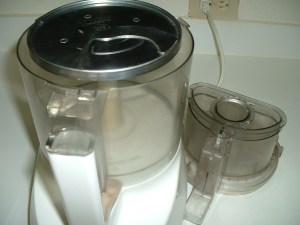
easy chopping of  rosemary in food processor

Rosemary Bread  Yields: 1 loaf.  Total prep time: 3 hr/  active prep time: 30 min/  inactive prep time: 2 hours/  baking time: 30 min.  Note: this method produces quick, easy, mess-free bread, the greatest!

4 c flour  (Blend 3 c whole wheat flour with 1 c unbleached white flour, or better yet, for premium bread, grind 2 2/3 c organic hard red spring wheat berries to make a total 4 c of flour, see photo below.)

2/3 oz, 4 stems, or 3 tbsp chopped fresh rosemary

1 1/8-1 3/8 c tepid water  (Amount is increased with regular, store-bought flour; it should 110-115 degrees in temperature.)

1 individual packet, or 3 tsp yeast  (Red Star Active Dry Yeast comes in a 2 lb package, available inexpensively at Costco; this freezes well in a sealed container for long-term use; if using yeast from freezer, may thaw ahead of time for quicker proofing.)

6 1/4 tsp sugar

1 1/2 tsp salt  (Himalayan, pink, or Real Salt is critical for optimum health; an inexpensive fine grind Himalayan salt is available at Costco for $4.95/5 lbs.)

Spray oil  (Coconut spray oil is best; Pam is available in most grocery stores; our local Winco brand, however, is far less expensive.)

  1. grinding flour with attachment to kitchen aid mixer

    If grinding your own flour, begin to do so now (see photo).

  2. Place 1/4 c water, lukewarm to the touch (110-115 degrees), in a small bowl; stir in yeast and 1/4 tsp sugar.  Let sit in a warm place, until double in size, about 10 minutes-this timing depends on temperature of room.  (Note: frozen yeast will take longer to rise.)
  3. Remove rosemary from stems, chop, and set aside.  This may be done in food processor; see photo at top of recipe.
  4. Place ground flour, rosemary, 2 tbsp sugar, and salt in processor.  Blend well with machine; stop and stir once, using hard plastic spatula that comes with processor.
  5. When yeast is doubled, add it and 1 3/8 c tepid water to flour mixture (if grinding fresh flour, use 1 1/8 c of water only).  Turn machine on and knead for 35 seconds; turn off and let dough rest for 4 minutes (see photo

    dough-made with fresh-ground flour-after initial kneading

    of dough, as it appears after this first kneading-dough made with store-bought flour isn’t as wet, however, as that of fresh-ground, because it has a finer grind, which absorbs more water).  The resting period cools dough, which is essential as processing increases heat; too much heat will kill the yeast.

  6. After pausing for 4 minutes, turn on the processor; knead dough for 35 more seconds; let rest for 4 minutes.
  7. Take out and knead by hand for 5-7 minutes, or until satiny smooth, minus the rosemary lumps (see photo below).  As wet dough readily sticks to hands, rinse them as needed, to facilitate easy kneading.

    dough before and after kneading by hand

    (Note: dough may be somewhat wet and sticky at first, but much moisture is absorbed with kneading by hand; this is especially true with fresh-ground flour.  IF your dough needs adjusting for some reason, do the following: if it remains quite wet and sticky, after kneading by hand for several minutes, slowly add more flour to your board as you knead; if it is too stiff to knead by hand easily, place back in processor; knead in 1 tbsp of water.  Repeat if needed, until severe stiffness is gone, it is flexible, and kneading by hand is facile, carefully resting dough so as not to overheat.  Ideally you want firm, supple dough, which is smooth to the touch and not sticky, when finished.)

  8. Place prepared dough in a well-oiled 13 gallon plastic bag; let rise in a warm place for 50-60 minutes, or until double.  (To facilitate proofing in a cold kitchen, may warm oven for 20-30 seconds only; be careful to only warm slightly, just taking edge off cold, as too much heat will kill the yeast.)
  9. Spray a bread pan with oil, preferably coconut spray oil; punch down doubled dough, forming it into a loaf; place in pan; use a piece of plastic wrap, which has also been sprayed, to loosely cover dough-this keeps it moist.
  10. Let rise until double for 50-60 minutes, depending on room temperature.  About 30 minutes into rising process, preheat oven to 400 degrees, to insure oven is ready when it is time to bake.  (IMPORTANT: if proofing loaf in oven, be sure to remove it, before turning oven on.)
  11. When double, bake for around 30 minutes, or until bread sounds hollow when tapped on bottom.  (Ovens vary slightly in temperature; my oven takes 27 minutes to bake a perfect loaf.)  Enjoy this excellent staff of life!

Ropa Vieja (Omelette)

ropa vieja (omelette)

Here we examine the historical and botanical make-up of tomatoes, the importance of Africans in the forming of southern cuisine, and details about the publication of cook books in the American south.

America’s Food Heritage

Our typical American cuisine was inspired by the familiar recipes brought over by English, French, Spanish, and Dutch settlers, as well as those of Scotch-Irish and German colonists, who followed these early immigrants; all of this European influence merged with the available foods of the Native Americans present on this continent.  1

Southern Cuisine Developed by Africans

African slaves played a broad part in fashioning our distinctive southern cookery.  The mistresses of these slaves initially taught them-our people-receipts recalled from these mistresses’ individual heritages, as listed above; then, prized dishes were developed, with the Africans’ natural appreciation of and aptitude for cooking.  These foods were used in the strong social competition among the plantations.  Such delicacies, which in large part formed this region’s cuisine, were not initially compiled in books for the public, but rather closely safeguarded within each family, due to the rivalry among these established settlements.  Thus, there were no Southern cook books until the first quarter of the 19th century; a few recipes from this geographic area were preserved, however, in some American cook books, mostly those published in and around Philadelphia.  2

Mrs. Mary Randolph’s The Virginia Housewife, printed in 1824, in Washington D.C., is part of the advent of cook books specializing in foods from the South.  It also includes some Northern recipes, as well as a few Spanish dishes, of which our Ropa Vieja omelette is one.  This promising recipe boasts of only five ingredients, one of which is the garden tomato, and just a few succinct instructions; its simplicity makes it exceptional.  3

Botanical Make-up of Tomatoes Produces a Powerful Food

In On Food and Cooking, Harold McGee explains why this sweet-tart, botanical fruit tomato, which is used as a vegetable, has such great appeal.  He attributes this attractiveness to the unique flavor brought about by its low sugar content-3%; other great features are its large amount of savory glutamic acid-as much as 0.3% of its weight-and its ample quantities of aromatic sulfur compounds.  These two latter ingredients, present in ripe tomatoes, predispose them to complement the flavor of meats.  This is because these two substances exist more commonly in animal flesh than fruits; thus, their rich presence in tomatoes allows for added taste to meat dishes.  Savory glutamic acid and sulfur aromas likewise bring out great depth and complexity in sauces and other food combinations; therefore, this particular produce can even replace meat in flavoring vegan dishes.  4

American Origins of Tomatoes and their Slow Acceptance in Europe

Tomatoes originated in the west coast deserts of South America.  Extensive varieties existed in Mexico, by the time Hernando Cortez and his 400 Spaniards discovered this land in 1519.  The tomato was incorporated in American (and later European) cookery in various ways.  At the time of Cortez’ arrival, Mexicans used thin shavings of this green, unripe fruit in many dishes; they also mixed ripe tomatoes with chillis in a sauce to top cooked beans.  Subsequently, the Spaniards in Europe readily adopted this fruit in their cuisine.  5

When Francisco Pizarro began his bloody attacks in Peru in 1532, this South American land, with all its royal Incan wealth, was eating mostly a vegetarian diet of maize, potatoes (including sweet and manioc potatoes), squash, beans, peanuts, avocados, chillis, and our beloved tomato.  6

Some time later, the Italians were adding it to broths and soups, as noted by the Quaker merchant Peter Collinson in 1742.  Tomato sauce for pasta followed several decades hence.  7

Britain lagged behind Italy, in accepting this item, due to their long-held mistaken viewpoint, which had originated on the Continent, connecting it with a deadly nightingshade, being it was of this same family.   Not until the 20th century did the English acquired a taste for tomatoes, particularly canned tomato soup.  8

Popularity of Tomatoes Grew Slowly in the United States

North America was almost equally slow in receiving this fruit, probably due in part to these same European misconceptions; they considered it to be lacking in nourishment and substance, as well as a cause for gout.  9

During the late nineteenth and early twentieth centuries, the U.S began what was to become a wide acceptance of tomatoes, primarily due to the strong influence from the great Italian immigration then.   Nevertheless, their first appearance here was when Thomas President Thomas Jefferson brought back seedlings from a diplomatic trip to Paris.  There the Parisians had just accepted this “love apple”, believed to be an aphrodisiac; their acceptance directly resulted from the effect Italian cooking had on French troops during the French Revolution at the end of the 18th century (see Spicy Sausages with Tomatoes & Turnips).

It is interesting to note that our third president had an extensive garden of 170 varieties of fruits and 330 varieties of vegetables and herbs; his grand kitchen utilized most of this produce, even producing ketchup for our epicurean leader, who primarily chose a vegetarian diet.  Ketchup at this time, however, was a vinegar-based condiment made from such ingredients as walnuts and mushrooms, not tomatoes.  10

Be sure to access my other tomato recipes: Parmesan Dover Sole and Rosemary Eggs.

References:

  1. Esther B. Aresty, The Delectable Past (New York: Simon and Schuster, 1964), p. 181.
  2. Ibid., pp. 182, 183, 193.
  3. Ibid., p. 193.
  4. Harold McGee, On Food and Cooking (New York: Scribner, 1984, 2004), pp. 329, 330.
  5. On Food and Cooking (New York: Scribner, 1984, 2004), Reay Tannahill, Food in History (New York: The Three Rivers Press, 1988, 1973), p. 206.
  6. Ibid., p. 214.
  7. Ibid., p. 207.
  8. Ibid.
  9. Ibid.
  10. www.monticello.org/site/house-and-gardens/historic-gardens

ingredients for ropa vieja

Ropa Vieja (Omelette)  Yields: 2 servings.  Total prep time: 25 min.  Adapted from an 1824 southern recipe found in Esther B. Aresty’s The Delectable Past (New York: Simon and Schuster, Inc., 1964).

2 lg firm ripe tomatoes, cut in eighths, seeds and juice removed

2/3 c shredded leftover chicken, ham, or beef

4 lg eggs, beaten lightly  (May use 3 duck eggs, which are bigger than chicken eggs; for info on duck and chicken eggs, see Rosemary Eggs.)

2 tbsp butter

1 tbsp chopped parsley, optional

Salt, to taste  (Himalayan, pink, or Real Salt is critical for optimum health; an inexpensive fine grind Himalayan salt is available at Costco.)

Fresh ground pepper, to taste

  1. cooked tomatoes

    Spray the optional parsley with a safe, inexpensive, effective produce spray (mix 97% distilled white vinegar and 3% hydrogen peroxide); let sit 3 minutes: then, rinse well and chop fine.

  2. Cut the tomatoes in eighths, gently scoop out liquid and seeds with a spoon (it not necessary to peel the tomatoes), place in a bowl.
  3. Shred and measure the meat, set aside.
  4. Beat the eggs, only until whites and yolks are lightly blended.
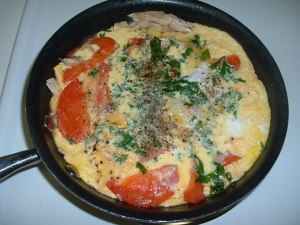
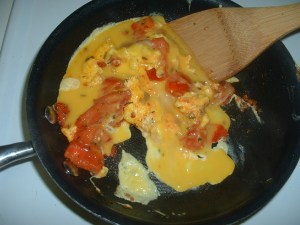
  5. Over medium heat, melt 2 tablespoons butter in a non-stick skillet; mix in meat, heating for one minute.  Add tomatoes and cook for six minutes, or until mixture is hot and tomatoes are somewhat softened, stirring occasionally (see above photo).
  6. Reduce heat to med/low; sprinkle parsley over cooked tomatoes and meat; pour beaten eggs over this mixture, quickly distributing the meat and tomatoes evenly in eggs.
  7. finished product

    Salt and pepper generously before covering; cover and cook slowly, until eggs are set on top (see photo).

  8. When done, you may remove any loose pieces of skin from tomatoes that appear on top of omelette; fold it over; cut in half to serve two people.

Avocado, Bean, and Corn Salad

avocado, bean, and corn salad

My church celebrated its 22nd anniversary this past summer with our annual picnic, which we always associate with incredible food; there are two men in our congregation that smoke tri-tip for this gala.  (They stay up all night smoking our Thanksgiving turkeys as well, which is by far the best turkey I have ever experienced.)  This year our outdoor celebration also boasted of fried chicken, not to be outdone by everyone’s glorious side-dish contributions.

Church gatherings are famous for their magnificent spreads; our congregation is no exception, for we have a host of great cooks, even though our body is small.  Indeed, we eat well!

I always make the following bean salad for our anniversary; it is not only quick, but keeps well in the sun.  May you find this a great dish for potlucks also.

Normally I don’t use many canned goods in my food preparations; they, however, facilitate the ease of this excellent recipe.  The history of canning is of great interest to me.  It began with a Nicolas Appert, a creative Frenchman with ordained skills-promised attributes we all get to exercise.

Our genius started out as a brewer; then, became a steward for the aristocracy; finally, he ended up as a confectioner during the Napoleonic era.  When France and Britain were at war in 1795, Napoleon, seeking a way to best preserve food for his army, offered 12,000 francs to the winner of a contest for such a discovery.  As a confectioner, Appert’s mind had already been developing such a solution, for he had been pursuing the foremost means in lengthening the shelf-life of fruits, by improving on the traditional candying and drying processes.  This formal opportunity brought his ideas to fullness; thus, he won the prize with his method in which he preserved fruits, vegetables, meats, eggs, partridges, chestnuts, grape must, even the vegetable truffles.  Our originator partially cooked the foods, before placing them in wide-mouth bottles; then, by corking and boiling the bottles in a water bath, he expelled the damaging air.  This technique of food preservation has remained in tact throughout the centuries.  1

Nevertheless, this hero unfortunately died a pauper, for by accepting the prize he lost the chance to patent his design.  (As an aside, I speak with the authority given me, in Jesus Christ’s name: “Enemy of our souls, you can steal none of our rewards!”)  2

In 1810, Appert published a book detailing his canning procedure, which the award had prohibited him from patenting; just months later, a patent using his method for preserving foods surfaced in England.  There, however, his corked glass container became a more durable, tin-coated iron canister, which came with instructions for opening with a chisel and hammer.  3

By 1849, this technology for food preservation improved with machine-made, can tops and bottoms.  Prior to this, two skilled workers produced 120 cans a day; now two people could daily make 1500 cans, and these machine-operators were unskilled at that.  4

These tin cans inspired what was the slow advent of can openers, an invention that remained quite unsatisfactory from its first appearance in 1855, until our modern device appeared in the 1980’s; this latter, a side-opening implement, uses two wheels in tandem, one rotating, the other serrated, removing the lid, while leaving no sharp edges.  These days we take this relatively new, inexpensive tool for granted; as a result of the sped of modern technology, often even this is not required, for now many cans come with pop-tops.  5

Today can-making is a major economic force; in the United States alone, more than 130 billion cans are generated yearly, making this an eight billion dollar industry.  6  The majority-about four times more-of these canned goods are fizzy drinks, such as sodas and beer, rather than food.  7

Hardcore cooks can soak and boil dried beans for my salad; nevertheless most of us choose to thank Nicolas Appert, for his obedience to press in with his quick mind.  As a result, we have canned beans and corn for this blessed recipe.

  1. Bee Wilson, Consider the Fork (New York: Basic Books, 2012), pp. 219-221.
  2. Ibid., p. 220.
  3. Ibid., p. 221.
  4. James Trager, The Food Chronology (New York: Henry Holt and Company, Inc., 1995), p. 242
  5. Bee Wilson, Consider the Fork (New York: Basic Books, 2012), pp. 221, 221.
  6. www.cancentral.com/can-stats/history-of-the-can
  7. Bee Wilson, Consider the Fork (New York: Basic Books, 2012) , p. 223.

assembling salad using garlic peeler

Avocado, Bean, and Corn Salad  Yields: about 1 1/2 quarts.  Total prep time: 25 min.  Note: this salad is spicy; for a milder version,  use less garlic and Jalapeno peppers; spiciness always lessens in intensity after a day of refrigeration; it is best to make this ahead for flavors to meld.

2-15 ounce cans of beans, drained  (Simple Truth Organic Tri-Bean Blend is ideal; available inexpensively at our local Fred Meyer-Kroger-stores.)

1-15 ounce can of sweet corn  (Trader Joe’s brand is excellent.)

1/2 cup chopped red or sweet onion  (For easy chopping, see step 2.)

5 large cloves of fresh garlic, or to taste, minced coarsely  (This amount provides a fair amount of bite; adjust for desired garlic flavor.)

chopping onion the easy way

2 Jalapeno peppers, or to taste, minced

1/2 cup salsa  (Trader Joe’s Salsa Autentica is ideal.)

1 tsp salt, or to taste  (Real Salt is important for health; available in health section at local supermarket.)

1/2 tsp fresh ground pepper, or to taste

2 small avocados, chopped

  1. Drain beans and corn in a colander, while proceeding to next step.
  2. For easy chopping, with root in tact, score a large onion with slices across top, cutting 2/3’s of the way down into it; turn onion and cut slices in opposite direction; shave pieces off end (see above photo); place in a large bowl.
  3. coarse grind of garlic

    For exceptional efficiency, peel garlic with a green, rubber garlic peeler from Bed, Bath, and Beyond (see this in photo at beginning of recipe).  May chop cloves coarsely with a sharp knife, or for quick preparation, place in a food processor, pressing pulse button repeatedly; stop and scrape down sides once; do not over chop, as a coarse grind adds bite to salad (see photo); place in bowl with onions.

  4. Cut Jalapeno peppers in half length-wise, scoop out seeds with a spoon, mince fine, and add to bowl (see photo below).  When finished, be sure to wash hands thoroughly before touching eyes.
  5. Stir salsa, salt, and pepper into onions/Jalapeno peppers.
  6. Gently blend beans and corn into this mixture; do not over mix, as this will make the beans mushy.  If making ahead, refrigerate at this point.
  7. mincing Jalapeno peppers

    Before serving, chop avocados, and carefully fold into bean mixture.  Serve with pleasure.

Spicy Sausage with Tomatoes and Turnips

spicy sausage with tomatoes and turnips

Nothing pleases the palate as much as tomatoes fresh from the garden; read below details concerning how they traveled from America to Europe to the whole world; then, experience this great tomato recipe.

How I love this time of year, as it explodes with their bounty.  Nevertheless, at times the question is what to do with them all.  When faced with this dilemma recently, I mixed this fruit with turnips and my favorite Aidells Spicy Mango with Jalapeno Chicken Sausages, both of which I had on hand; thus, this relatively quick and easy recipe evolved.  Enjoy.  (For another delicious Aidells sausage recipe, see Sausage with Zucchini and Eggplant .)

Where Tomatoes Originated

We think Italian cuisine, when tomatoes are mentioned, as we readily do with references to sweet and hot peppers, eggplant, potatoes, turkeys, and corn (in particular polenta).  None of these foods, however, were present as part of this country’s heritage, until after the discovery of America.  1

The tomato, Lycopersicon esculentum, along with its relatives the potato, chilli, and tobacco, are part of the nighingshade family; tomatoes were domesticated first in Mexico, long before Christopher Columbus’ arrival here.  2

Cortez Brought Tomatoes Back To Spain

In 1519, twenty-seven years after Columbus’ first voyage, this fruit was officially discovered in Mayan towns by Spanish adventurer Hernando Cortez.  In 1527, conquistadors brought it back to Spain, along with the avocado and papaya.  3

Tomatoes Spread Throughout Europe

Nearly three decades hence, in 1554, an Italian chronicle listed the first identifiable description of this yellow cherry tomato as pomo d’oro (golden apple).  By the end of the 16th century, both red and yellow tomatoes were present in European gardens, but only as exotic ornamental plants.  There was a long period in which great suspicion was attached to them throughout this continent, due to their close resemblance to a deadly nightingshade.  Circumstances of the French Revolution, at the end of the 18th century, however, established them as an acceptable food.  4

Italy Leads The Way In Eating Tomatoes

Outside of Mexico, Italy was first to heartily incorporate this fruit in its food preparation; inadvertently it became a leader in this adaptation.  The story unfolds with the French region Provence, whose cuisine was closely related to its Italian neighbor; these men from Provence formed the Marseillaise legion during the French Revolution.  Being richly exposed to Italian cooking, these soldiers had adopted the Italian “love apple”, as it was called, for it was considered an aphrodisiac.  In turn, this Marseillaise legion introduced this treasure to the Parisian troops, who took it back to their great city; thus, skepticism concerning tomatoes ceased in Paris.  Acceptance followed throughout Europe and subsequently the whole world.  5

The week after next, I will post a Spanish recipe Ropa Vieja, from a 19th century American cook book, with more information on the history of tomatoes.  This is an omelette using our prized fruit and leftover meat; it doesn’t get any simpler, but oh so taste-provoking!

References:

  1. Ilaria Gozzini Giacosa, A Taste of Ancient Rome (Chicago and London: The University of Chicago Press, 1994), p. 11.
  2. Harold McGee, On Food and Cooking (New York: Scribner, 1984, 2004), p.329.
  3. James Trager, The Food Chronology (New York: Henry Holt and Company, 1995), pp. 86, 88, 96, 97.
  4. Ibid.
  5. Esther B. Aresty, The Delectable Past (New York: Simon and Schuster, 1964), pp. 129-130.

Spicy Sausage with Tomatoes and Turnips  Yields 4-6 servings.  Total prep time: 1 hr.  Note: leftovers taste even better, as flavors meld.

5 1/2 tsp oil  (Coconut or avocado oil is best; olive oil is carcinogenic when heated to high temperatures.)

1 medium yellow onion, cut in even 1/8″ slices

12 oz Aidells Spicy Mango with Jalapeno Chicken Sausages  (May use any hot sausage of your choice, though this particular Aidells sausage is ideal; available at many supermarkets, including our local Winco and Fred Meyer-Kroger-stores.)

preparing turnips

1 lb turnips, cut in small 1/2″ dice

1 1/4 lb fresh tomatoes, chopped

3/4 tsp dried oregano  (Trader Joe’s has an excellent organic dried oregano for $1.99!)

1 tsp dried basil  (Also available reasonably at Trader’s.)

1 tsp salt  (Himalayan, pink, or Real Salt is critical for optimum health; a fine grind Himalayan salt is available at Costco for $4.95 for 5 lbs.)

1 tsp fresh ground pepper

cooking turnips

Avocado slices  (These are high in potassium and other powerful nutrients.)

  1. Spay vegetables with an effective, inexpensive spray (combine 97% distilled white vinegar and 3% hydrogen peroxide); let rest for 3 minutes; rinse really well.
  2. To caramelize onions, melt 1/2 tsp oil in a sauté pan over medium heat; when a piece of onion sizzles in pan, lower heat to med/low; add rest of onions (do not crowd or they will sweat, taking much longer to caramelize). Stir every several minutes, until they began to change color; then, stir every minute, until dark brown; set aside.  Watch carefully while proceeding to next steps.
  3. In another frying pan, heat 2 tsp oil over medium heat; when small piece of sausage sizzles in pan, add the rest; cook quickly until browned, watching closely so as not to burn; place in a bowl, carefully saving juices in pan.
  4. Deglaze hot pan with 2 or more tablespoons of water (scrape fond, cooked-on juices, off bottom); set pan aside.
  5. Peel turnips, dice in small 1/2″ cubes, place in a large bowl, see photo in list of ingredients.
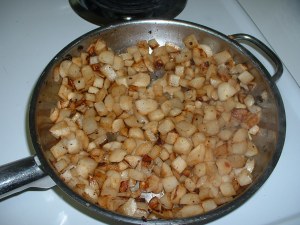
  6. Over medium heat, heat 1 tbsp more of oil in the above pan with juices. When a piece of turnip sizzles, stir in the rest, coating well with oils.  Cook covered until soft, about 10 minutes; stir every few minutes, deglazing pan each time you stir, by adding 2-4 tbsp of water; this additional water will steam the turnips; see above photo.  (Be sure to cover while cooking.)
  7. cooking tomatoes

    Meanwhile chop tomatoes; set aside in a bowl.

  8. Mix tomatoes into soft turnips; sauté uncovered, over medium heat, until they are cooked down-about 15 minutes-at which time a chunky sauce will be formed (see photo). When tomatoes initially begin cooking, stir in oregano, basil, salt, and pepper.  Be sure to cook this uncovered.
  9. Mix in sausage and onions after a somewhat-thick sauce has formed, having chunks of tomato in it; adjust seasonings (see photo).
  10. finished product

    Serve topped with avocado slices, for added health benefits.

Quick and Delicious Leek Soup

bowl of leek soup

The history of leeks is colorful. They have been cultivated both in Europe and Central Asia for thousands of years; they are considered to be native to Central Asia and the Mediterranean, though historical texts from other areas mention them as well.

There are Biblical accounts of their presence in Egypt-in northeastern Africa-during early world history.  When times got tough in the wilderness, the children of Israel longed for this delicacy, to the point that they were willing to return to their captivity under Pharaoh; archaeological digs support the presence of leeks in the Egyptian diet for the past 4 millennia.

Shortly after Christ’s presence on earth, during the first century A.D., the Roman Emperor Nero consumed them daily, for he adhered to their healing power in strengthening one’s singing voice.  Greek philosopher Aristotle concurred with this commonly accepted belief in ancient times, for he attributed the clear voice of the partridge to its diet consisting of this vegetable.

As the Roman Empire spread, its soldiers allegedly brought this choice food to the tables of the United Kingdom, where its popularity grew greatly.  According to legend as far back as the 6th century A.D., Welsh soldiers were wearing a leek in their helmets for identification purposes-a tradition that was carried on in subsequent centuries.  Shakespeare, whom I studied in London in 1974, refers to this Welsh passion in Henry V.  Such enthusiasm continues in Wales in present times, for this member of the onion family is now its national emblem, along with the daffodil.

My first encounter with this Allium occurred in the 1980’s in Billings, Montana, when an Irish friend taught me how to make leek soup, as part of a complete Irish meal.  I had need to know how to cook this national cuisine authentically, for I had contributed a catered St. Patrick’s Day dinner to a fundraiser’s auction, which the local radio station had promoted well; thus, I had ten eager winners expecting the best.  My friend, whose roots were in Ireland, put his heart into equipping me for this fun event; he even made a huge Irish flag, which I still possess.

Leek soup is prevalent in many different nationalities; I serve a Potage Bonne Femme, a potato and leek soup, in a 19th century French banquet, from my repertoire of historical meals.  This present version, however, is superior.  For more recipes and information on leeks, go to  Zucchini Chicken with Leeks and Shallots and Kale, Leeks, and Chicken.

Enjoy this fast soup recipe both now and for years to come; it is that good.

References:

https://draxe.com/leeks/

http://foodfacts.mercola.com/leeks.html

http://www.historic-uk.com/HistoryUK/Historyof Wales/TheLeek-National-emblem-of-the-Welsh

www.wales-calling.com/culture/leeks-and-daffodil.htm

trimming leeks

Leek Soup  Yields: 2 qts.  Total prep time: 1 hr.

3 leeks, white and light green part, 2/3 lb trimmed

1 med/lg yellow onion, chopped small

2 celery ribs, in small dice  (If desired, may omit the celery and double the potatoes, or vice versa double the celery, omitting the potatoes, to be diabetic friendly.)

5 tbsp butter, preferably Kerry butter (If using only celery, 7 tbsp butter will be needed.)

2 small Yukon potatoes, 2/3 lb, peeled and chopped in 1/2″-cubes  (May substitute sweet potatoes, which have a low glycemic index; these add great flavor to soup.)

4 c chicken broth  (Bone broth is best for food value;  for easy recipe, see Tortellini Soup.)

1/2 c water

1 bay leaf

1 tsp salt, or to taste  (Himalayan, pink, or Real Salt is critical for optimum health; a fine grind Himalayan salt is available at Costco for $4.95 for 5 lbs.)

1/2 tsp white pepper, or to taste

1/4 tsp nutmeg, or to taste  (Fresh ground is best.)

1/2 bunch, or 1/2 c chopped, Italian flat parsley  (Organic is only slightly more expensive and much healthier.)

2 tbsp flour, 2 tbsp butter, for roux

1 c whipping cream

1 tsp Better than Bouillon soup base, or to taste  (Chicken flavor is best, but vegetable flavor will also do.)

  1. Spray all vegetables, including parsley, with a vegetable spray (a mixture of 97% distilled white vinegar and 3% hydrogen peroxide is effective and inexpensive).  Let sit for 3 minutes; rinse well.
  2. rinsing chopped leeks

    Remove dark green top off leeks, leaving the white and light green part.  With the root in tact, cut leek in half lengthwise (see above photo); fan out under running water to remove dirt.  Holding the two halves together, cut each leek in 1/4″-thick-slices; place pieces in a large container.  Rinse well with water, stirring with hand (see photo); drain in a colander.

  3. Chop onion and celery, set aside.
  4. Melt 1/4 c butter in a large stock pot over medium heat; chop the celery in small 1/4″-dice.  Watch butter so as not to burn.  (Use 6 tablespoons of butter, if doubling the celery, by omitting the potatoes.)
  5. Add leeks, onion, and celery to melted butter, distributing it well throughout vegetables; cook covered for about 8-10 minutes, stirring several times (this will sweat the onions and leeks, or turn them translucent).
  6. Peel and cut potatoes in small 1/2″-pieces, placing them in a bowl of water to keep them from turning color.
  7. When leeks and onions are translucent, add drained potatoes, broth, 1/2 c water, bay leaf, salt, pepper, and nutmeg to pot.
  8. making roux

    Cover and bring to a boil over med/high heat; lower heat and simmer, partially covered, for about 20 minutes, or until potatoes are soft.  Stir occasionally

  9. Wash parsley, remove stems, chop, and set aside
  10. Make a roux by melting 2 tbsp butter in a small saucepan over medium heat; blend in 2 tbsp of flour with a wire whisk.  Cook until golden brown, mixing continuously.
  11. When potatoes are soft, whisk 1 c of the hot soup broth into pan of roux; add a second c of broth, blending thoroughly-this mixture will be quite thick-then, add this back into the soup.
  12. Mix parsley, cream, and roux into soup in stock pot; add a tsp of Better than Bouillon, to heighten taste.  Adjust seasonings and simmer for another five minutes (see photo of finished product).
  13. finished product

    Serve hot and enjoy!  (Flavors meld best after sitting for a day.)

Kale, Leeks, and Chicken

kale, leeks, and chicken

A friend from my church has a very large garden; sharing its bounty is her joy.  Last summer’s series on simplified kale receipts was inspired by her gracious contributions (for recipes, see Cooking with Kale    and  Cooking with Kale Made Extra Easy).

My mind creates recipes according to what is in my larder, which usually boasts of provision supplied by church members.  Lately Goldie has been bringing her organic kale again, as well as leeks and celery; this mouth-watering chicken dish resulted.

For a wedding present last year, I gave a marriage supper, complete with a cooking class, to newlyweds in our congregation (see Thai Coconut Lime Flounder,)  My desire was to release the gift of excellent nutrition in them.  Several weeks ago, we celebrated their holy matrimony again, with a new set of instructions and dinner following, rejoicing over God’s goodness in our lives.

The first time I coached Dina, she exhibited such courage in overcoming her unfamiliarity with food preparation.  Hope, however, grew this recent session, for she has grown exponentially in her eager steadfastness in the kitchen.

This teaching includes my chicken dish, using my recent acquisition of kale, shallots, and leeks.  These steps are straightforward, though they are time-consuming, with the preparation of leeks and kale, but oh the benefits of health and taste!

Leeks are one of the world’s oldest vegetables, which are more delicate in flavor than either onions or shallots; they are considered highly nutritious, with cancer fighting attributes, as well as antiseptic, laxative, and diuretic properties, among many other health-promoting values.  This vegetable is particularly strong in vitamins K and A (when eaten raw, one 3.5-ounce serving contains 52 % daily requirement of vitamin K and more than 29% that of vitamin A).  Though research on this particular Allium is hitherto limited, it can well be assumed that its health benefits are comparable to those proven in its closely related onion and garlic cousins.  Its notable amount of flavonol kaempferol, in its substantial polyphenol content, thereby combats many health problems related to oxidative stress and chronic low-level inflammation; among these are rheumatoid arthritis, obesity, and type 2 diabetes; thus, this recipe is beneficial to Dina, whose husband is presently overcoming diabetes.  For an additional recipe and more on its history, go to Zucchini Chicken with Leeks and Shallots .

Enjoy making today’s clear, detailed chicken recipe for leeks, shallots, and kale; my next entry will expound on the colorful history of leeks, with a delectable soup.

References:

www.foodfacts.mercola.com/leeks.html

www.whfoods.com/genpage.php?tname=foodspice&dbid=26

www.historic-uk.com/HistoryofWales/TheLeek-National-emblem-of-the-Welsh/

finished product

Kale, Leeks, and Chicken  Yields: 5-6 servings.  Total prep time: 1 1/2 hr (lengthy, but well worth it with these simple, detailed directions).

1 1/2 lbs chicken tenderloins, about 8-10 lg pieces  (Natural is best; available reasonably in Trader Joe’s freezer.)

2 lg carrots, optional

3 lg stalks of celery

1-1 1/2 lbs of kale

chopping leeks

4 leeks, white and light green part, 3/4 lb trimmed  (The best leeks are fresh-not more than a week old-and 1 1/2 “in diameter.)

5 lg cloves of garlic, minced  (3 cubes of frozen garlic from Trader Joe’s is much easier.)

4 tbsp butter

8 tsp oil  (Coconut or avocado oil is best, as olive oil is carcinogenic, when heated to high temperatures.)

1-2 tbsp fresh thyme, removed from stems, and coarsely chopped

Salt  (Himalayan, pink, or Real Salt is critical for optimum health; a fine grind Himalayan salt is available at Costco for $4.99 for 5 lbs.)

Fresh ground pepper

  1. Place chicken in a large bowl of warm water to thaw, set aside.
  2. Spray all vegetables with an inexpensive effective spray, by combining 97% white distilled vinegar and 3% hydrogen peroxide; let sit 3 minutes.  While waiting, if using fresh garlic, mince it now.  Rinse sprayed vegetables in a sink full of water three times.
  3. Cut celery diagonally in 1″ pieces.  Scrape optional carrots with a sharp knife (this preserves vitamins just under the skin); slice thinly at a diagonal.  Set both aside together in a bowl.
  4. Prepare leeks by first discarding outer leaves; cut off the dark green at the top and root hairs on bottom, leaving the white and light green part.  Cut each leek in half lengthwise; rinse well; then, cut each half in 2″ pieces, by placing leek cut-side up on board.  Finally, slice these 2″ lengths, cut-side up on board,

    cutting ribs out of kale

    into thin strips (see photo above).  Place pieces in a large container.  For final cleaning, rinse strips well with water, stirring with hand; then, drain in a colander.  This is known as the chiffonade-cut.

  5. Melt butter over medium heat in a sauté pan; as soon as a small piece sizzles in pan, add half the leeks, coating strips well with the hot butter. Reduce heat to low; cook down in pan, to make room for the rest of leeks, distributing oils well with each addition.  When all leeks are in pan, add garlic and slowly cook, covered, over low heat, stirring occasionally.
  6. straight-edge blade of food processor for chopping

    Cut ribs out of kale with a sharp knife (see above photo). May chop by hand, or quickly chop greens mechanically, by using the straight-edge blade of a food processor (see photo).  Turn processor on and place kale pieces in feeder tube (see photo below); set aside.

  7. Place thawed chicken on paper towel, salt and pepper GENEROUSLY.  Heat 1 tbsp of oil in a large frying pan over medium heat; when a small piece of chicken sizzles in oil, add the rest of the tenderloins; cook until light pink inside (do not overcook, as these will cook more later); cut tenderloins in bite-size pieces, removing them to a large bowl.  CAREFULLY SAVE JUICES IN PAN.
  8. Add 1 tbsp of oil to these juices; mix in half the kale, distributing oils evenly.  Over medium heat, cook this vegetable down until there is room to add more; mix in oils with each addition, until all is in the pan; cook covered, until limp, about 10 minutes, stirring occasionally.  As needed, deglaze pan (scrape fond, cooked-on juices, off bottom with a spatula, after adding 2 or more tbsp of water).  Remove to bowl of meat when done.
  9. placing kale in feeder tube of processor

    Meanwhile gently peel thyme off stems, chop coarsely with a sharp knife, set aside.

  10. Put last 2 tsp of oil in hot pan after kale is removed; add carrots and celery; mix well; cook until tender, stirring every couple of minutes.  Meantime go to next step.
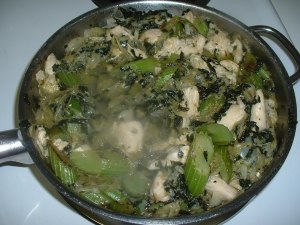
  11. Blend 1-2 tbsp chopped thyme, 1/2 tsp salt, and 1/2 tsp pepper into leeks; stir in chicken/kale; continue cooking over low heat, until all is hot.  Add this mixture to pan of celery, when tender.  Adjust seasonings.  One final time, scrape bottom to deglaze pan, using the juices from the added leek mixture.  Serve with confidence!

Zucchini Chicken with Leeks and Shallots

zucchini chicken with leeks and shallots

I am still developing recipes for zucchini.  My new creation is enhanced with the rich flavors of leeks and shallots, this week’s offerings at church from a faithful member’s garden; these are of the onion family, but very different from each other in appearance, flavor, origin…

Shallots are mainly of two varieties, which are usually reddish-brown, though sometimes purple; these roots are similar in looks to, but larger than, garlic cloves.  This plant’s flowers primarily bloom in white or violet.

Leeks are big in comparison, looking like huge green onions, with wide flat leaves.  They are best when their stalk formations-long, relatively hard, bundled sheaths-have grown to about 1 1/2 inches in diameter.  Ideally these should be fresh-not more than a week old-and stored in loose plastic bags in the refrigerator.

Shallots taste like a mixture of onions and garlic, though they are milder in flavor and more pungent; they bless exceedingly!  Our worthy leeks are even milder yet, with a mild pungency as well.

Shallots, which are European in origin, are especially associated with French cuisine.  Their roots/cloves can be eaten fresh, or cooked in butter; boiling is also possible.  They are usually sautéed whole; though, halving them is best when large.  Their sweetness is exceptionally delightful!

In the U.S., leeks grow primarily in the northern sections, due to the cooler climates, a requirement wherever they grow worldwide.  They, being so mild, should be simmered slowly, making them ideal for soups and stews; nevertheless, they may be sliced with a chiffonade-cut, as I describe in this recipe, and gently fried in butter, to augment the savor of special food combinations.  This Allium is low in calories and high in nutrients (such as vitamin K, manganese, copper, vitamin B6, folate, vitamin C, iron, vitamin A, fiber, magnesium, calcium, vitamin E, and omega-3 fats), making it a power-packed food.  For additional leek recipes and history go to Kale, Leeks, and Chicken and Leek Soup .

Arrowroot is my choice for thickening the unequaled juices, resulting from simmering these leeks and shallots.  It is a starch from certain plants of the genera Manihot, Curcuma, and Tacca, as well as the tropical American plant Maranta arundinacea.  Its name consequently materialized from our Native Americans use of this root to absorb poison from arrow wounds.  I decided upon it, because I was serving this meal to a diabetic friend: it adds only seven grams of carbohydrates to the entire six servings, which is about two percent of the daily requirement of this chemical compound for the whole recipe.  For these same health reasons, I also selected the diabetic friendly Ezekiel 4:9 Sprouted Grain Pasta.  Our repast was a grand success!

Arrowroot is gluten-free, with twice the thickening power of flour.  It makes smooth sauces, which have remarkable clarity.  Great importance lies in not boiling the liquids you add it to, as this will stop its action.  Unlike a roux made from flour, this thickens very quickly; it is comparable to cornstarch, but lighter and healthier.

The following entrée uses tantalizing rosemary and moist zucchini, of which we have abundance from our gardens right now.  Its accompanying sauce, with the prized leeks and shallots, causes this chicken dish to explode with exciting tastes.  Enjoy!

References:

http://www.differencebetween.net/objects/comparisons-of-food-items/difference-between-leeks-and-shallots/

www.whfoods.com/genpage.php?name=foodspice&dbid=26

https://www.gurneys.com/Differences_between_Onions_Leeks_and_Shallots

chopping leeks with chiffonade-cut

Zucchini Chicken with Leeks and Shallots  Yields: 5-6 servings.  Total prep time: 1 hr.

1 1/4 lb chicken tenderloins, approximately 7 large pieces, thawed  (Natural is best; available reasonably in Trader Joe’s freezer.)

4 leeks, 1 1/2″ in diameter, white and light green part only-about 3/4 lb

1/4 lb shallots

1 1/2 lb zucchini

2 tbsp fresh rosemary, chopped fine

1/4 c butter, preferably unsalted

2 tbsp oil  (Coconut or avocado oil is recommended, as olive oil is carcinogenic when heated to high temperatures.)

Salt and fresh ground pepper  (Himalayan, pink, or Real Salt is critical for optimum health; a fine grind Himalayan salt is available for $4..99 for 5 lbs at Costco.)

1 tbsp arrowroot, dissolved in 1/4 c cold tap water  (May substitute cornstarch; arrowroot, however, is available inexpensively in bulk, at such upscale grocers as New Seasons; also accessible in spice section at local supermarkets.)

Fettuccine pasta  (Ezekiel 4:9 Sprouted Grain Pasta is health-promoting and diabetic friendly.)

  1. rinsing cut leeks

    Start thawing chicken in a bowl of water, set aside.

  2. Clean zucchini with a vegetable spray (combine 97% distilled white vinegar and 3% hydrogen peroxide for an inexpensive effective produce spray).  Let sit 3 minutes and rinse well.  Meanwhile go to next step.
  3. Prepare leeks by discarding outer leaves, cut off green tops and roots, and rinse well.  For chiffonade-cut, slice leeks lengthwise; rinse again; then, divide each half in 2″ portions.  Next cut each 2″ length in thin strips (see photo at top of recipe).  Place in a large container, rinse well with water, drain in colander, and set aside (see photo).
  4. Meanwhile cut zucchini in 2″-long spears, place in a bowl.
  5. Heat butter in a sauté pan over medium heat, until a small piece of leek in pan sizzles; add half the leeks, stirring in butter.  Reduce heat to low.  Cook down enough to fit other half into pan, distributing oils well; cover and cook, stirring occasionally.
  6. Peel shallots, slice large shallots in half (see photo); add to simmering leeks.  Let cook slowly over low heat,

    peeling shallots

    stirring occasionally.

  7. Chop rosemary, measure 2 tbsp, and place in a small container (may use less).
  8. Fill a stock pot 2/3’s full of water; add about 2 tbsp of oil-any kind will do-but no salt; bring to a boil over med/high heat.
  9. Meanwhile place tenderloins on paper towel; GENEROUSLY salt and pepper them.  Heat 1 tbsp of oil-preferably coconut oil-in a large frying pan, over medium heat, until small piece of chicken sizzles; add and cook chicken, until slightly pink in center (do not overcook, as it will cook more later on).  Cut each tenderloin in thirds with a spatula, removing pieces to a bowl; carefully save juices in pan.
  10. Add last tbsp of oil to pan of juices; mix in zucchini, distributing oils evenly.  Cook only until tender, stirring occasionally; watch so it doesn’t get mushy.  While cooking, go to next step.  (Note: may have to add more water to stock pot, so it is 2/3’s full, and boiling.)
  11. Dissolve arrowroot in 1/4 cup cold tap water, set aside.
  12. Place pasta in pan of boiling water; turn down heat to medium.  Cook for 6-7 minutes, until al dente; do not overcook.  Drain and set aside.
  13. Meantime stir chicken, rosemary, and 1/2 tsp salt into leeks/shallots; cook over medium heat until hot.  Add this mixture to pan of tender zucchini, stir together.
  14. finished product

    Turn down heat under zucchini/leek/chicken to insure the juices are not boiling, but hot; this is important for thickening to occur.  Using a wire whisk, blend in small amounts of dissolved arrowroot to the liquids around edges of pan, tilting pan to bring forth juices; in this way, use all the arrowroot.  Adjust seasonings.

  15. Serve over pasta; this is an exceptional treat!

Rosemary Eggs

rosemary eggs

I am creating recipes for an abundance of fresh rosemary, which I recently received; this simple duck egg receipt is among them.  It reminds me that I eat like a queen.  Read on to discover the benefits of duck eggs over those of chickens.

Six years ago my young friend Noah began raising ducks, which he cherishes as if they were his children; each possesses its own personality and carefully chosen name.

Depending on the breed, ducks produce between 150-200 eggs a year, which come in all sorts of colors, varying mostly by genetic strain.  Different colored eggs, however, sometimes occur within the same breed.

Noah has seventeen of these domesticated aquatic birds, with only five of them producing presently.  Later on there won’t be any eggs, for they only lay from early spring, until the winter cold sets in.  We are always sad when their production stops.

For the past half decade, I have been a beneficiary of this treasured delicacy; consequently my baking has excelled.  Pastry chefs prize these ovum of the family Anatidae over chicken eggs, for they contain less water, have firmer whites, and a higher fat content; this makes for moister cakes, breads, and cookies, all of which rise better, due to the additional leavening power found here.

The right balance in the interaction between eggs, flour, sugar, and fat in baked goods is important; your product will be dry if there is either too much or too little of the crucial egg.  In most recipes, “eggs” is a reference to large-sized chicken eggs, of which the equivalent of three is 2/3’s cup of duck eggs; therefore, I always measure these for an accurate agreement in any given recipe.  Note: whipping duck whites takes longer because of their firmness; thus, the recommendation is to beat them at room temperature, adding a little lemon juice; older eggs are preferable to fresh, as they aren’t as firm.

Duck eggs are up to 50% larger than those of their chicken cousins, with more yolk than white.  They are higher in protein and creamier, making great omelettes and quiches; crème brulee is unforgettable when made with these!  Nevertheless, my favorite way to eat them is over-easy, with the rich, smooth, orange yolk dripping all over the plate, which I sop up with my homemade toast.  Be sure to not overcook them, as they become rubbery.

Exponents of eggs propound that-among many benefits-they help prevent breast cancer, because of their high choline content; their abundance of the antioxidants lutein and zeaxathin fights mascular degeneration and cataracts.  Their beneficial blend of omega-3 fatty acids, zinc, B vitamins, and iodine feeds your brain, thus enhancing your mood.  They are an ideal, low-caloric, muscle-producing protein.

USDA has the same regulations for chicken, duck, quail, and ostrich eggs.  Their farmers and fans proclaim that duck eggs are less susceptible to diseases and parasites, making them safer, as well as healthier with a higher concentration of nutrients.  It is believed that their thick shells give them a longer shelf life than chicken eggs.

Eggs in general have gotten a bad rap in recent years; many feel they contribute to heart disease.  This is far from the truth, as they contain mostly monounsaturated and polyunsaturated fats, which actually lower heart disease risk.  Harvard health experts say healthy people can eat an egg a day; others believe you can eat even more.

These special duck eggs are popular in Asian cuisines, especially Chinese and Vietnamese, where they are frequently cured in brine; this draws out moisture and preserves them, altering their texture.  I fell in love with these pickled eggs while living in Tokyo!

My facile receipt blesses, for it enhances eggs with rosemary.  If possible, use these superior duck eggs, available at local farms and upscale grocers, where they range from $6 to $12 a dozen.  My young friend, however, sells his for the low price of $6/doz.  (Noah resides near the Tualatin high school here in Oregon; go to Cynthia Powell link on my Facebook page.)

References:

www.rodalesorganiclife.com/food/chicken-eggs-vs-duck-eggs-which-is-healthier

www.hgtv.com/outdoors/gardens/animals-and-wildlife/duck-eggs-411

https://www.tyrantfarms.com/5-things-you-didn’t-know-about-duck-eggs

https://pastrychefonline.com/2015/03/14/how-do-eggs-function-in-baking/

www.modernfarmer.com/2015/06/everything-you-need-to-know-about-duck-eggs/

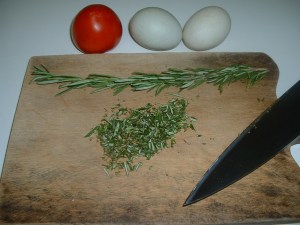
chopping rosemary with a sharp knife

Rosemary Eggs  Yields: 1 serving.  (May multiply this, using a large non-stick pan.)  Total prep time: 15 min.

1 tsp fresh rosemary, minced  (1 1/3 tsp will be needed, if using duck eggs, which are considerably bigger than chicken eggs.)

1 small tomato, chopped

2 large chicken eggs  (May substitute duck eggs.)

1 tsp butter

Salt, to taste  (Himalayan, pink, or Real Salt is important for health reasons; a fine grind Himalayan salt is available at Costco for $4.95 for 5 lbs.)

Fresh ground pepper, to taste

  1. cooking liquid out of tomatoes

    Chop rosemary fine with a sharp knife; set aside (see above photo).

  2. Chop tomato and place in a dish.
  3. Beat eggs in a bowl, set aside.
  4. In a small non-stick omelette pan, heat butter over moderate/med heat; add rosemary; and cook for about 20 seconds.  Stir in tomato and cook for 2-3 minutes.  There will be juice from the tomatoes at first (see photo); cook until most of this liquid is evaporated.
  5. Pour in eggs; salt and pepper the top.  Gently fold in the firm egg on the bottom of pan (see photo); cook until egg is not runny any longer, but still quite moist.  Do not overcook, as this makes duck eggs, in particular, rubbery and dry.
  6. folding in cooked egg

    Serve hot, with homemade zucchini bread (2017/07/24), or better yet my rosemary bread toasted, which I will publish in several weeks.

Natural Sausage with Zucchini and Eggplant

natural sausage with zucchini and eggplant

At this time of year, we are wondering what to do with all the zucchini.  Using natural sausage and Chinese eggplant, I transformed this ordinary vegetable, which is actually a fruit, into a memorable dish.

Garlic and Aidells’ Spicy Mango with Jalapeno Chicken Sausages give this common garden plant a dramatic bite, with a sweet aftertaste.  Eggplant is a perfect accompaniment to zucchini, and caramelized onions compliment all.  This is a simple, mouth-watering treat indeed.

My pastors are bringing their prolific zucchini to our services now, and I am thrilled. Our church body experiences this benefit every growing season.

Throughout the year, we experience the results of what this couple’s hands accomplish in the realm of the Spirit, but during harvest time we reap what these same faithful hands produce in natural soil.  Their charitable action is steadfast, and it can be concretely seen in the vegetables and fruits, with which they fed our physical bodies.

This particular squash reproduces rapidly; it can quickly grow beyond what is satisfactory.  When it gets over-sized: it contains too much water, its seeds are large and tough, there aren’t enough recipes to utilize this inundation.  (Learn more about its biology and history at Zucchini Bread, 2017/07/31.)

Our pastors watch this fruit/vegetable prudently; thus, readily picking it before it grows beyond its prime-whenever possible.  Our church is like a prototype of their healthy garden.  Pastors Monte and Dawn care for us like prized plants: watering with the word, observing diligently, pruning with exceptional wisdom and love.  We are indeed well-tended.

I can’t express gratitude enough that our Lord saw fit to place me under their protection; it is here that I became equipped to fulfill my purpose as a food historian.  I invite you to access this bread of life at our church website alfc.net

Meanwhile eat heartily, by cooking this delicious recipe.

Aidells’ Spicy Mango with Jalapeno Chicken Sausages

Natural Sausage with Zucchini and Eggplant  Yields: 4-5 servings.  Total active prep time: 45 min.

2 1/3 tbsp oil  (Coconut or avocado oil is best; olive oil is carcinogenic when heated to high temperatures.)

1 med yellow onion, cut evenly in 1/8″ slices

12 oz natural sausage, cut diagonally  (Aidells’ Spicy Mango with Jalapeno Chicken Sausages are the best here; available at most local supermarkets.)

1 lb Chinese eggplant, cut in 1/2″ cubes  (See photo below.)

4 lg cloves of garlic, minced  (For convenience, use 2 frozen cubes of garlic from Trader Joe’s.)

1 tsp salt, or to taste  (Himalayan, pink, or Real Salt is critical for optimum health; a fine grind Himalayan salt is available at Costco for $4.95 for 5 lbs.)

3/4 tsp freshly ground pepper, or to taste

chopping eggplant

2 carrots, thinly sliced at a diagonal

1 1/2 lbs of zucchini, cut in 1/2″ cubes

  1. Clean vegetables, using an inexpensive, effective spray of 93% distilled white vinegar and 3% hydrogen peroxide; let sit 3 minutes and rinse well.  Meanwhile go to next step.
  2. In a sauté pan, heat 1/2 tsp of oil.  When a small piece of onion sizzles, add all onions and caramelize over med/low heat, stirring every 2 minutes until color starts to form; then, stir every minute, until dark brown.  When finished, deglaze pan with 2 tbsp or more of water (scrape the fond, or cooked-on juices, off the bottom of pan with a spatula); then, add to the bowl of meat described below.  Watch onions carefully, while performing the next steps.
  3. Cut vegetables and meat, as described in the above list of ingredients; set all aside in separate bowls.  Mince garlic, if using fresh.
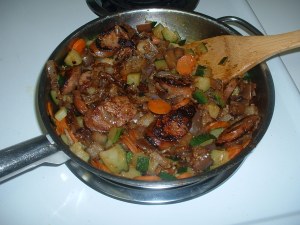
  4. finished product

    Heat 2 tsp of oil in another frying pan over medium heat.  When a piece of sausage sizzles in pan, add the other sausage slices and brown quickly, watching carefully, so as not to burn.  Place in a large bowl, carefully saving juices in the pan.

  5. When meat is removed, heat 2 tsp more of oil, with the left-over juices. Add eggplant, mix oil in well, and deglaze pan (scrape off fond left over by meat with 2 tbsp or more of water added to hot pan).  Cook covered until soft, stirring every couple of minutes; deglaze pan again; transfer eggplant to the bowl of meat.
  6. Heat 2 tsp of oil in same pan, add carrots, and cook for 3 minutes, or just until tender, stirring occasionally.  Mix zucchini into carrots; cook covered until limp, stirring several times.
  7. When vegetable is done, blend in garlic, salt and pepper; cook until you can smell the garlic.  (If using frozen garlic, make sure it is melted and distributed well.)  Mix in meat, onions, and eggplant; adjust seasonings; heat thoroughly.  Serve with delight.