Balsamic Vinaigrette

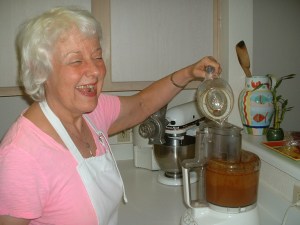
Teaching my balsamic vinaigrette recipe

teaching my balsamic vinaigrette recipe

I acquired my beloved vinaigrette recipe in enchanting Paris.  There I learned the secrets to this simple receipt in the fall of 1985.

At that time I cooked many historical meals at a French friend’s apartment, close to the Louvre. Mornings found me seeking needed ingredients at a profusion of quaint Parisian shops.  There was much mercy for my broken French among the shop owners, who grew to know me.

A flurry of grand entertainment resulted from the hosting of these elaborate meals.  Our varied guests returned warm hospitality in their abodes on alternate nights.  My passion for art galleries quickened during the days when they reciprocated our harmonious feasting.

Indeed, Paris charmed me during that September in the mid-1980s!

My balsamic vinaigrette is extremely simple.  (We used raspberry vinegar for this same recipe in Paris.)  I always dress my famous salads with this balsamic and my father’s blue cheese dressings, which is next week’s tantalizing post.

Peggy’s Balsamic Vinaigrette  Yields: about 22 ounces.  Total prep time: 20 min. Note: may repeat these easy steps to make a double batch; keeps well when refrigerated; any kind of vinegar may be substituted for the balsamic.

5 lg cloves of garlic, more to taste if smaller

3/4 c balsamic vinegar  (Use protected Aceto Balsamico from Modena, Italy, which can be expensive, available reasonably at Trader Joe’s.)

3/4 tsp dried oregano leaves  (A great, organic dried oregano is available at Trader’s for $1.99.)

1 tsp dried basil leaves  (Also a bargain at Trader’s.)

1/4 tsp sugar, or to taste

1/2 tsp salt, or to taste  (Himalayan, pink, or Real Salt is critical for optimum health; an inexpensive fine grind Himalayan salt can be found at Costco.)

1/2 tsp fresh ground pepper, or to taste

1 tsp high quality mustard  (Aiola mustard from Trader’s is ideal.)

1 c Bel’Olio Extra Light Olive Oil  (I prefer this light olive oil, available at Costco; other olive oils are strong in taste.)

  1. Peel and cut garlic cloves in half; place in a dry 11-cup, or larger, food processor; chop garlic, stopping machine to scrape down sides.  IF you are making two recipes, chop the garlic for both at once; set half aside. (If you don’t have a food processor, may chop cloves fine with a sharp knife; may also use a Vita Mix or blender to make dressing.)
  2. Add vinegar, herbs, sugar, salt, pepper, and mustard to the garlic.
  3. Turn on processor; leave running.
  4. pouring oil in feeder

    Fill the feeder with oil. (The feeder is the plunger that fits in the top of the food processor; it has a small hole in the bottom of it; this allows the oil to drip into vinegar mixture slowly, thus emulsifying the dressing; see photo.) Use all the oil in this manner.  If you are using a blender, be sure to add oil very slowly, blending as you go to emulsify dressing.

  5. Adjust seasonings to taste.  Note: the garlic should taste really strong, as it mellows dramatically after a couple of days.
  6. Pour into bottles, using a funnel.  Save used glass jars for this purpose; be sure to sterilize.
  7. Keeps in the refrigerator for months, or at room temperature for several weeks.  It’s often necessary to leave dressing out at room temperature, for at least an hour before using, when stored in the refrigerator, as the cold oil sometimes solidifies.  Hot tap water will melt the solid oil, also.

Healthy Green Salads

building a healthy salad

building a healthy salad

Strength-giving salads have been the mainstay of my evening meals for many years; they delight me. Recently I taught a class on how to maintain robust bodies by building wholesome salads.  This next series spells pleasure in hearty recipes for glorious greens and more.  Here I begin with the basic steps for creating these leafy dishes.

Healthy Salads

A variety of vibrant greens are good for the body. Spinach is high in iron, but too much of this raw vegetable is not wise.  So balance raw and cooked spinach.  A little vitamin C (tomatoes, citrus, pineapple, etc.) helps the absorption of the iron.

Beef or chicken can be added.  These meats are high in iron and protein.  Good quality eggs, beans, tuna, and cheese are also excellent protein sources.

Dried fruit (dates, cranberries, apricots, figs, raisins…organic is best) add a beautiful contrast of sweetness.  Avocados are dynamite!

Choose an assortment of fresh vegetables, such as carrots, celery, radishes, bell peppers, etc.  It’s important to use organic peppers, as this vegetable really absorb pesticides.   Organic carrots are really inexpensive.

Roasted agave nuts (see recipe below) and homemade croutons (see recipe below) add texture and protein.  Note: organic bread is a good protein source.

Nourishing homemade dressings save lots of money and explode with good flavor. (Recipes to follow in upcoming posts.)

Roasted Agave Nuts  Yields: 1 lb.  Total prep time: 50 min/  active prep time: 10 min/  baking time: 40 min.

  1. Buy 1 lb of an assortment of whole raw pecans, almonds, walnuts, and cashews in the bulk food section.  (Cashew pieces work well and are cheaper.)  I like to weigh out ¼ lb packages of each at the store.
  2. Preheat oven to 265 degrees.
  3. In a large bowl, pour 1/4 cup Organic Raw Blue Agave Sweetener.  (Available at a good price at Trader Joe’s.)  Blend in 3/4 tsp cayenne pepper (or to taste) and 2 tsp cinnamon.
  4. Add 1 lb of mixed raw nuts.  Stir well, until all the nuts are coated.
  5. Cover an 11 ½ x 17 ½ cookie sheet with a piece of parchment paper. Spray parchment really well with spray oil (Pam Coconut Spray Oil is best.)  This is essential, or nuts stick to the paper.
  6. Spread nuts evenly on oiled parchment.  Bake for 40 minutes.
  7. Remove from oven.  Sprinkle generously with salt WHILE HOT.  (Himalayan, pink, or Real Salt is critical for optimum health; an inexpensive fine grind Himalayan salt is available at Costco.)
  8. Nuts must be hot for salt to stick.  IF you forget to salt while hot, place them in hot oven again, until they are reheated.  Then salt and cool.  Break apart and store in sealed container at room temperature. Keeps well.

Homemade Croutons  Yields: 1/2 gallon-size storage bag.  Total prep time: about 1 1/4 hr/ active prep time: 15 min/  baking time: about 1 hr.  Note: dry bread out, for 8 hr ahead of time, on a cookie sheet.

  1. May use gluten-free, homemade bread, Dave’s Killer Bread, or Franz organic Great Seed. (I grind my own organic wheat berries for my bread, however, croutons from store-bought bread aren’t as hard as that made from my homemade bread.  I prefer Franz organic bread, which makes an excellent crouton high in nutrients and protein.)
  2. Make sure bread is stale.  May partially dry by leaving it exposed to the air for up to 8 hours.  You may store bread in a sealed plastic bag after drying, if you are not ready to bake immediately.  Don’t get bread super stale, or the butter won’t distribute evenly.  Expose slices for about 8 hours in the humid Northwest; adjust time for a drier climate.  Bread should be somewhat dried out, firm to the touch, but not hard.
  3. Preheat oven to 265 degrees.
  4. Cut bread in cubes.  Use 1/2 of 1 lb loaf of bread for one large cookie sheet.
  5. Melt 6 ounces of butter in a large frying pan.
  6. Add 3/4 tsp cayenne pepper, or to taste.  Stir in 1 tsp salt (Himalayan, pink, or Real Salt is best).  Mix seasoning well into melted butter.
  7. Add bread cubes.  Stir thoroughly, until bread is fairly evenly coated.
  8. Place bread cubes on an 11 ½ x 17 ½ inch cookie sheet, distributing evenly so heat can reach all.
  9. Bake for 45 minutes.  Check for dryness; if not crunchy, bake for 15 more minutes.  Repeat this last step until croutons are completely dried.
  10. Cool and store at room temperature in a sealed gallon-size storage bag. They keep indefinitely.

1950’s Banana Cake

1950's banana cake

1950’s banana cake

My mother let each child choose his own birthday cake while we were growing up.  My little heart worked overtime each year to decide between banana cake and fresh pear pie.  Both are awe-inspiring!

I spell out the wonders of my mother’s banana cake here. The delectable pie will follow this fall in a series of recipes extolling my family’s favorite meal since the 1950’s; until then you will be pleased with this memorable confection.

I grew up in the small tourist village of East Glacier Park, Montana.  It is the east entrance to the spectacular display of Rocky Mountains in Glacier National Park.  I have seen mountain ranges all over the world; none compare with that of my home.

There my young mother was mentored by several “older” women as I was maturing; one was Leone Brown.  She was all of 50 at the time, but she seemed very old to me.  This knowledgeable woman taught Mom much about cooking.  She created many beautiful crafts for her as well; my 93-year old mother still has her handmade Easter eggs, made out of delicate egg shells.

This beloved cake is the fruit of Leone’s bountiful wisdom; personally I have been making it with joy since the early ’70’s.  Believe me, it will knock your socks off!

Banana Cake  Yields: 2-9 inch layer or 2-9 x 5 inch loaf pans.  Total prep time: 2 1/4 hr (with  inactive prep time of 1 hr or longer for freezing cakes to facilitate easy frosting)/  active prep time: 50 min/  baking time: 25 min.

Note:  1 1/2 recipes will be needed for 3-8 inch layers.  I like to make 2-loaf cakes and freeze them separately on paper plates, sealed in gallon-size freezer bags, for cutting off frozen slices as needed.  Dessert is always on hand for unexpected guests!

1/4 c milk, soured with few drops of lemon juice from a squeeze ball

3/4 c butter, softened

1 1/2 c sugar  (I prefer coconut sugar, or sucanat, evaporated cane juice.)

2 lg eggs

2 1/2 c flour  (Bob’s Red Mill unbleached flour is high quality, or grind 1  2/3 c organic soft white winter wheat berries to make 2 1/2 c fresh ground flour.)

1 tsp baking soda

1/2 tsp baking powder

1/2 tsp salt  (Himalayan, pink, or Real Salt is critical for optimum health; Himalayan salt is available inexpensively in fine grind at Costco.)

3 ripe medium bananas  (1 1/2 c mashed)

1 tsp vanilla

Spray oil  (Coconut spray oil is best; Pam is available in most supermarkets; our local Winco brand, however, is cheaper.)

Flour for dusting the sprayed pans

  1. Preheat oven to 375 degrees.
  2. Sour milk in a med/large bowl with a few drops of lemon juice from a squeeze ball, set aside.
  3. Cream butter in a large bowl, add sugar, and beat until light.  Add eggs, 1 at a time, beating well with each addition.  Set aside.
  4. Shake together flour, baking soda, baking powder, and salt in a sealed gallon-size storage bag, or stir all together in a large bowl with a fork.
  5. Add bananas and vanilla to sour milk, mash bananas with a fork, and blend all (set aside).
  6. Mix 1/2 the flour mixture into butter; then, add 1/2 the mashed bananas into this, beating only until all is incorporated, as over-beating toughens cakes and cookies.  Repeat steps, using remaining flour and bananas.
  7. Spray cake pans; dust with flour.
  8. Pour batter in prepared pans.  Bake for about 25 minutes, or until a toothpick comes back clean and cake lightly springs bake when you press with finger.  Do not over-bake (time varies with size of pans).
  9. Cool in pan for 5 minutes.  Then, slide a knife around the edges, gently remove cakes, and freeze these on paper plates for at least 1 hour, to facilitate frosting (this inhibits the crumbling of cake as you frost).

Cream Nut Frosting  (Note: make 1 1/2 recipes for a 3-layer cake.)

2 1/2 tbsp flour

1/2 c cream  (Heavy organic whipping cream is best for health.)

1/2 c butter, softened

1/2 c sugar  (Preferably organic cane sugar; available at Costco or Trader Joe’s.)

1/4 tsp salt

1/2 tsp vanilla

4 c powdered sugar (Trader’s has organic powdered cane sugar.)

1 c pecan pieces (Least expensive when bought in bulk at local supermarket.)

  1. Blend flour and cream in a small saucepan with a wire whisk.  Cook over med/low heat, stirring constantly, until a thick paste is formed.  Set aside to cool to room temperature.
  2. Cream butter in a large bowl with an electric mixer, add 1/2 c regular sugar, beat until light and fluffy.
  3. Blend in salt and vanilla.
  4. Mix in cooled cream paste, beat well.
  5. Add 1 c of powdered sugar, beating thoroughly.  Add rest of powdered sugar, 1 c at a time, beating with each addition until all is incorporated.
  6. Frost the frozen layer or loaf cakes.  Cover top and sides with pecan pieces. (If freezing cakes for future use, be sure to freeze frosting on cakes before sealing in gallon-size freezer bags.)

Tomato/Feta Chicken

Tomato/feta chicken

tomato/feta chicken

An explosion of creativity occurred in my sister’s upscale kitchen this month: my siblings and I collaborated over one of my recipes during a trip home for my mother’s 93rd birthday.  Our three strong cooking minds worked together to perfect a dish I created years ago.

Nearly a decade has passed since I helped a friend every Monday, for she was bogged down in her professional responsibilities.  Aromatic ailments filled pots and pans, as I prepared her family’s nourishment for each upcoming week.

This particular friend had been to cooking school in Italy; her excellent input and feed-back sharpened my skills, while I was helping her family.  At her home, I created this recipe for tomato/feta chicken, which my siblings Maureen and Paul helped perfect recently.

One thing I learned from my friend was to add the garlic at the close of the sautéing process; she said this keeps it from burning.  I was adding it before this, as I was cooking the meat.  My friend’s ingenious tongue could taste the burnt garlic; thus, she suggested that I add it at the very end, which is how I had cooked with this herb since.

However, my siblings suggested that adding it early on allows for more flavor.  My brother explained the proper process: when you add garlic, while sautéing, cook only until you can smell it; then, immediately add the liquid for the sauce, to keep it from burning.

My sister employs an even more advanced method: she roasts lots of whole peeled cloves on a cookie sheet, in a preheated 300 degree oven, for at least an hour (or until golden brown). She stores this in the refrigerator, adding about three tablespoons per four-serving dish, while the dish is cooking-only cook briefly, however, if dish is dry.

After tasting our finished work, I am sold on cooking this herb longer, employing these safe ways.  The following recipe reflects this new directive; here the fresh garlic is cooked for a lengthy time in the wet tomatoes.

There was another point I learned from my siblings’ expertise.  Both urged me not to bother with washing pieces of cut meat; it is only necessary to clean the inside of the carcasses of fowl, where blood has collected.  This has made cooking easier for me.

This tomato/feta chicken recipe is exceptionally good; enjoy it!

Tomato/Feta Chicken  Yields: 4-6 servings.  Total prep time: 1 1/4 hr.

1 med/lg yellow onion, halved and cut in even 1/8″ slices

5 tsp oil  (Coconut or avocado oil is best, as olive oil is carcinogenic when heated to high temperatures.)

8 chicken tenderloins, thawed in water  (The frozen ones at Trader Joe’s are all natural and a good price.)

Salt and pepper to taste  (Himalayan, pink, or Real Salt is critical for optimum health; a fine grind Himalayan salt is available inexpensively at Costco.)

4 ripe tomatoes, chopped  (These must be ripe; organic is best.)

3/4 tsp dried oregano  (Organic is available at Trader’s; it is of excellent quality and very inexpensive.)

1 tsp dried basil

3-5 lg cloves of garlic, chopped fine  (2 cubes of frozen garlic from Trader’s is a much easier prep.)

1-16 oz package frozen broccoli florettes  (An inexpensive, organic variety is available at Trader’s.)

4 oz feta cheese  (This is best, when purchased in an 8-oz block, rather than the pre-crumbled version, which has been treated.)

Shaved or grated Parmesan cheese

Steamed brown rice (I prefer basmati brown rice)

  1. Take frozen broccoli out of freezer; it cooks better when partially thawed.  (Better yet, leave it in the refrigerator over night.)
  2. If chicken tenderloins are frozen, you may thaw them in warm water.  Pat dry with paper towel.
  3. caramelized onions

    In a large heavy-bottom frying pan, heat 1 tsp oil over med/low heat. Add onion and caramelize, cook slowly until dark brown.  Note: do not crowd onions in pan, or they will sweat and it takes longer to caramelize them.  Stir every few minutes for about the first 30 minutes; then, stir every minute afterwards, as onions begin to stick to pan and browning process accelerates; see photo. (For more details on caramelizing, see Caramelized Onions and Carrots-2017/06/19.)  Meanwhile go to next step.

  4. Chop tomatoes and garlic; set each aside separately.
  5. Heat remaining 1 1/2 tbsp oil in another large skillet.  Salt and pepper tenderloins generously; place chicken in hot oil, sautéing over medium heat quickly.  Cut tenderloins with spatula, as cooking, to check for doneness (should be slightly pink in center as they will cook more later).   As pieces are done, place in a bowl, saving juices in pan.  May add onions to this bowl, when they are done.
  6. Add tomatoes to hot pan in which you cooked the chicken; simmer over med/low heat for 10 minutes. Add dried herbs and garlic; cook down to a chunky sauce, about 20 minutes more.  Season with salt and pepper to taste.
  7. When onions, chicken, and tomatoes are cooked, may set all aside and finish recipe just before serving, if desired.
  8. When you are ready to serve, add thawed broccoli to pan of tomatoes and simmer over medium heat; cook until vegetables are tender and hot.
  9. Distribute chicken and onions in tomato sauce/broccoli; heat mixture.  Stir in feta, crumbling it with your fingers; adjust seasonings.  Cook briefly, so feta doesn’t completely melt.
  10. Serve over rice; top with shaved Parmesan cheese.

19th Century French Lemon Meringues a la Ude

Meringues a la Ude

meringues a la Ude

This is the third and final post on my simple 19th century French dinner.  These tart, gluten-free meringues a la Ude are a summer delight!  They are easy to prepare, though it takes about one hour of light labor; a child can follow these care-free steps of preparation.

These lemon meringues are effortless, because it’s another recipe from Louis Eustache Ude’s The French Cook, 1813; the lemon filling, however, is mine.  Ude also created the easy, delightful chicken a l’oignon of this series (see 2016/07/04).

This man’s incredible mind conceived elegant foods with the simplest preparations. His extraordinary talent placed him in the illustrious palace of King Louis XVI, before the fall of the monarchy; after his escape in 1795, he taught England his secrets.

Teaching young Nat how to cook.

teaching young Nate how to make meringues

I discovered this privileged information in Esther B. Aresty’s The Delectable Past  (New York: Simon and Schuster, 1964).  This recipe is even easier for us today than it was for Ude’s followers, for we have the electric mixer to beat the egg whites!

Organic cane sugar works well for this receipt.  Nevertheless you may use regular refined cane sugar (C & H is a good brand.)

I tried to make the meringues with coconut sugar, which was a huge disaster. Sucanat, evaporated cane juice, doesn’t work either, as it is not fine enough to be incorporated in the beaten egg whites.  So stick with cane sugar, using either organic or regular.

19th century French costumeThis post includes a photo of my period costume for my 19th century French meals, which I wear when doing public events.  It is very beautiful, though it is quite bulky on me now, for I weighed 226 pounds when my costume designer fashioned it.

My Lord has healed my body and mind!  The result is a very voluminous dress on my small frame, which is joy unspeakable-health and more health!


Meringues a la Ude with Lemon Filling Adapted from a recipe in Esther B. Aresty’s The Delectable Past (New York: Simon and Schuster, 1964).  Yields: 1 dozen gluten-free meringues.  Total prep time: 1 3/4 hr/  active prep time: 1 hr/  baking time: 1 hr.

3 large egg whites (save 2 yolks for filling)

2 pinches salt

1 cup of sugar (Organic cane sugar is best; available in a 2 pound package at Trader Joe’s, or in a cheaper 10 pound bag at Costco.)

1/2 tsp lemon or orange extract, optional

  1. Preheat oven to 225 degrees.
  2. Separate egg whites in a large bowl (save 2 yolks).  Add salt and beat the whites until quite stiff, using an electric mixer.
  3. Add sugar very slowly-a scant teaspoon at a time-keeping the beaters going constantly.  As whites get really thick, after about 3/4 cup of sugar is added, increase additions to 2 tablespoons at a time.  When all the sugar is incorporated, continue to beat for several minutes.  Mix in optional extract.
  4. Cover a cookie sheet with parchment paper; spoon egg whites on the paper in small mounds, about 2 1/2 inches long, in the shape of an egg.
  5. Bake for about 60-70 minutes, or until golden brown and rather sturdy.
  6. While warm, gently cut an indentation in the meringue with a small sharp knife.  Scooping delicately with your finger, make a hollow in each.
  7. Set aside and cool completely.
  8. Fill each meringue with lemon filling just before serving.

Lemon Filling (about 3 cups, enough for a dozen meringues)

3 medium organic lemons  (Regular lemons will have taste of pesticides.)

1/4 cup cornstarch

1/4 cup sugar  (Organic cane sugar is best.)

1/4 tsp salt

2 cup cold water

2 large egg yolks

2 tbsp of butter

  1. Clean and zest lemons; juice and set aside.
  2. Mix cornstarch, sugar, and salt in a medium sauce pan.
  3. Add water; mix well with a wire whisk.
  4. Beat in egg yolks thoroughly.
  5. Bring to a boil over medium heat, whisking constantly; continue boiling for 1 minute more, or until thickened.
  6. Add butter, lemon zest, and juice; blend well with whisk.
  7. Remove from heat. Cool in refrigerator, covering the top of filling with a piece of plastic wrap, once cool.
  8. Spoon filling into meringues just before serving.
  9. Serve open face.  The tart, yellow lemon filling shouts summer’s blessings!

Carrots au Beurre

Carrots-au-beurre

carrots au beurre

This three-part 19th century dinner, which started last week (see Chicken a l’Oignon and Lemon Meringues a la Ude), reflects the new Classic French cuisine.  This era in culinary history became popular as the Napoleonic age followed the French Revolution.  Then self-made men, following the example of Napoleon, rose in status and wealth.  They had to learn the ways of entertaining, or how to be amphitryons (hosts).

Cook books of the time reflected this non-aristocratic class’ needs, by giving such directions.  A forty-year lapse in the publication of cooking instructions, of any sort, existed prior to the beginning of this period.  One important recipe book, with the dawning of this new day, was Le Cuisinier, by A. Viard; it was published during the entire nineteenth century; its name, however, changed with each fresh political upheaval.

First printed in 1806, Le Cuisinier Imperial was named after the Emperor who loved classicism; Napoleon’s strong passion gave this new style of cooking its name Classic French cuisine.

The book’s title changed to Le Cuisinier Royal, when Louis XVIII became king in 1814.  Other name conversions reflected the politics of the century: it became Le Cuisinier National, at the time Louis Napoleon was elected President of the Republic; then, it went back to employing “Imperial”, when this man declared himself Emperor Napoleon III in 1852.  The cook book was known by Le Cuisinier National once again, when France became a republic in 1871; it has remained such; thus, this recipe for buttered carrots, taken from these pages, dates back two centuries.

In 1964, Esther Aresty documented the history of European and American cuisine in her account The Delectable Past, from which I got my above information. Here she improved on this delicious recipe from Le Cuisinier by pureeing this vegetable in a food mill.  I have augmented her outstanding method with easy, modernized, 21st century steps, utilizing a food processor.

You’ll be immensely pleased with this memorable dish; a comfort food of all comfort foods!

Carrots au Beurre  Adapted from a recipe in Esther B. Aresty’s  The Delectable Past (New York: Simon and Schuster, 1964).  Yields 4 servings.  Total prep time: 50 min./  active prep time: 20 min./  cooking time: 45 min.   Note: may make this the day before, as flavors are better the second day; double recipe for great leftovers.

½ cup pecan pieces

1 pound carrots  (Organic  carrots are very inexpensive.)

2 cups green beans  (Use either fresh or frozen;  excellent French-cut beans are available in Trader Joe’s freezer.)

1/4 cup whipping cream

2 tbsp butter

1 tsp fresh ground nutmeg, or to taste

1/2 tsp salt, or to taste  (Real Salt is best, available in health section of local supermarket.)

1/4 tsp pepper, or to taste

Butter or coconut spray  (Needed for oiling pan, if making ahead and refrigerating.)

  1. Preheat oven to 265 degrees. Roast pecans on a small cookie sheet for about 40 minutes, or until light brown, when piece is broken; set aside.
  2. Spray carrots with 97% distilled white vinegar mixed with 3% hydrogen peroxide, an inexpensive effective produce spray; let sit three minutes; rinse thoroughly; scrape with a sharp knife (scraping, as opposed to peeling, saves the vitamins which are just under the skin).  Cut into 1 inch pieces; if the carrot piece is thick, cut it in half.
  3. Cover cut vegetable with water in a medium saucepan, bring to a boil over medium/high heat, lower heat to medium, and cook until soft.
  4. Meantime steam green beans in a medium saucepan.  (If you are making carrots ahead, prepare green beans during last half hour of  the reheating of carrot dish in oven.)
  5. Place the hot, drained, soft carrots in a food processor; add cream, butter, nutmeg, salt, and pepper; blend until carrots are a smooth mixture, stopping once to scrape down sides.  Adjust seasonings to taste.  (IF preparing ahead, butter a baking dish large enough to hold recipe; then, place pureed vegetable in it; cover well with tin foil; refrigerate; reheat in 350 degree oven 1 1/2 hours before serving.)
  6. Place hot pureed carrots in the center of a vegetable platter, surround with green beans, and top with roasted pecans.

Chicken a l’Oignon

Preparation of Chicken a l'Oignon

preparation of Chicken a l’Oignon

I will be giving easy recipes for a complete 19th century French dinner over the next three posts.  The main entrée for this meal is Chicken a l’Oignon (chicken with onion); this receipt was created by Louis Eustache Ude, chef to King Louis XVI, at the time of the French Revolution.

Our chef of renown escaped France during the tumult and moved to England; here he wrote the cookbook The French Cook, published in 1813.  His English was poor; thus, he lapsed into his native tongue when he couldn’t recall the proper English words; the title Chicken a l’Oignon demonstrates this trait of Ude.

His food preparations tended to be very simple and exceptionally elegant, of which the following is a perfect example.  Here thinly sliced onion is stuffed under the skin over the breast meat of a roaster; you do this by gently making a cavity under the skin with your hand; hence, the onion juices seep into this succulent meat, as it is roasted to perfection.  The results are tantalizing!

The ease with which you make this dish will astound you. Trust me it will become a family favorite.

Be sure to save the carcass for bone broth; instructions for this are given in Tortellini Sausage Soup; meanwhile freeze your leftover carcasses, until you have the needed three for the recipe.

Note: Bone broth is a power food, extremely high in protein; it is packed with nutrients that aid the digestive system and build up your adrenal glands; one cup of regular chicken stock has one gram of protein, while one cup of bone broth has nine grams of this essential food item!  The manner of preparation makes all the difference in producing these two diverse broths.  Buying prepared bone broth is highly expensive, while making your own is practically free!

Chicken a l’Oignon   Adapted from a recipe in Esther B. Aresty’s The Delectable Past (New York: Simon and Schuster, 1964).  Yields about 5 servings.  Total prep time: about 2 1/4 hr/  active prep time: 10 min/  cooking time: about 1 3/4 hr/  inactive prep time: 15 min.

4 ½-5 pound chicken  (Foster Farms is all-natural and inexpensive.)

1 large yellow onion, halved and sliced thinly

Spray oil

Salt and pepper  (Real Salt is best; available in the health section of your local supermarket.)

Steamed brown rice  (I prefer basmati brown rice.)

  1. Preheat oven to 450 degrees.
  2. Wash the inside of the chicken.  (Note: it isn’t necessary to wash meat, which is cut; only whole fowl, where blood is caught inside the carcass.)
  3. Cut off excess fat at neck; salt and pepper inside of chicken.
  4. Gently working your hand under the skin, make a cavity between the skin and the breast meat.  Go down into the thigh meat with your fingers, being careful to not tear skin.
  5. Gently stuff onion slices in the cavity over the breast meat, pushing them down over the thigh meat area by the legs.
  6. Using a cheap, canola spray oil, thoroughly spray the inside and top (also the underside of upper rack and edges) of a broiler pan; this makes cleaning extremely easy!
  7. Place chicken on pan, salt and pepper generously.
  8. Put in oven, reducing heat to 350 degrees immediately.  Bake for 20 minutes for each pound; temperature should be 165 degrees when done-legs should move fairly freely and juices should come forth, when skin is pierced.
  9. Remove from oven and let stand for 15 minutes before carving.
  10. Serve with steamed brown rice.

Scottish oat scones and more…

20160430_103137

One spring day in Montana’s Big Sky country changed my creative life forever.  An imaginative oil painting of mine was drying in the living room; my tiny, efficient kitchen brimmed with Spanish tapas; I was entertaining the arts and entertainment editor of the Billings Gazette, whom I knew from my acting world.  She was going to review my article on the historical buildings of this largest city in Montana, for my hopes were she would publish it. She spoke prophetically over me, as we indulged in our lavish repast:  “Leave these other artistic quests; seek your true strength of creating quaint, delectable foods; start catering!”

Thus, I launched my business in 1982, with all the passion of my former poetic attempts.  My first catering assignment was that June, when this editor published her article on one of my French dinners, thus giving the needed exposure to my new dream.  It was a marvelous meal of bouillabaisse (fine fish stew) with all the trimmings; a memorable evening that marked the beginning of my knowing the joy of my life’s calling.

This fire in my soul originated in southern Montana, but in a very short time my eager endeavors spread north, for I catered elegant historical feasts on trips to my home town, of East Glacier Park, and the surrounding area. Here groups would have me return each summer to present my “latest creation”.

One such group had me cater my delicacies to them yearly, for several decades.  How they blessed me: they treated me like fine gold as a guest in their home; they paid for luxurious, needed massages during my intense labors; there was a memorable night sleeping on their sailboat on Flathead Lake; and so much more…

An old-time friend invited me over for this scone recipe during one of these trips north; hence, I fell in love with this slightly sweet, nutty breakfast delight from Scotland.  I have been making these scones ever since, for they held me spell-bound on that morning in the early 1980’s.  I am convinced you’ll be sold on them, too.

Scottish Oat Scones  Yields: 12 servings.  Total prep time: 40 min/  active prep time: 20 min/  baking time: 20 min.

1 egg

2/3 c butter, melted and slightly cooled

1/3 c milk or cream

1/4 c sugar  (Coconut or cane sugar is best.)

1 1/2 c whole wheat pastry flour  (Optional: may grind 1 c organic soft, winter wheat berries to make a total of 11/2 c flour.)

1/2 c unbleached white flour  (I prefer Bob’s Red Mill.)

1 1/4 c old fashioned rolled oats  (Organic is best, available in bulk at most supermarkets.)

1 tbsp baking powder

1 tsp cream of tartar (Much cheaper when you buy this in the bulk food section; be sure to save empty spice jars for storage; date the jars and replace with fresh spices yearly.)

1/2 tsp salt  (Himalayan, pink, or Real Salt is critical for optimum health; an inexpensive fine grind Himalayan salt is available at Costco.)

1/2 c currants, raisins, or cranberries

Spray oil  (Coconut spray oil is best for flavor and quality.)

  1. Preheat oven to 400 degrees.
  2. Beat egg in a large bowl; mix in butter and milk.  Add sugar and beat well.
  3. Place all other dry ingredients except fruit in a sealed storage bag.  Shake well.  Add this to above liquid mixture, beating just until mixed thoroughly, as over-beating toughens pastries.
  4. Stir in fruit.  IF using freshly ground flour, let dough sit for 45 minutes, as this is a courser grind and absorbs the liquid more slowly than store bought flour.
  5. Shape dough to form a ball; pat out on a cookie sheet, sprayed with oil, to form an 8-inch circle. Mark 12 wedges in dough with a sharp knife. (Note: You may bake this on an ungreased stone, which will require a longer baking time.)
  6. Bake until golden brown in center of oven for about 12-17 minutes.  (Time will vary with cookie sheet vs. stone; stone will take up to 30 minutes.)  Center should be slightly moist; do not over bake.
  7. Remove from oven and cool on pan for 5 minutes; transfer to serving plate.  May serve warm, or at room temperature.  Enjoy!

Curried Pineapple Ahi Tuna

Curried pineapple ahi tuna

curried pineapple ahi tuna

I had a fresh pineapple crying out to be used and a dinner guest about to arrive. This easy, outstanding dish resulted that tantalized my company. The sauce may be prepared ahead of time; you may cook the tuna just prior to serving it.

Nearly every person in my family (parents, siblings, nieces, and nephews) possesses this gift of developing imaginative, delicious recipes. Many are, or have been, professional chefs.  My brother Paul and sister Maureen were the backbone of inspiration behind my family’s restaurant high in the Rocky Mountains, at the east entrance to Glacier National Park in Montana.  This establishment belonged to my family for just over 50 years; it was famous in its day for its cherished food.  Paul and Maureen brought their polished innovations to our eatery.

My sister has taught me so much about cooking with optimum health benefits.   She is a master at creating beautiful foods that nourish body and soul.  I am so indebted to her for her nutritive excellence in my skills.

Intuitive wisdom about the preparation of ailments is in my family’s genes. It’s my fundamental inheritance:  I just know how to cook. My “formal” training in this endeavor is limited to one day, as a visitor, at Cordon Blue Cooking School in Paris, France.  The lesson was taught in French, of which I understood very little, but the dishes looked, smelled, and tasted glorious!  Note: I am the only one in my clan that applied higher education in food history to our joy of cooking.

Curried Pineapple Ahi Tuna  Simple and superb!  Yields: 4 servings.  Total prep time: 1 1/4 hr.

1 1/2 tbsp oil  (Coconut or avocado oil is best, as olive oil is carcinogenic when heated to high temperatures.)

1 med yellow onion, halved and thinly sliced

3 lg carrots, thinly sliced at a diagonal

10 oz frozen broccoli florettes, partially thawed  (Trader Joe’s has a good buy on organic.)

2 tbsp butter

4 tbsp flour

1-15 oz can of chicken, vegetable, or fish broth

2 c of fresh pineapple, cut in small pieces  (May substitute well-drained, canned crushed pineapple.)

4 ahi tuna steaks

salt and pepper to taste  (Himalayan, pink, or Real Salt is critical for optimum health; an inexpensive fine grind Himalayan salt is available at Costco.)

Brown rice, cooked according to directions on package

  1. Caramelize onions, by melting 1/2 tsp of coconut oil in a large frying pan, over medium heat.  When a small piece sizzles in oil, add rest of onion.  Reduce heat to med/low; stir every several minutes until onions begin turning in color; then, stir every minute until they are a dark brown.
  2. Heat remaining coconut oil in another pan; add carrots and broccoli and cook until tender. When done, add cooked onions.
  3. Melt butter in a medium saucepan. Add flour. Whisk and cook over a medium heat for 30 seconds. Slowly add broth, whisking well with each addition. Cook until thickened, stirring with whisk. Add pineapple (sauce will get runny with fruit.) Cook, whisking, until thickened again-it won’t be quite as thick.  Add to vegetables in the large frying pan. Season to taste with salt and pepper.
  4. May set aside at this point and finish, by cooking tuna, just before serving.
  5. Wash tuna steaks and pat dry. Salt and pepper generously.
  6. Place steaks in hot sauce mixture and poach. DO NOT OVERCOOK.
  7. Serve with rice.

1960s French Dinner

Cotes de porc braises a la moutarde

cotes de porc braisees a la moutarde

I have a repertoire of what I call my childhood recipes, of which the following is one of my favorites.  It stretches my imagination every time I eat it: I can hardly believe that food tastes this good!

My Culinary Heritage

My mother taught me so much about cooking; she was excellent at this endeavor in her day.  My mentor exercised her expertise with hospitality in our home, rather than in our family restaurant, inspiring me to follow in her footsteps with her extensive gourmet preparations.

The passing on of tradition from generation to generation is so important.  I’ve never married, but I have a vast quiver full of spiritual children-more than I can count!  Thus, I have a desire to give them what was so freely given to me, which is wisdom.  I gaze at this precise diamond through the perspective of food, with all its joys and health-providing benefits.  I am so grateful to God, my parents, and my entire family for this knowledge that was birthed in me.

Childhood Comfort Foods

We all identify with comfort foods, especially those from our youth.  I will offer numerous ones, with which my mother nurtured our family’s souls.  Cotes de porc braisees a la moutarde is my first choice in this marvelous journey into the past.

Time-Life Books Foods of the World

Time-Life Books put out a series of cook books entitled Foods of the World, showcasing the cuisines of numerous countries in the mid-twentieth century.  Mom subscribed to these superb sequel; my family and our guests experienced incredible pleasure as a result.  Hence I grew to appreciate the world, through its food in the confines of my home at a very young age.  This instilled an appetite in me, which was gratified in my twenties and thirties, when I went to the nations to study their eating habits.

Receipts for Braised Pork Chops

For another great pork recipe, using cream and mustard, inspired by Julia Child, see Cotes de Porc Sauce Nenette.

I have greatly simplified the following recipe for pork loin chops from its original complex detail in Time-Life Books.  My version is uncomplicated and literally explodes with unforgettable flavor!  Enjoy…

Cotes de Porc Braisees a la Moutarde  Yields: 4 servings.  This recipe is adapted from Foods of the World: The Cooking of Provincial France, M.F.K. Fisher and the Editors (New York: Time-Life Books, 1968).

4 center-cut, boneless pork loin chops, about 1 1/4″ thick

salt and fresh ground pepper, to taste  (Himalayan, pink, or Real Salt is critical for optimum health; an inexpensive, fine grind Himalayan salt is available at Costco.)

flour for dusting meat

2 tbsp butter, 2 tbsp oil  (Coconut or avocado oil is best, as olive oil is carcinogenic when heated to high temperatures.)

1 lg yellow onion sliced, about 2 c of 1/8″ slices

3 tbsp wine vinegar

3/4 c heavy cream

2 tsp Dijon mustard

1/4 tsp lemon juice

Serve with brown rice  (My favorite is brown basmati rice; available at Trader Joe’s.)

  1. Heat butter and oil in a large, heavy skillet, over medium heat.  Wash pork chops and lightly pat dry; salt and pepper generously.  Dredge in flour, shaking off all excess.  Sautee in hot oil for 2 minutes on each side; do not overcook. Remove from pan; set aside.
  2. Add onions to pan, stirring in pan drippings well.  Sweat onions (cook until translucent).  Add vinegar, scraping the bottom of the pan; cook until most of moisture is gone.
  3. Add cream.  Stir well and bring to a boil over medium heat.  Place pork chops in onion mixture, coating well with onions/sauce.
  4. Cook until pork chops are hot; do not overcook.
  5. Take off heat; stir in mustard and lemon juice, mixing into the onions by moving around the chops with a spatula or spoon.  Adjust seasonings.
  6. Serve immediately with steamed rice and be wowed!