Red Sauce for Pasta or Spaghetti Squash

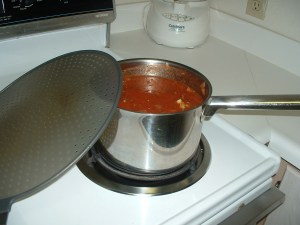
simmering red sauce with splash shield

A beloved friend gave me a Valentine’s present of heart-shaped pasta; immediately I created this red sauce so I could enjoy my new treasure, resulting in this excellent covering for either pasta or spaghetti squash.

Follow these easy instructions for substituting the squash, if your dietary needs call for a vegetable rather than a starch with this piquant accompaniment.

Gifts promote well-being in both the giver and receiver.  My mother’s favorite language of love was that of gift giving; thus, I learned at an early age the power of contributions from the heart.  As a result I love to shower favor upon others, as well as graciously receive their inspired kindnesses.

This same act of generous sacrifice plays a lively part in my relationship with my Father in heaven, for I constantly seek to offer myself to him.  In doing so, it is important to slow down, move forward cautiously, relax, and especially, trust the process.  In this way, we proffer our lives to our Maker moment by moment.  However this process often brings tension, for resistance arises.

We see an explicit example of this opposition in our practice of eating: here polarity is experienced between a desire to quietly absorb pleasure and a friction arising out of our need to resolve storms present in our beings.

Taut emotions can result as we struggle to calm overactive minds, so we can enjoy our food; this dichotomy in our bodies can be countered with prayer.  Great grace is needed, however, if heightened feelings cause us even to miss the opening blessing over our nutriments.

When the above happens to me while eating, I immediately search my heart for honest moves of gratitude, which usually include my two favorite gifts from God: I have vibrant health, with my acquired ability to eat sanely, and an immense supply of resources, including the highest quality of food.

These two endowments were not always present with me, for I knew excessive physical and financial poverty in the past.  At one point I had a 226 pound body, that couldn’t stop eating compulsively; now it is clothed better than Solomon in size petite.

All devouring of my economic supply has likewise ended.  An apt example of this is the recent demolition of my computer, at which juncture I stood, looked out my window at the river below, and spoke the word: all things come together for good for those that love God and are called according to his purpose.  Joyful faith rose in me, I was convinced that increase was on its way.

Indeed it was!  For after waiting patiently six weeks, I now publish my blog with the fastest of computers, an I-7 laptop equipped with a new wireless keyboard, mouse, printer, and monitor setup.

In addition to the outstanding quality of these, I have a fiber optic internet connection-instead of DSL-with 90 times more power and a monthly fee that is slightly less!

This unheard of upgrade-a sign of the Father’s immense love-was further outdone by the monetary provision for this loss.  First, great deals gave me $700 worth of equipment for $280.  Next, three separate parties were moved to help me with this.  This was outdone even further, however, with this full amount being exceeded by half again as much, or $140 was left over in gift monies!

This is just one simple example of how my needs are always met today.  God, who owns the cattle on a 1000 hills, indeed showers us with blessings, if we but believe.

He loves each and every one of us!  Right now, his heart is reaching out, to set us free from all wounds that hinder his glory from manifesting in our lives.  He is only about goodness, as my testimony proves.  Let’s receive his blessings; begin by enjoying this red sauce recipe.

sweating onions

Simple Red Sauce for Pasta or Spaghetti Squash  Yields: 2 qt.  Total prep time: 1 hour/  active prep time: 30 minutes/  cooking time: 30 minutes.   (Spaghetti squash requires approximately 1 1/2 hr to bake.)

4 tbsp oil  (Coconut oil is best for flavor and quality here; avocado oil will also do; olive oil is carcinogenic, when heated to high temperatures.)

1 med/lg yellow onion, chopped

1 lb ground beef

1 lb romanesco or 3/4 lb mushrooms  (I like to use romanesco for variety’s sake; it is a green variant of cauliflower, which is available in the organic section at better supermarkets; may also use a combination of both.)

3 tbsp butter, if using mushrooms

2-15-oz cans of tomato sauce  (Hunt’s and Simple Truth-at our local Fred Meyer’s-make inexpensive organic tomato sauces.)

1-15-oz can of water

2 tsp dried oregano  (Trader Joe’s carries a superb, organic dried oregano for $1.99!)

1 tbsp dried basil  (Also available inexpensively at Trader’s.)

1 tsp sugar  (I prefer organic; available at Trader’s and also in a more economical 10 lb bag at Costco.)

2 1/2 tsp salt, more to taste  (Real Salt is important for optimum health, available in nutrition section at local supermarket.)

1/2 tsp fresh ground pepper, more to taste

5 extra-large garlic cloves, minced  (3 cubes of Trader’s frozen garlic is better here.)

1/4 c tomato paste  (Open a 6-oz can and freeze individual 1/4 cup servings in small plastic bags, to be thawed as needed.)

Pasta or 4.5 lbs spaghetti squash  (This spaghetti squash yields 4-6 servings.)

Parmesan cheese, grated or shaved

  1. If using spaghetti squash, preheat oven to 375 degrees; pierce squash with a fork multiple times; place on side on foil-covered cookie sheet, and bake for approximately 1 1/2 hour, turning halfway through, at 3/4 hour.  Cool for at least 10 minutes before handling, cut lengthwise, take out seeds, and scrape out “noodles” with a fork, when ready to serve.
  2. Heat 2 tbsp oil in a 3-quart saucepan over medium heat; add a small piece of onion; when it sizzles, add rest of onions and sweat (cook until translucent); see photo.
  3. Fry beef in sauté pan; salt and pepper generously before cooking; drain fat if there is a great deal of excess, when finished.  Proceed to next step, while meat is cooking.
  4. If using romanesco, clean and cut into very small pieces, add to translucent onions, and cook until somewhat soft, about 4-5 minutes, stirring frequently.
  5. Add the cooked beef to onion mixture, along with tomato sauce, water, herbs, sugar, 1/2 tsp salt, pepper, and garlic.  Blend well.  Set aside sauté pan.
  6. Cover saucepan with a splash shield, which is available at Bed, Bath, and Beyond (see top photo); bring to a boil over medium heat; reduce heat to med/low and simmer for 30 minutes.  Go to next step.
  7. If you are using mushrooms instead of the romanesco, clean them by brushing off dirt with a mushroom brush, cut into small chunks.  Heat butter in the sauté pan, cook mushrooms in hot butter for several minutes, until slightly limp, stirring constantly.  Add mushrooms and juices to sauce.
  8. Meanwhile if serving with pasta, boil a large pot of water, to which 2 tbsp oil and 2 tsp salt are added.
  9. When sauce has simmered for 30 minutes, blend in tomato paste; cook for several minutes, or until thickened, stirring constantly.
  10. Adjust seasonings to taste.
  11. Boil pasta 10 minutes before serving, or if using spaghetti squash, split baked squash in half lengthwise, take out seeds, and scoop out noodle-like membrane with a fork.
  12. Pour hot sauce over noodles and top with Parmesan cheese.  Serve immediately.
  13. Note: may freeze small individual containers of leftover sauce, to be conveniently thawed for future use.  This is dynamite!
Parmesan Dover Sole

pan of baked Dover sole

Joy found in my gift of hospitality and fine food exploded when I was celebrating a belated Christmas get-together with Carol, a friend of 31 years.  Our time in each other’s company is always rich; my desire for our merrymaking was that my food would give honor, blessing our long-term bond.  This delicious dish answered this ambition beyond my expectations.  I share it here for your use with those close to you.

Friendship and food are both treasured gifts.  When we mix the two together, life pours forth.  I always endeavor to meet my guests’ particular needs, thus making each dinner engagement unique and exceptional.

For instance Carol doesn’t like hors d’ouvres, as they were never served in her family of origin; for her they take away from an acute appetite for the main meal.  Consequently, we just partake in tea and conversation for the first half hour of our gathering.

This sensible person has a heightened awareness of taste.  She knows good food and eats with purpose, maximally enjoying each bite.  This takes concentration; my friend allows herself this luxury; thus, we spend much of our repast in silence, focusing on gastronomic pleasures.

This discipline was first displayed to me when I was 20 years old, while waiting on table in my father’s restaurant.  (Joy unspeakable happened to me then, as I served the public with our exceptional ailments.)

My About Page on this website notes that which is true for each of us: it details the unfolding of my destiny, which has been happening throughout my entire life-I was born a food historian.  An excellent example of this destiny-making process is what I learned about the gift of hospitality, while serving the public in my youth; during that instructive time, a young couple showed me what a treasure stillness brings to eating.

Tourists peopled my family’s eatery in Glacier National Park and this unique pair was probably there on their honeymoon.  I initially approached their table with rousing emotion, my usual display of a genuine heartfelt welcome.  My spirit, however, was quickly corrected.  This excitable enthusiasm, which was normally highly pleasing to those on holiday, was not appropriate in their presence, for there was a holy reverence about them.  My sensitive response was an immediate change of demeanor.

Throughout their lengthy feast, I watched them with awe, as they indulged in each other’s company and our kitchen’s delights, in their unparalleled way.  I intuitively knew how to respect them with a quiet spirit.  This, however, was so foreign to me that I felt like I was walking on egg shells.  But oh the glory of it all!

Since then, God has given me a friend with whom I can practice what these two taught me, forty odd years ago.  Carol and I uphold veracity in all of life’s dealings; thus, even our eating is veracious.  Because of the honesty in our souls, we engage in veneration to God as we consume food; therefore, you can see my need for a dish that would rise to our integrity, which I knew would be present at this gathering.

My heart’s desire was met in this Parmesan Dover Sole recipe; how facile and pleasing it is beyond words.

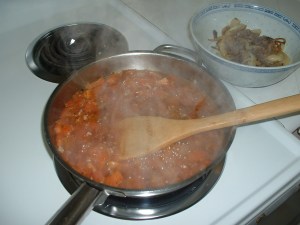
sauce cooking

Parmesan Dover Sole   Total prep time: 1 1/3 hr/  active prep time: 50 min/  baking time: 30 min.  Yields: 3-4 servings.  Note: you may double this recipe, leftovers are great, however fish only keeps for 3 days.

1/2 tsp oil  (Coconut oil is best here for flavor and quality; you may also use avocado oil; olive oil is carcinogenic, when heated to high temperatures.)

1 med yellow onion, halved at the root and cut in even 1/8 inch slices

5 med cloves garlic, minced  (May substitute 2 cubes frozen garlic from Trader Joe’s for easy prep.)

1 lb Roma tomatoes, chopped small  (Organic is best; the organic Roma variety is not that much more expensive than regular tomatoes.)

1/2 tsp sugar, optional  (This brings out the flavor in the tomatoes.)

1/2 tsp salt, or to taste  (Himalayan, pink, or Real Salt is critical for optimum health; a fine grind Himalayan salt is available at Costco for $4.95/5 lb.)

1/4 tsp fresh ground pepper, or to taste

1/2 tsp Better Than Bouillon  (This soup base, in either chicken or vegetable flavor, will do; available at most grocery stores.)

3/4 c boiling water

Spray oil  (Pam coconut spray oil is ideal, available more reasonably in our local Winco brand.)

1 lb Dover sole fillets, or other type of whitefish, such as flounder  (Dover sole is a type of sole that has very thin fillets, which is ideal for absorbing sauces; see Thai Coconut/Lime Flounder, 2016/12/05.)

1 c Parmesan cheese, grated or shaved

Rice, steamed according to directions on package

  1. Preheat oven to 350 degrees.  (If you prepare dish ahead of time, do steps 2 through 9 before hand; then, begin preheating oven 1 hour before serving.)
  2. beginning stages of caramelization

    Heat oil in a large sauté pan over med/low heat; add onions and caramelize, by stirring every several minutes until color starts to form (see photo); then, stir every minute until dark brown (see photo below). Do not crowd onions in pan, or they will sweat, taking much longer to cook.

  3. If using fresh garlic, chop and set aside.  Spray tomatoes with an inexpensive, effective vegetable spray, a mixture of 97% distilled white vinegar and 3% hydrogen peroxide; let sit for 3 minutes; rinse well.
  4. Meantime dissolve Better Than Bouillon in the hot water, set aside.
  5. Chop tomatoes in small pieces and place in another frying pan; add garlic, bouillon mixture, sugar, salt, and pepper, stirring well.  Bring to a boil over medium heat; then, turn heat down to med/low; simmer gently for about 20 minutes, or until a sauce is formed, with the tomatoes somewhat chunky (see above photo).  Adjust seasoning when sauce is complete. (For tips about cooking properly with garlic, see Tomato/Feta Chicken, 2016/07/25.)
  6. onions nearing finish

    Begin steaming the rice while tomatoes are cooking.  (If you are preparing this ahead of time, start this starch when you put cold fish dish in preheated oven, 50 minutes before serving.)

  7. For a single recipe, spray with oil a 9 1/2″ x 7 1/2″ x 3″ pan or 2 1/2-quart baking dish (for a double recipe, use a 9 1/2″ x 13″ x 2″ pan).  Place fish fillets in bottom of pan.
  8. Pour prepared sauce over raw fish and sprinkle with Parmesan cheese, see top photo.  (If preparing this ahead, refrigerate fish dish at this point.)
  9. Bake in preheated 350 degree oven for 30 to 50 minutes-time varies if fish is cold from the refrigerator.  Fish is done when its center is opaque and it flakes with a fork.
  10. Enjoy this incredibly good dish!  Leftovers are also delicious.

Gingered Bok Choy with Ground Turkey

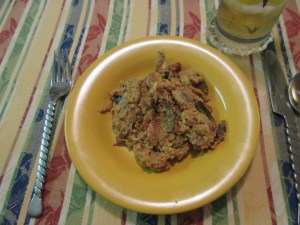
gingered bok choy with ground turkey

gingered bok choy with ground turkey

Today’s recipe, with its Chinese flair, is easy to follow, though it takes some patient chopping of vegetables. (The process of this preparation flows, especially after the first time you make it.)  My dish is low in carbohydrates, vitamin-proficient, and has an inexpensive, high-quality protein. Abundant health and pleasure result!

The inspiration for it grew in me.  Recently I was influenced by Chef Susanna Foo. She Americanized her Chinese cuisine by substituting our everyday ingredients, for their Oriental counterparts, which were challenging to get in the 1990’s.  Foo discovered that these simple adjustments actually enhanced her cooking; thus I chose apple cider instead of rice vinegar and, for heat, jalapeno instead of Szechuan peppers.  1

My palette was also crying for orange juice in the mix.  I added to these surprises typical Chinese ingredients: ginger, garlic, soy sauce, sesame oil, coriander, and bok choy, which is a Chinese cabbage from Brassica rapa-the same species that gave us the turnip.  Note: the spice coriander is common to Chinese, Indian and Mexican cooking; its fresh leaves are known as cilantro-see Munazalla, 2018/03/12.  The glorious blending of these foods thrilled me!

My whole family acquired the cooking gene, a rich inheritance received from our parents. However the grander bequest was that of their love: Mom and Dad cherished one another in a steadfast, unspeakable way.  This security has always belonged to our entire family.  It has never weakened, no matter what, for even death has not separated my parents.

My father went to heaven on November 16, 2006, but I contend that my mother enjoys his presence even more now.  At 93, she sits in Buzzy-baby’s chair and eats ice cream with him.  She joyfully informs me, when I call, that he is letting her finish his share too, as he always did while he was alive.

My parents each possessed individual attributes that allowed for their earnest commitment: my father had a beautiful heart and my mother unshakable faith. Over the years, I have declared that my greatest heritage of all comprises of these two qualities.  These endowments, along with the cooking gene, set the stage for all I get to do in this world.  They have formed me, for I am a food historian in love with my God.

This legacy of devotion and faith is more precious than gold.  My inherited strong heart, powerful faith, and ability to cook, all three, propel me into this marvelous, God-given destiny.  Give me pots, pans, and ingredients and heaven-sent food results.  My meals excite all your senses.

Now I encourage you: look to your life; discover your unique inheritance (your intrinsic gifts); go forward with them.  Indeed your birthright was ordained before time began.  In the meantime try my recipe!

  1. Andrew Dornenburg and Karen Page, Culinary Artistry (Hoboken, N.J.: John Wiley & Sons, Inc., 1996), p. 211.
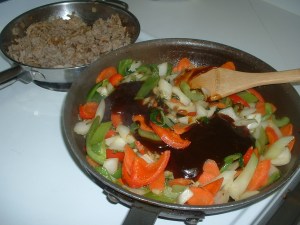
assembly of gingered bok choy

assembly of gingered bok choy with sauce

Gingered Bok Choy with Ground Turkey  Yields: 5-6 servings.  Total active prep time: 1 1/4 hour.

7 tsp oil  (Coconut or avocado oil is best for sauteing; olive oil produces carcinogens at high temperatures.)

1 med/lg yellow onion, halved at the root and cut in even 1/8″ slices

2 carrots  (Organic carrots are very inexpensive; find them in 1 lb packages at Trader Joe’s.)

2 stalks of celery

l lg red bell pepper  (It is important to use organic bell peppers, as this vegetable really absorbs pesticides.)

1 lb bok choy  (Organic bok choy comes in smaller heads; weigh before purchasing.)

1 lb ground turkey  (Natural is important; Foster Farms is reasonably priced and good.)

4 tbsp fresh ginger, peeled and chopped fine

1 lg jalapeno pepper, minced small  (May use more for a hotter dish.)

5 large cloves fresh garlic, or 3 cubes frozen garlic  (Frozen garlic is available at Trader Joe’s, it provides ease in cooking, especially excellent for this recipe.)

1/3  c organic tamari  (May substitute soy sauce, but not as healthy or flavorful; tamari is available in the health section at Fred Meyer’s, or at other national chains such as Whole Foods.)

1/3 c apple cider vinegar  (Raw is the best; inexpensive at Trader’s.)

1/3 c orange juice  (May squeeze your own, or use orange juice that is not from concentrate, such as Florida’s Natural or Tropicana’s.)

1/4 c water

1 tbsp sesame oil  (This is found at a good price at Trader’s.)

1/2 tsp ground coriander

1/4 cup corn starch, dissolved in 1/4 cup cold water

Steamed rice  (I personally prefer brown basmati.)

  1. Heat 1/2 tsp of oil in an large saute pan over medium heat.  Add a small piece of onion; when it sizzles, oil is ready.  Add remaining onions and caramelize, by stirring every several minutes, until color starts to form; then, stir every minutes, until dark brown.
  2. Meanwhile cook turkey in a extra large frying pan.  Place in a bowl.
  3. Clean all vegetables, except ginger, with an inexpensive effective spray (a mixture of  97% distilled white vinegar and 3% hydrogen peroxide); let sit for 3 minutes and rinse extra well.  Set aside.  While waiting for vegetables, start cooking rice.
  4. Peel and mince ginger in very small pieces, set aside.
  5. Chop garlic fine, if using fresh, set aside.  (Frozen garlic from Trader’s works better with this recipe.)
  6. When onions are caramelized, add cooked meat to them, and turn off heat.  Note: you will reuse this extra-large pan for cooking the vegetables.
  7. Dissolve corn starch in 1/4 cup cold water, set aside.  Next slowly heat garlic, tamari, vinegar, orange juice, water, sesame oil, and coriander in a small saucepan over med/low heat.  It will take about 15 minutes for light bubbles to rise in liquid.  Meanwhile go to next step.
  8. Prepare carrots by scraping with a knife and thinly slicing at a diagonal. (Scraping, rather than peeling, preserves vitamins just under the skin.)  Cut celery in 3/4″-wide diagonal pieces.  Place carrots and celery in a bowl, set aside.
  9. Chop pepper in 3/4″ x 2 1/2″-wide strips.  Place in another bowl with bok choy, which is chopped in strips the same size as the pepper, including greens.  Set all aside.
  10. Heat remaining 1 1/2 tbsp oil in the extra-large pan.  Place a small piece of carrot in oil, wait for it to sizzle.  Also turn heat on to med/low under pan of meat/onions.
  11. Add carrots, celery, and ginger to hot oil.  Stir well to coat vegetables with oil.  Cook 3 min, stirring occasionally.  Add bok choy and pepper strips, mix well with carrots.  Cook for about 7 minutes, or until vegetables are done, but still crisp.  Be sure to stir frequently.
  12. The liquid sauce should be forming light bubbles by now; add the cornstarch, which is thoroughly dissolved in water; beat constantly with a wire whisk.  It thickens quickly.  Remove from heat when thick and clear. (This takes only about 15 seconds.)  Set aside
  13. Mix together: hot meat, finished vegetables, and sauce.  Serve immediately with steamed rice.  This pleases the palate!

Thai Coconut/Lime Flounder

Salad with leftover Thai flounder

salad with leftover chilled Thai flounder

This delicious white fish dish resulted from a long-awaited-for marriage, which took place in my church in October.  A feast at my bountiful table was part of my wedding present to our venerated couple.

Our bride Dina was particularly interested in learning how to cook, with ease, for her new groom.  My bright idea was to begin my dinner gift in the kitchen with teaching her how to make the meal.  I prepared all the steps, just like you might see on a cooking show: the ingredients were set out in small individual dishes, along with the corresponding pans and utensils. All was in place for the lesson to flow naturally.

My priceless inheritance from my parents was a gene that “knows” food. Therefore I intuitively conceived this delicious dish, which was specifically geared for her husband’s dietary needs.  An exquisite, ultra simple recipe resulted.

Surprise and hesitancy occurred upon my friends’ arrival, as I informed Dina that she was going to make dinner, under my close direction.  She, being true to form, rolled up her sleeves with courage.  Her nervousness soon dissipated, for the facility of my simple instructions comforted her.  Joy unspeakable resulted: a chef was born! I have observed, as an aside, that this woman approaches all of life’s challenges with this same spirit.

Are you timid about stepping into the unknown, either in or out of the kitchen? May you receive encouragement to advance in faith; start by trying my recipes. They look lengthy at times, but are effortless!  The cause for this seeming protractedness is my inclusion of practical details, which make food preparation easy and enjoyable.  You’ll sense that you are in  cooking school, when you use my receipts, as I teach at every point.  Rest assured-I will educate you for the joy of cooking.

My favorite way to serve this smooth flounder, with its slight bite, is over a good pasta (however I used rice for my newly weds); either will bless the taste buds. Also, cold leftovers of this fish top off a salad superbly.

This feast pleased Dina and Dale; and me as well!

Thai coconut lime flounder dinner

Thai coconut/lime flounder dinner

Thai Coconut/Lime Flounder  Yields: 4 servings.  Total prep time: 40 minutes.

Note: flounders closely relate to soles; thus, you may substitute any sole here (also see Parmesan Dover Sole, 2017/03/27).

1 tsp coconut oil  (Other oils will do, but coconut is best for flavor and quality here.)

1 med yellow onion, halved at the core, and cut in even 1/8 inch slices

1 lime, juiced

7 oz Extra Thick Coconut Cream, or half of a 14 oz can  (This is available at Trader Joe’s.)

3/4 tsp dried, crushed red pepper  (Save spice jars and refill yearly with fresh, inexpensive “bulk’ spices.)

1/4 tsp salt

4 fillets of flounder, approximately 1 pound  (Wild-caught is best; may substitute a pound of sole, which is a close relative to flounder.)

Steamed rice or pasta, regular or gluten-free

  1. beginning stages of caramelization

    Start cooking rice, according to directions on package.  If using pasta, begin boiling water in a big pot; to which you add 2 tsp salt and 2 tbsp oil-any kind of oil will do.

  2. Place 4 individual dinner plates in oven; set the temperature on warm.
  3. Heat oil in a large sauté pan over med/low heat; stir in onions well; caramelize, by stirring every several minutes until they start to turn color (see photo); then, stir every minute until dark brown (see photo below); watch carefully while going to next steps.  (Do not crowd pan with onions, or they will sweat, taking much longer to cook.)
  4. Meanwhile roll lime on counter; press down hard with your hand, until the meat of the fruit is broken down and softened; juice lime; set aside.
  5. Place whole can of coconut oil in a small storage container; be sure first to gently stir milk and cream together thoroughly in can (this prevents a mess when emptying the can).
  6. Add half of the coconut cream (7 oz), lime, red pepper, and salt to caramelized onions.  Stir well and slowly bring to a soft boil over medium heat.  If preparing for guests, you may choose at this point, to set aside coconut/onion mixture and heat it 15 minutes before serving.  If you are waiting, be sure to have the plates warm, rice cooked, or water boiling when you start to cook the flounder.  (Note: you can freeze leftover coconut cream, or use within a week.)
  7. caramelized onions approaching finish

    Start cooking pasta in boiling water about 10 minutes before dinner time. Boil until it is al dente, about 7 minutes, do not over cook. Drain and place on heated dinner plates when done.

  8. Meanwhile add two fillets of flounder (more if using smaller sole) to hot coconut cream/onion mixture, which has been heated over medium temperature.  Poach briefly on each side, only until color in center is opaque.  Do not overcook.  Remove to heated dinner plates, on which you have placed pasta or rice.  Repeat this step with the remaining fillets.  Cover with sauce.
  9. Serve it forth!

Medieval White-Dish

White-dish

white-dish

Here is a bird’s eye view of a 14th century nobleman’s kitchen, as was common during the reign of King Richard II, as well as the foods in which they partook.

Their kitchen consisted of a large, separate structure with many fireplaces built along the walls, each with its own cooking area. At least one fireplace was large enough to roast a whole ox.  A raised, open hearth was situated in the center of the kitchen.

Bake metes (baked foods) were concocted in an oven, prepared first with a blazing fire, getting its brick walls red hot.  Cooks placed the pies, custards, and pastries in the hot oven, after they swept out the ashes.  These items baked, behind a closed door, until the oven was cool.

Bakers, however, made breads in separate buildings in larger kitchens, such as that of King Richard II.  The stoves in these bake houses were often 14 feet wide.

Our king was extravagant; he daily entertained over a thousand guests.  There is record of a very large shopping list for a banquet he gave on September 23, 1387. His overseer included 14 salted oxen, 2 fresh oxen, 120 sheep, 140 pigs, 120 gallons of milk, and 11,000 eggs, among taxing quantities of other items.

These feasts were held in the castle’s great hall.  Here the king and special guests sat on a raised platform, or high borde.  The lesser guests assembled at tables that paralleled the side walls.  The backless benches, on which they sat, were called banquettes; thus we got the name banquet for such affairs.

Cooks in many of these kitchens prepared white-dish, or blank-mang.  It was a popular dish in England, as well as on the Continent, during the Middle Ages. Chaucer’s chef made this receipt.  Our poet wrote in his “Prologue” to the Canterbury Tales (c.1386):  “For blancmange, that made he with the best.”

I am indebted to Lorna Sass for her documentation of this information in To the King’s Taste (New York: The Metropolitan Museum of Art, 1975).  Below is my version for her delicious, historical recipe.  Its preparation is easy with my introduction of 21st century appliances  Can’t encourage you enough to try this.  It’s a palate pleaser!

Next week I will be making the connection between these medieval foods and our “renaissance” happening right here in Tualatin, Oregon.

White-Dish is adapted from a recipe in Lorna Sass’ To the King’s Taste (New York: The Metropolitan Museum of Art, 1975).  Yields: 4-6 servings.

2 large chicken breasts

2 1/2 cups water

1 1/4 tsp salt  (Real Salt is best, available in health section of local supermarket.)

1/2 cup raw whole almonds

1 cup brown rice  (I like basmati rice, available at Trader Joe’s.)

3 tbsp butter

4 tsp brown sugar, packed down  (Sucanat  evaporated cane juice, may be substituted; this is close to what they used in the Middle Ages.)

3 tbsp anise seed

1/4 cup sliced almonds

  1. In a tightly covered medium-size saucepan, over medium heat, boil chicken in water, to which 1/4 tsp salt is added.   Boil for about 10-15 minutes.  Be careful to not overcook.  Check meat by cutting with a sharp knife; center should be slightly pink.  (Meat will be cooked more later on.) Remove chicken from broth; set aside both broth and meat.
  2. To make the almond milk, grind 1/2 cup whole raw almonds in a 11-cup, or larger, food processor. Pulse repeatedly until almonds are a fine powder.  (A blender or Vitamix will also work; add 2 tbsp of ice water to nuts, before grinding, if using either of these.)
  3. With food processor running, slowly add two cups of broth through the feeder tube on top of the processor.  (You may have to add water to make 2 cups of liquid; if perhaps you have extra broth, be sure to save this.)  Let sit for 10 minutes.  This makes almond milk.
  4. Put almond milk in the saucepan.  Add remaining 1 tsp salt, 1 tbsp butter, and sugar.  Bring to a boil over medium heat.  Add rice, cover,  and reduce heat to medium low.  Simmer gently for about 40 minutes, or until rice is soft.  Watch carefully so rice doesn’t cook dry; gently check bottom of pan with a fork, being careful to not stir rice.  Add more broth, or water, as needed.
  5. Meanwhile dice chicken into 1-inch cubes.  Set aside.
  6. In a small sauté pan, cook almond slices in remaining 2 tbsp of hot butter.  Watch carefully, sautéing only until light brown.  Salt them lightly and set aside.
  7. Crush anise seed using a mortar and pestle.  May also grind in a DRY food processor by pulsing lightly.  Set aside.
  8. Add chicken when rice is soft; stir, and cook about 5 more minutes, or until meat is hot.  Watch moisture in bottom of pan, so rice doesn’t burn, add water or broth as needed.
  9. Serve garnished with buttered almond slices and crushed anise seed.  SO GOOD!

1950’s Sweet and Sour Meatloaf

When we were young, my siblings and I chose the meals for our birthdays and holidays; we always picked sweet and sour meatloaf.  How we loved it!  There was never a Christmas Eve that our home didn’t boast of its tantalizing smells, for they arose from the roasting of beef, with its contrast of vinegar and brown sugar, mustard and tomato sauce.  The aroma was remarkable.

My memory of festivities back then was that of heightened anxiety, with my troubled soul.  Celebrations  made me deeply aware of the void in my being, as I suffered greatly from lifelong mental illness.  But no more.  The powerful word of God has completely healed me; it removed all wreckage from my mind and body, just as it promises to do.

I asked Jesus into my life on December 16, 1994, but my healing didn’t begin to materialize with clarity until Mother’s Day of 2013; this marked the start of my attendance at Abundant Life Family Church (alfc.net), where the word is taught in all its pure simplicity.

I am indeed set free!  Now I thoroughly enjoy gala affairs; moreover everyday is a glorious party.  May you realize that heaven is here on earth.

My family still holds fast to our traditional repast of sweet and sour meatloaf.  It is ever-present at celebrations, and blesses us on my every trip home.  Always I envision this mouth-watering dish when I think of family and food, for it’s an inseparable part of our clan.  It is extremely easy to prepare; I guarantee you will be wowed by it.

1950's sweet and sour meatloaf

1950’s sweet and sour meatloaf

Sweet and Sour Meatloaf Yields: 4 servings.  Total prep time: 2 hr/ active prep time: 20 min/ cooking time: nearly 2 hr.  Note: You may double this for superb sandwiches from leftovers.

4 med russet or baker potatoes, cleaned and wrapped in tin foil

1 lg egg, beaten

1/2 c fresh bread crumbs

1 med yellow onion, chopped

1 1/3 c tomato sauce

3/4 tsp salt and 1/4 tsp pepper  (Himalayan, pink, or Real Salt is critical for optimum health; an inexpensive fine grind Himalayan salt is available at Costco.)

1 lb ground beef  (Beef fat MUST be 15% /85%; natural or organic ground beef is best; available frequently at a very good price at our local Grocery Outlet.)

2 tbsp brown sugar, packed down  (Organic is best, available at Trader Joe’s.)

2 tbsp apple cider vinegar  (Raw has health benefits; most economical at Trader’s.)

2 tbsp yellow mustard  (Only use yellow mustard, such as Frenchies)

1 c water

  1. Preheat oven to 350 degrees 2 hours before serving.
  2. Place potatoes in oven; bake for nearly 2 hours, for medium-size potatoes.
  3. In a large bowl, mix egg, bread crumbs, onion, 1/3 c tomato sauce, salt, and pepper; then, thoroughly blend the hamburger into the sauce (it works best to use your hand to do this.)
  4. Form a loaf in a 9 1/2 x 7 1/2 x 3 inch Pyrex pan, or other deep baking dish.  Use a 13 x 9 1/2 inch pan if doubling.  Make a deep indentation in the center of the loaf, so it looks like a boat (this will hold the sauce in the center of meatloaf); therefore, basting isn’t necessary.  Place meat in oven.
  5. Using the same bowl, mix all the remaining ingredients: 1 c tomato sauce, brown sugar, vinegar, mustard, and water.
  6. Remove loaf from oven, pour the sauce over the meat, and bake for 1 1/2 hours.
  7. Serve with unwrapped, split baked potatoes, on which lots of sauce is poured.  SO GOOD!

Lemon/Spinach Chicken or Ahi Tuna

Lemon spinach chicken

lemon/spinach chicken

Back to cooking with greens with another delightful dish!  This simple spinach recipe utilizes the bounty of my friend’s fall garden.  She replants her leafy vegetables mid-August for a late harvest, with which I am blessed. However one 10-12 oz bag of fresh spinach will do, if you are buying it.

This recipe is high in protein and iron. It has vitamin C as well, which increases the absorption of dietary iron according to the Mayo Clinic.  They recommend using any of the following for this purpose: broccoli, grapefruit, kiwi, leafy greens, melons, oranges, peppers, strawberries, tangerines, or tomatoes.  Lemon juice and tomatoes were my inspiration here.

It is important to use coconut or avocado oil, as olive oil produces carcinogens, when heated to high temperatures.

I always use Real Salt or Himalayan salt, which have all the necessary minerals. Other salts (including white sea salt) don’t have these essential nutrients.  High quality salt, which is pink in color, and electrolytes are both necessary for good health.  You will notice a stabilization of your emotions, when these are balanced in your system.  Arbonne sells excellent electrolyte powder at a reasonable price, especially when you consider the cost of coconut or vitamin waters and Gatorade.  The caliber of Arbonne’s electrolytes far exceeds that of these drinks!

The first time I served my lemon/spinach creation was for a couple from my church.  His mother had just passed and we were celebrating her life with utter joy!  There were jocund accounts of her life’s victories, as well pictures of her holy marriage in the 1940’s.  The Spirit of God moved during our festive fellowship.

I used ahi tuna steaks that night in this recipe, instead of the chicken tenderloins. Either version is powerfully good.  Note: be extra careful not to overcook the meat or fish.

Enjoy perfect simplicity here!

Lemon Spinach Chicken   Yields: 4 servings.  (Note: may substitute ahi tuna steaks.)

3 tbsp of oil  (Coconut or avocado oil is best.)

1 large yellow onion, halved and thinly sliced

2 medium lemons, squeezed

12-16 chicken tenderloins, thawed  (Natural ones are available at Trader’s inexpensively, or you may substitute 4-6 ounce ahi tuna steaks.)

Salt and pepper to taste  (Real Salt is best, available in the health section at local supermarkets)

2 medium/large tomatoes, chopped

4 cloves of garlic, chopped  (For a change, I used elephant garlic which is milder; if using this, double the amount.)

10-12 ounces of fresh spinach

Steamed brown rice  (Basmati rice from Trader’s is my favorite.)

  1. Heat 1 ½ tbsp oil in a large frying pan over medium heat.  Add small piece of onion; when it sizzles, add the remaining onion.  Carmelize onion (cook until dark brown).  Set aside in a large bowl.
  2. Meanwhile roll lemons on counter, pushing down hard with your hand, to loosen the juices inside.  Squeeze lemons. Set aside.
  3. Melt remaining oil in frying pan over medium heat.  Pat thawed tenderloins or tuna, somewhat dry, by using paper towels.  (A little moisture will help the adhesion of seasonings.)  Be sure to salt and pepper raw meat/fish generously.  Cook chicken tenderloins or tuna, in hot oil, in batches if necessary.  Cut tenderloins into bite-size pieces with spatula.  Cook only until very pink inside.  DO NOT OVERCOOK!  (The inner meat of the tuna or chicken should be almost red, as it will cook more later.)  Place pieces in the bowl with onions as each is done.  Watch very carefully, as not to overcook.  Leave fond (pan drippings) in pan.
  4. Add tomatoes and garlic to hot frying pan and cook over medium heat for 10 minutes, or until soft and chunky.  Deglaze the pan (scrape fond off bottom with a heat-resistant spatula or wooden spoon), while tomatoes are cooking.  Note: there is an abundance of flavor in fond.
  5. Add half the spinach to hot sauce; stir well, by distributing the tomatoes over greens.  Repeat step with rest of spinach; cook briefly, or just until leaves are slightly limp.
  6. Place meat or tuna, onions, and lemon juice in frying pan with spinach/tomatoes.  Stir well.  Cook mixture just until hot.  Do not overcook the meat/fish.
  7. Adjust seasonings.
  8. Serve with steamed brown rice.  So delicious!

A Simple “Frittata”

dinner with Dave

dinner with Dave

My pastors provide our congregation with fruits of their labors during the harvest season; this year’s bumper crop of tomatoes and zucchini inspired Pastor Dawn to create this frittata-like dish, which I have expanded on here. It boasts of these rich autumn vegetables. The receipt is so easy that it cries out for many encores.

The traditional frittata, or Italian omelette, has a two-stage cooking process.  You normally begin making this egg dish on the stove top and finish it in the oven. One may even purchase special pans for preparing this.  However my simplified version is made in a frying pan, solely on top of a burner.

The original frittata is a cross between an omelette and quiche, which is comprised mostly of eggs with some vegetables.

"frittata"

“frittata”

On the contrary, my “frittata” is mostly vegetables with several eggs scrambled in.  There is no guessing with these easy steps of preparation. The result is intense flavor, good protein, and creative cooking with fall produce.

My beloved cousin and his wife, whom I hadn’t seen since 1995, were here for dinner several weeks ago.  We indulged in this European creation and my honeyed-lime kale with turkey. (See Cooking with Kale, 2016/09/07.) The presence of God and this delicious food nourished our souls during our lavish repast.

You will relish this “frittata”-it is so good!  Enjoy.

A Simple “Frittata”  Yields: 4-6 servings.

1 tbsp oil  (Coconut or avocado oil is best.)

1 med yellow onion, halved at the core and thinly sliced

3 med/large tomatoes cut in eighths

2 med/small zucchinis, thinly sliced

½ tsp dried oregano  (A great, inexpensive, organic variety is available at Trader Joe’s.)

3/4 tsp dried basil

4 lg cloves of garlic, minced  (May use 2 cubes of frozen garlic from Trader’s.)

Salt and pepper to taste  (Real Salt is best, available in health section of local supermarket.)

4 lg white mushrooms, brushed, with mushroom brush, and sliced

3 oz good quality cheese, grated

3 lg eggs, beaten  (I like to use duck eggs, which are creamier and higher in protein.)

  1. Heat oil in a large frying pan over medium heat. Place a small piece of onion in hot oil. When it sizzles, add the rest of the onions.  Cook until golden brown; stir occasionally.
  2. Add chopped tomatoes, zucchini, herbs, garlic, salt, and pepper. Reduce heat to med/low. Cook vegetables about 40 minutes, or until liquid is gone and sauce is thick. Be sure to stir occasionally. Watch carefully toward the end of cooking, so vegetables don’t burn.  (May set aside at this point and reheat, to finish recipe, just before serving.  Watch carefully when reheating, so as not to burn the sauce.)
  3. Add mushrooms and cheese to hot sauce. Stir well.
  4. Add eggs to vegetables; stir gently several times, as they cook. Cook until eggs are done. Mixture will be soft.
  5. Adjust seasonings.
  6. This is delicious served hot, room temperature, or ice cold.  Leftovers are great!

Cooking with Kale Made Extra Easy

Chopping kale in food processor

chopping kale in food processor

Last week’s easy kale recipe may be simplified even further.

A dear one from my church shares my passion for excellence with food.  She recently rolled out the red carpet for a small group of us; a repast of splendor marked the celebration of what would have been the 49th anniversary of her marriage; she commemorated this occasion with her friends, as her husband went to heaven ten years now.  Her exquisite home and meal spoke volumes of exuberant love to my soul!  It foreshadowed the “marriage supper of the Lamb” for me.

This couple started the coffee movement.  Her husband trained a person who participated in creating one of the most popular, international, corporate franchises.  (Note: I will be doing a future post on this married team and the coffee development.)

My beloved fellow lover of foods has gifted me with new ailments; one such blessing was a bottle of Cherry Pomegranate Habanero Sauce from Robert Rothschild Farm; this inspired me to cook kale with a ready-made sauce.  Order this on-line or get it at Costco; any prepared sauce will work for the following recipe, of which a number are available at Trader Joe’s; thus, healthy fresh greens are made with the shortcut described below.

My other church friend, that provides the kale from her organic garden, shared her version for

Assembly of chopping attachment

assembly of chopping attachment

my receipt, which is makes this even easier.  She added a prepared spicy chicken, which she purchased from our upscale Whole Season’s Natural Foods; this eliminated the additional step of cooking the meat for this dish. The result was optimum health, heightened taste, and even greater culinary ease.

I use the food processor to chop all my leafy vegetables. (See how the assembled blade looks in the photo.)  Sometimes I have other greens on hand, such as beet tops, mustard greens, or spinach, which I mix in with my kale; this adds nutrition, when available. It only takes minutes to chop the prepared greens in this manner; I can’t encourage you enough to try these simple, healthy instructions.


Kale with Beef or Turkey and a Prepared Sauce  Yields: 4-6 servings.  Total prep time: 45 minutes.

8 1/2 teaspoons oil  (Coconut oil enhances flavor and quality here.)

1 medium yellow onion, halved at the core and cut in even 1/8 inch slices

1 lb ground turkey or beef  (Natural is best; Foster Farms natural ground turkey is inexpensive; a prepared meat from a deli is even quicker.)

Salt and pepper  (Himalayan, pink, or Real Salt is critical for optimum health; an inexpensive fine grind Himalayan salt is available at Costco.)

1-1 1/2 lb fresh kale  (Organic is best.)

4 carrots, thinly sliced, at a diagonal

8-12 oz jar of prepared sauce

Avocado, sliced

  1. beginning stages of carmelization

    Heat 1/2 teaspoon of oil in a saute pan over medium heat.  Test for readiness by placing small piece of onion in hot oil; the temperature is right when it sizzles. Reduce heat to med/low, add onions, and carmelize (cook until dark brown): stir once every several minutes until color starts to change (see photo); then, stir every minute until dark brown (see photo below). Watch carefully, as you go to next steps.

  2. Spray carrots and kale with produce spray (a mixture of 97% distilled white vinegar and 3% hydrogen peroxide is a safe, cheap, and effective cleaning solution).  Let vegetables sit three minutes; rinse three times in a sink full of water.
  3. Cook meat in 2 teaspoons of oil, in a large frying pan, over medium temperature; salt and pepper heavily before cooking; place in a bowl when done.  Set aside pan for future use.  (If using a prepared meat, omit this step.)
  4. Chop the wet kale in a food processor, by using the straight edge attachment (this is the large, round disk that fits onto the provided white “stem”-place this tall, assembled cutting disk in the food processor, where you normally put the smaller blade-see above photo).  Be sure to pick out large pieces of stem before setting aside chopped kale.  Note: you may chop this by hand, by first cutting out stems, then cutting kale into small pieces, using a sharp knife.
  5. finished carmelized onions

    Scrape cleaned carrots with knife (this preserves the vitamins just under the skin); slice carrots thinly, at a diagonal; set aside.

  6. Heat 1 tablespoon of oil over medium heat in pan the meat was cooked in; add carrots when a small piece sizzles in hot oil; cook covered for 2-3 minutes, or until tender, stirring occasionally.
  7. Place another tablespoon of oil in pan; add 1/2 the kale to carrots and distribute the oils, stirring well. (Be sure to check for big pieces of stem.) Repeat these steps with remaining kale; cook covered for 10 minutes, or until kale is limp; stir occasionally.
  8. When onion is caramelized, add meat and blend well.  Mix in  a generous amount of your favorite prepared sauce; flavor should be strong, as it will lighten, with the addition of vegetables.  Heat thoroughly.
  9. Add hot meat mixture into vegetables, when kale is cooked.
  10. Serve topped with fresh avocado slices.

Cooking with Kale

Honeyed Lime Kale with Ground Turkey

honeyed/lime kale with ground turkey

This series displays my relaxed creations with greens.  A close friend from my church blesses me with an abundance of fresh produce from her organic garden; I am wowed by its bountiful beauty.  She grows several species of kale; thus, I am always creating new recipes incorporating this health-giving vegetable.

Here I spell out detailed steps of preparation for cooking this green.  It’s easy to follow these directions.  Vibrant health results!

My recent series of posts on 19th century French foods defines Classic French Cuisine (see Chicken a la Oignon, 2016/07/04, Carrots au Beurre, 2016/07/11 and Meringues a la Ude, 2016/07/18).  These posts expound on that culinary period following the French Revolution in 1775.  The main cooking procedure in my kale series is sautéing, which originated during this culinary age.

Cooking methods changed at the end of the 18th century, as Esther B. Aresty described in The Delectable Past: fireplaces gave way to ranges with built-in ovens; French cooks quickly invented the sauté pan.  The word sauté means to jump-when the fat “jumps” in the pan it is ready for cooking. 1

Here I give instructions for employing this cooking method properly.  First heat the oil; then, add a small piece of food.  It is time to begin sautéing, when it sizzles or “jumps” in the pan.  This allows swift frying of food for optimum preservation of nutrients, as it inhibits the overcooking of vegetables and meats.

The following, easy recipe brings proficiency with cooking nutritious kale.  Next week I will share a shortcut, where this procedure is simplified even further, with prepared sauces and/or meats.

I pray this dish brings the same pleasure to you as it does me.  To our health!

  1. Esther B. Aresty, The Delectable Past (New York: Simon and Schuster, Inc., 1964), p. 126-127.
  2. https://en.wikipedia.org/wiki/Saut%C3%A9ing
Food processor assembled with wide-blade, chopping attachment

optional food processor assembled with straight-edged, chopping attachment

Honeyed/Lime Kale with Beef or Turkey  Yields: 4-6 servings.  Prep time: 1 1/4 hours.

2 tbsp oil  (Coconut oil is best here for quality and flavor; olive oil is carcinogenic, when heated to high temperatures.)

1 med yellow onion, halved at root, and cut in even 1/8 inch slices

1 lb ground turkey or beef  (Natural is best; Foster Farms’ natural ground turkey is inexpensive.)

Generous amounts of salt and pepper  (Himalayan, pink, or Real Salt is critical for optimum health; an inexpensive fine grind Himalayan salt is available at Costco.)

1-1  1/2 lbs of fresh kale  (Organic is best.)

4 carrots, thinly sliced at a diagonal  (Organic carrots are very inexpensive.)

Juice of 2 limes

2 tbsp honey

avocado, cut in thick slices

  1. beginning stages of caramelization

    Heat 1 teaspoon oil in a frying pan over medium heat, until a small piece of onion sizzles in pan; lower heat to med/low; add the rest of onions and caramelize-cook until dark brown.  Stir every two minutes, until color starts to form (see photo); then, stir every minute until dark brown.  Be sure to watch carefully, while going to next steps.

  2. Place 2 teaspoon oil in large saute pan, over medium temperature; test for readiness by putting a small piece of meat in hot oil; the temperature is right when it sizzles or “jumps”.  Add rest of turkey; salt and pepper heavily, before browning.  Set aside in a  bowl when cooked; save pan for cooking vegetables.
  3. Meantime spray carrots and kale with produce spray (a mixture of 97% distilled white vinegar and 3% hydrogen peroxide is a safe, cheap, and effective cleaning solution).  Let sit three minutes; rinse well in a sink full of water three times.
  4. May cut stems out of wet kale and chop into small bite-size pieces by hand-this is time-consuming.  Better yet prepare it with a food processor by using the straight-edged, chopping attachment.  (This is the large, round disk that fits onto the provided “stem”; place this tall, assembled cutting disk in the food processor where you normally put the smaller blade; see photo at top of recipe.)  If using a food processor, it is not necessary to cut stems out, but be sure to carefully pick out pieces of stems, after processing.  Set aside chopped kale.
  5. caramelized onions at mid-point

    Scrape cleaned carrots with a sharp knife (this preserves the vitamins just under the skin); slice carrots thinly at a diagonal; set aside.

  6. Heat lime juice and honey in a small saucepan, just until blended, set aside.
  7. Heat 1 tablespoon of oil over medium heat in the large saute pan; when a piece of carrot sizzles in hot oil, add carrots and cook for 2 minutes.
  8. Add 1/2 the kale, distributing the oils well and checking again for any pieces of stem left from processing.  Cover pan and cook kale down; repeat this step with remaining kale, when there is room.  Cook covered for 10 minutes, or until kale is totally limp, stirring occasionally.
  9. When onion is caramelized, mix this and meat into cooked kale; blend in the honeyed/lime juice; adjust seasonings.
  10. Enjoy topped with fresh avocado slices.