Pasta and Spinach, with Lemon Sauce

pasta and spinach, with lemon sauce

Sauces have been used to modify and accentuate food throughout history, transcending all cultures.  Here we will examine ancient Rome, for it offers-in the strictest sense of recipes-the earliest cook book De Re Coquinaria, which is perhaps erroneously believed to have been written by the gourmet Apicius in the first century A.D.  This discrepancy is made evident by Athenaeus, who compiled the anthology The Deipnosophists, circa 230 A.D.  This latter book is regarded as one of the leading sources of information about ancient times, and its author knew all about Apicius as a gourmet, but didn’t attribute a cook book to him.  Regardless of the exact authorship of De Coquinaria, it supplies the rich basis of a worthy record of early cooking techniques.

With it come glimpses into the eating habits of the well-to-do, including sumptuous recipes, such as those for feasts.  Note that contrary to established beliefs, the everyday Roman dining was simple: breakfast (jentaculum) was bread with a few olives or raisins; lunch (prandium) mostly consisted of leftovers, cold meat, or eggs; the daily main meal (cena) also reflected less extravagance-this latter was more elaborate only in households with an excess of slaves.

Even more than the fussy dishes concocted for guests, plain foods, like grain pastes, beans, and bread, required spices and strong sauces to transform them, with their disproportionate quantities of starch.  This same rule is illustrated by the most intense of the world’s repertoire of sauces, such as the soy mixtures of China, the chili pastes of Mexico, and the curries of India-derived from the South Indian name kari meaning sauce.  Here the common man basically developed sauces as seasonings for bulky carbohydrates, which both absorb and dilute them; on the other hand, the solid masses of fish and meat scarcely incorporate liquid at all.

In Food in History, Reay Tannahill states that all the qualities that give a cuisine its identity change in a society that can afford to eat meat and fish daily, with their staying sauces.  (Such peoples utilize extensive creativity in sauce-making, the primary element of good cooking.)  Thus, Tannahill suggests that the whole essence of cuisine may have thus changed in the rural society that was transfigured into Imperial Rome.

Showy receipts were prepared for company by that ancient culture. The full dinner party in Roman times was considered to be nine people, reclining on three couches, around a U shape table.  These guests leaned on their left elbow, while eating with the fingers of their right hand.  This was a messy activity; they washed themselves from top to toe before a meal, probably needing to do so after as well.  By necessity, the dipping sauces for their flesh foods required a sturdy substance for easy eating; such thickening was achieved by adding wheat starch or crumbled pastry.

The use of liquamen (or garum) was predominant in Roman cookery.  This clear, golden, fermented fish sauce was made commercially, by leaving out a mixture of fish and salt in the sun for two to three months (eighteen months for larger fish).  Its presence in most recipes not only added strong flavor, which the Romans loved, but in turn, masked milder rancidity, so prevalent in their foodstuffs.

Imperial Rome grew to be a quarter of the size of modern Paris, unlike the other great, small urban centers of Sumer, Egypt, and Greece, which were small by comparison; this made transport of perishable foods, which were stockpiled in warehouses, very slow.  With no refrigeration, food spoilage presented a large problem; thus, the powerful, fishy/salty flavored liquamen found its way into almost everything.

The recipes of antiquity were sketchy, with little more than a list of ingredients.  Their sauces, as mentioned above, often called for wheat starch and crumbled pastry as thickeners, for there was no roux.  Interestingly enough, roux was NOT the invention of 17th-century classical French cuisine, as is generally accepted; indeed, two printed German recipes remain employing this, which date back to late medieval times, 150 years before roux began revolutionizing cooking.

This paste roux-a combination of flour and butter cooked to varying degrees for different recipes-is the binder in four out of five of the leading mother sauces: brown sauce (espagnole), white sauce (veloute), milk-based béchamel, and traditional sauce tomat (the fifth is hollandaise).  These five mother sauces were formalized in a code by Auguste Escoffier in Le Guide Culinaire (1903); they act as the basis of most sauce creations, chocolate being an exception.

Our lemon recipe, a béchamel, is time-efficient, for I feel a need to respect the modern sense of rush, which makes many afraid of a brown sauce that in a careful kitchen can simmer for up to ten hours.  Enjoy this delightful dish prepared in less than 30 minutes!

References:

Esther B. Aresty, The Delectable Past (New York: Simon and Schuster, Inc., 1964) pp. 14, 15, 18, 20.

Reay Tannahill, Food in History (New York: Three Rivers Press, 1988, 1973), pp. 82, 83, 89, 90.

Bee Wilson, Consider the Fork (New York: Basic Books, 2012), p. 202.

Harold McGee, On Food and Cooking (New York: Scribner, 1984, 2004), pp. 616-618.

https://www.thekitchn.com/do-you-know-your-french-mother-sauces-211794

https://www.britannica.com/biography/Auguste-Escoffier

weighing pasta

Swift Pasta and Spinach, with Lemon Sauce  Yields: 2 servings (as a main course),  or 4 servings (as a side dish).  Total prep time: 25 minutes.  Note: may use gluten-free pasta.

2/3 cup  shallots, chopped small

1/3 cup or 1/3 medium onion, chopped small  (If desired, may use more onions and less shallots; a total of 1 cup, of both together, is needed.)

2 med/lg garlic cloves  (For easy prep, substitute 1 cube frozen garlic from Trader Joe’s.)

3 tbsp fresh lemon juice-2 small lemons  (May add optional zest of half a lemon.)

5-6 oz of pasta

5 tsp butter

2 tsp flour  (May substitute potato or rice flour for gluten-free version.)

2 tsp oil  (Coconut or avocado oil is important for health, as olive oil is carcinogenic when heated to high temperatures.)

1/2 cup heavy whipping cream  (Must be heavy cream, or it will curdle.)

Salt and white pepper, to taste  (Real Salt, Himalayan, or pink salt, is critical for optimum health; a fine grind Himalayan salt is available very cheaply at Costco.)

Fresh spinach

  1. hand-held wooden lemon squeezer

    Boil 2 1/2 quarts of water over med/high heat in a covered saucepan-add about a teaspoon each of salt and any kind of oil.

  2. Chop small the shallots and onions; measure and set aside.  Mince garlic, if using fresh.
  3. Roll lemons on counter, pressing down hard with hand to loosen juices in meat; squeeze and measure lemon juice; set aside.  (See above photo of hand-held juicer, ideal for easy juicing.)
  4. When water is boiling, turn heat down to medium, add pasta and cook for 7 minutes, or until al dente.  Drain in a colander when done.
  5. Meanwhile, melt 2 tsp of butter in a small saucepan over med/low heat; stir in flour with a wire whisk; cook briefly for about 1 minute-traditionally, roux for a béchamel shouldn’t change in color at all.
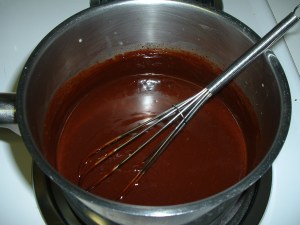
  6. finished lemon sauce

    Heat 1 tbsp butter and oil, in a medium-size sauté pan, over medium heat.  Add shallots and onion; cook until translucent, stirring frequently.  Mix in garlic; if garlic is fresh, cook for about 30 seconds more, just until aroma arises, or saute shallot/onions just until cube is dissolved, if using frozen.

  7. Add heavy cream, lemon juice, and roux to onions/shallots/garlic; stir constantly until sauce is thickened; see photo.
  8. Toss with prepared pasta, serve on a bed of spinach, enjoy!

Ahi Tuna, Peppered with Lemon Sauce

ahi tuna with lemon sauce

Ahi or yellowfin tuna is of the genus Thunnus and the species albacares; it is not to be confused with albacore or longfin tuna (Thunnus alalunga), even though the French use their word albacore for this yellowfin, while the Portuguese use albacora.  Note: the English albacore or longfin, of the species alalunga, is the basis for the United States tuna-canning industry.

Wikipedia sites the Hawaii Seafood Buyers Guide as stating that the enormous yellowfin tuna (with its Hawaiian name ahi) is popular in raw seafood dishes, especially sashimi, as well as being excellent for grilling, where it is often prepared seared rare.  Its buyers recognize two grades, “sashimi grade” and “other”, with variations of quality in “other”.

In sushi and sashimi, yellowfin or ahi is becoming a replacement for the near commercially extinct southern bluefin tuna (Thunnus maccoyii); presently the latter is probably the most valuable and prized fish worldwide.

On September 11, 2013, smithsonian.com referred to Japanese chefs as revering this bluefin like the Italians might a white truffle or the French oenophile might a bottle of 1945 Bordeaux.  It goes on to state that its high standing, along with that of the other tuna species such as the yellowfin and bigeye, has not always been recognized in Japan, for in the 19th century it was called neko-malagi, meaning “fish that even a cat would disdain”.  Indeed, this beef-red fish is smelly and strong-tasting.

The wide-spread acceptance, of this once essentially worthless seafood, is actually a product of a marketing scheme of the Japanese airline industry.  The story starts with the tuna sport fishing craze prevalent in the 1940’s, 50’s, and 60’s, along the Atlantic coast of the U.S. and Canada; these 400-plus-pound bluefins were being caught for fun, weighed, and photographed; then, they were either sent to landfills, sold for pet food, or thrown back into the ocean dead.

With the dawn of the 1970’s, Japanese cargo planes brought electronics to America; these same planes took advantage of the cheap New England tuna carcasses for their return flights.  Not wanting to go back empty, they ingeniously purchased these dirt-cheap bluefins, which in turn produced profits of thousands of dollars each in their homeland.

What made this country welcome this previously detested fish?  (The Smithsonian article qualifies bluefin as being not so good, with a tangy iron flavor and a texture that melts in your mouth, which amateurs love; this is opposed to the crunchier, more subtly flavored muscles tissues of animals like squid, clams, various jacks, flounder, and sea bream, which are highly favored by traditional sushi connoisseurs.)  The reasoning behind today’s widespread acceptance of bluefin can be traced back to the newly acquired taste for beef in Japan’s diet in the 70’s.  Concurrent with the electronic boom, this national appreciation for strong flavored beef brought about their subsequent open-mindedness to the dark, red flesh of tuna as well.

When I moved to Tokyo in 1980, I experienced this red meat wave; hence in 1982, after my return home, I was inspired to seek the approval of Montana governor Ted Schwiden, for my becoming an “ambassador” to this Oriental country; my proposal was to sell the then popular Montana beef, with my historical Montana dinner, entertaining our state’s clients overseas (see “About” for more on this).

This advancing beef rage in the Orient set the stage for the universal acceptance of bluefin, for it prepared Japan’s taste buds for the inundation of this tuna by their airlines; in turn, this rich, dark fish’s popularity then spread back across the ocean to America; and “by the 1990’s, the bluefin tuna was wanted almost desperately world-wide”, according to the Smithsonian.

Now it is facing commercial extinction, with yellowfin or ahi taking its place.  As the magazine states, traditional sushi sophisticates, however, do not always appreciate bluefin; some even consider it junk fish, as it was once known.  Yet the general public perhaps foolishly values this tuna, in a way which is extremely opposite to that of the mid 20th century, when it was sent to landfills along the Atlantic coast.

In America, we love to grill ahi tuna, the frequent substitute for bluefin, as well as serving it raw.  This outstanding receipt, which is prepared in minutes, affords a mouth-watering lemon sauce to compliment this firm fish.

References:

https://en.wikipedia.org/wiki/Yellowfin_tuna

https://www.floridamuseum.ufl.edu/fish/discover/species-profiles/thunnus-albacares/

https://www.smithsonianmag.com/arts-culture/from-cat-food-to-sushi-counter-the-strange-rise-of-the-bluefin-tuna-5980010/

medium/rare ahi

Ahi Tuna, Peppered with Lemon Sauce  Yields: 3 servings.  Total prep time: 30 min, or less.  Note: for an even quicker 10 min preparation, do step 5 only, omitting the lemon sauce, as well as all the ingredients, except the tuna, seasonings, and 2 tbsp oil.  On the other hand, you may double the sauce, allowing easy leftovers for next week’s Swift Pasta and Fresh Spinach with Lemon Sauce (1/8/18).

2 tsp butter

2 tsp flour

3 tbsp fresh lemon juice  (2 small lemons needed; may add optional zest of half a lemon.)

3 tbsp shallots, chopped small

2 medium garlic cloves, minced  (For easy prep, substitute 1 cube frozen garlic from Trader Joe’s.)

1-1.5 lb ahi tuna steaks  (Economical,  frozen, wild-caught ahi is often available in 1 lb bags at our local Grocery Outlet; may also use 3 fresh steaks, which tend to be 1.5” thick; these take longer to cook, weighing more.)

1 1/4 tsp salt  (Real Salt, Himalayan, or pink salt is so important for optimum health; a Himalayan salt is available very inexpensively, in bulk at our local Winco.)

1/4 tsp cayenne pepper

2 1/2 tsp freshly ground pepper

2 tbsp oil  (Coconut or avocado is best for health, as olive oil is carcinogenic, when heated to high temperatures.)

1/2 c heavy whipping cream  (Must be heavy cream, or it will curdle.)

  1. Heat serving plates in oven, turned on warm.
  2. cooked roux

    Next prep roux, by melting butter in a small sauce pan over medium heat; mix in flour; while stirring constantly with a wire whisk, cook until moisture is absorbed,  about 1 minute; for this sauce color of roux shouldn’t change much (see photo); set aside.

  3. Juice lemons by first rolling them on counter, pressing down hard with hand; this loosens the meat for easy juicing; set measured juice aside.
  4. Mince garlic; chop shallots in small pieces; place in separate dishes.
  5. Rub tuna with salt, cayenne, and freshly ground pepper, which have been mixed together in a small dish.
  6. Heat oil in heavy-bottom frying pan, over medium/high heat.  Gently place steaks in hot oil and cook to desired doneness; set on warm plates in oven.  (Tuna steaks will vary in thickness; sear tuna until golden brown, turning only once; 5 oz steaks will need about 1 minute per side for medium/rare; fresh tuna, which is about 1.5” thick, takes about 2 minutes on each side for rare, while 2.5 min and 3 min per side respectively for medium/rare and medium.  DO NOT OVER COOK, or it will be extremely dry.)
  7. After putting cooked tuna in warm oven, turn heat down to medium under pan and deglaze it with 2 tbsp water, wine, or chicken or fish stock.  Cook minced shallots in hot juices, just until they turn translucent, about 1 minute; stir in garlic.
  8. lemon sauce

    Finish sauce by adding heavy cream, lemon juice, and optional zest to shallots/garlic.  Blend in roux, stirring continuously with a wire whisk, until sauce is thickened (see photo).

  9. Pour sauce over fish and serve immediately.  (For a quicker version, may omit the sauce and just serve seared ahi, by following step 6 only.)
  10. Enjoy this splendor, which is the fastest gourmet meal I know!

Norwegian Oven Pancakes

Norwegian oven pancake

The exceptional baking of Norway has been on my mind lately, with recipes I have been making since the 1970’s: I published the Yuletide bars Mor Monsen’s Kaker on 2017/11/27; and now I offer Norwegian Oven Pancakes.  This effortless baked pancake blesses at anytime, but truly it triumphs at a holiday breakfast-may it grace your Christmas morning, either before or after gifts.

Not always has the making of a pancake been so simple; in Consider the Fork, Bee Wilson details the time-consuming directions, published in the advice book Le Menagier de Paris, in 1393: take eggs, the fairest wheaten flour, and warm white wine-in place of milk-beating all together “long enough to weary one person or two” (this was done in a household of servants).

Almost every nation boosts of their own particular version of pancakes, some sweet and others savory; there isn’t room to define these multiple, provincial modifications; I will review, however, those of several countries that capture my interest in particular.

The Nordic pancake is typically like a French crepe, but their oven variation ugnspannkaka resembles a German pancake-also known as a Dutch Baby-which is baked, thick, and unleavened; today’s entry is the ugnspannkaka.

On the other hand, American hotcakes and griddlecakes are always made with a raising agent, such as baking powder, along with flour, eggs, and milk; thus, they swell and bubble in the hot frying pan.  In the 19th century, prospectors and pioneers employed sourdough starter for the rising of this light, airy flapjack; such is still the popular Alaskan mode.

Johnnycake and bannock are pancake types of old.  In world history, bannock dates back as early as 1000 A.D.; hence both the Native Americans and settlers were making this in early North America.  The Natives used corn, nut meal, and plant bulb meal in this creation; the immigrant’s technique was Scottish in origin, in which oatmeal was the key component.

Johnnycake was first recorded here by Amelia Simmons in American Cookery, 1796, with the ingredients of Indian meal, flour, milk, molasses, and shortening (for the history of shortening, see my Ozark Honey-Oatmeal Cookies, 2017/10/30).  These flat corn cakes were a staple in young U.S.A.

In England, pancakes are without a rising agent, using primarily flour, eggs, and milk, which results in their being close to French crepes.  Served for a sweet dessert or as a savory main course, these British cakes date back centuries, for Gervase Markam wrote their instructions in The English Hus-wife (1615); she, however, substituted water for milk and added sweet spices.  That nation’s Yorkshire pudding, a similar receipt to their pancakes, rises only slightly, by the well-beaten air in this batter without leaven.

These English unleavened varieties of flannel cake differ from their risen form found in Scotland, which includes baking soda and cream of tartar;  there are also numerous variables in Wales-among which some incorporate yeast, others oatmeal.

African pancakes, such as those in Kenya and South Africa, most often resemble the English crepe.  In Afrikaans, these unleavened English crepes are known as pannekoeke, while plaatkoekies refer to American-style “silver dollar” risen pancakes.  In Uganda, the pancake is united with their staple banana, usually being served at breakfast or as a snack.

Of all the vast productions, present-yet differing-in almost every nationality, the Ethiopian one enchants me the most; there they have injera, a very large spongy affair, which acts as a huge platter for their stews and salads to be served on at their feasts.  With the right hand, one tears the edges off this yeast-risen flatbread, to scoop up the meal, finally eating the underlying “tablecloth”, in which all the foods’ juices have been absorbed.  In 1984, I had the great pleasure of spending a whole day with an Ethiopian family in Billings, Montana, while they taught me how to cook and eat this authentic repast-I was fascinated with its injera, which simultaneously acted as a plate, an eating utensil, and finally the food itself.

Of all these above mentioned recipes, our Norwegian oven pancake is the most simple.  Enjoy this festive delight, which only takes minutes to assemble.  It is indeed glorious!

References:

Bee Wilson, Consider the Fork (New York: Basic Books, 2012, 2013), p. 147.

https://en.wikipedia.org/wiki/Pancake

James Trager, The Food Chronology (New York: Henry Holt and Company, Inc., 1995), p. 52.

Harold McGee, On Food and Cooking (New York: Scribner, 1984, 2004), p. 548.

Amelia Simmons, American Cookery, 1796 (Grand Rapids, Michigan: William B. Eerdmans Publishing Co., 1965, reprinted), p. 57.

pancake right out of oven

Norwegian Oven Pancake  Yields: 6 servings.  Total prep time: about 45 min/  active prep time: 15 min/  baking time: 30-40 min.  Note: leftovers are delicious either cold or at room temperature.

6 lg eggs

1/2 c sugar  (Coconut sugar is ideal; for its health benefits, see Zucchini Bread, 2017/07/24.)

3/4 c flour  (Bob’s Red Mill organic, unbleached white flour is high quality, or substitute whole wheat pastry flour.)

1 tsp salt  (Real Salt, pink salt, is important for premium health; available at nutrition center in local supermarket.)

1 tsp vanilla

2 1/2 c milk  (May use an alternative milk, such as hazelnut or almond.)

piece of butter the size of an egg, about 5 tbsp

  1. Preheat oven to 375 degrees.
  2. With an electric mixer, beat eggs in a large bowl; blend in sugar, salt and vanilla; gently, quickly mix in flour.
  3. Meanwhile, melt butter in a 9” x 13” pan in hot oven; watch carefully.
  4. batter before baking

    Very slowly add milk to above egg mixture, beating continuously.

  5. When butter is melted, roll it around baking dish, coating entire pan.
  6. Pour batter in greased baking dish.  Bake for 30-40 minutes, or until batter is set.
  7. Serve hot.  (Cold leftovers are also great!)

1970’s Atomic Muffins

atomic muffins

My heart has always longed for ideal eating habits, though I haven’t always possessed the capacity for their required discipline.  Natural foods first came into my life in the early seventies, in my eccentric college town of Missoula, Montana.  It was there a friend taught me this powerful atomic muffin recipe.

Then I was attempting to nurture my body with the best; I looked great on the outside-118 compact pounds clothed in the best of vestures-but my insides were another story, for I had the hidden disease of bulimia, which was with me for a total of 3 years; half way through this, I briefly became anorexic and was admitted to Calgary, Alberta’s Foothills hospital, weighing 88 pounds on my mother’s scale.  There a rising physician, who was just breaking into this then unknown field, cared for me.

Eating disorders were rare at that time, though now they are commonplace.  My heart breaks for those that suffer thus, for I know firsthand their devastating grip.

During the years that followed this hospitalization, I went from an extreme 88 to a gross 226 pounds, before I surrendered and God brought complete healing to me: I now have a beautiful, healthy physique, and I eat sanely, with an ability to make balanced choices, having an innate strength to neither over- or under-consume.

This privilege grew progressively.  As a direct answer to an earnest cry for help, it initiated with my courageous act to turn from the bulimic darkness, on a crisp November day in 1978.

Back then, my jaws would hurt from daily, nonstop eating and purging; it was during this fiery torment that I sought the help of a Catholic priest, whom by chance I had heard was successfully recovering from alcoholism; thus, I trusted the hope, visible in his mastery of obsession, to spill over into my life.

My plans were to purge one last time before my 1 PM appointment, but I awoke to late to do so; hence, the first ominous hurdle presented itself, with my intense temptation to skip the meeting.  Something bigger than I, however, got me there.

With this glimmer of determination, I arrived at this parish, unknown to me, in a small neighboring town, only to suffer the second attempt to stop my breakthrough: the priest answering my knock informed me that his superior, the recovering alcoholic, was unavailable.  My instinct was to flee, but I blindly accepted his proffered services instead.

This man, whether knowingly or unknowingly, told me my bulimia wasn’t sin, but rather something beyond my control; he suggested that I stop doing it; at the same time he administered grace, saying that IF upon occasion I failed, I was to ask the Father for forgiveness, and immediately return to my new eating.  All this miraculously seemed doable, for the seed of faith had been established.

I will never forget leaving this sanctuary and walking out into the parking lot, where the asphalt seemed to dance with the reflection of God’s light, from Montana’s perpetual Big Sky.  Indeed my soul was dancing along with this lively, beautiful pavement; my new birth had begun!

At about three weeks into this profound freedom, a stark overwhelming urge to purge an excessive meal assailed me, in which there was actual physical weakness, as I staggered going back and forth toward a public bathroom.  This moment became a crucial step in proving my liberty, for it was then I decisively turned from death to life: clarity came with the vivid memories, both of the sweet peace experienced during this abstinence, as well as the subsequent pleasures derived from foods that I was now able to actually taste; there was vital victory as I successfully turned, moving to the place where  life and my friends were waiting.

It got much easier after that.  Only once in all these 50 years did I give into this lie, for I slipped into this old habit for a week, when I was desperately trying to loose a few pounds, before leaving for Paris in 1985; a greater than I brought me back to my senses, and I stopped as suddenly as I had started.  While in Dijon, France, after an exceptionally large meal, I was tested, however, to see if I really meant business.  Only by grace did I stand, not purging my grotesque meal.  Never again have I returned to this inferno; honestly, I am no longer even faintly tempted.

In this same way, though with much less drama, all my food consumption has been refined: first I receive inspiration for better habits, whether it be the exclusion of a given matter, or the addition of something new; next, I weigh and balance the suggestion, getting clear in my heart what is best for me; then, I initiate the change, which often comes with challenges at first.

I find that we are generally tested, when establishing all new behavior; such testing, however, provides proof of the pudding, for it fixes newly-won-rights indelibly.  Now I thank God, not for the attacks themselves (which aren’t of him), but for the rich strength provided in overcoming them, through our partnering with his grace.

Bless our food, bodies, and hearts always!

grinding flour with an attachment for a Kitchen Aid mixer

Atomic Muffins  Yields: 2 dozen.  Total prep time: 3/4 hr/  active prep time: 30 min/  baking time: 15 min (if you have 2 muffin pans).

1 c raisins, soaked in boiling water for 15 minutes

1/2 c oil  (Grape seed or avocado oils are best for heating to high temperatures, without producing carcinogens.)

3/4 c sugar  (Coconut sugar is ideal-see Zucchini Bread, 2017/07/24, for information on this sugar.)

2 tbsp molasses

2 lg eggs  (Organic free-range eggs are healthiest.)

1 c whole wheat pastry flour  (May grind 2/3 c organic soft winter white wheat berries to make a cup of fresh-ground flour.)

1/4 c barley or spelt flour

1 tsp salt  (Real Salt, pink salt, is so important for premium health; available in nutrition center at local supermarket.)

1/2 c powdered milk

1/2 c nutritional yeast  (Available in bulk at many stores, such as our local Winco.)

3/4 c wheat germ

1/2 c old fashioned rolled oats  (Organic in bulk is only slightly more expensive and much more nutritious.)

1/2 c sesame seeds

1/2 c sunflower seeds

3/4 c pumpkin seeds

1/2 c nuts, chopped

1 1/2 c milk  (May use an alternative milk, such as almond or hazelnut.)

Coconut Spray Oil  (Pam is available at most supermarkets; our local Winco brand, however, is far cheaper.)

  1. easy mixing of dry ingredients in a sealed storage bag

    Preheat oven to 375 degrees.

  2. If grinding fresh flour, do so now (see photo at top of recipe).
  3. Cover raisins with boiling water; set aside for 15 minutes, for them to plump up.
  4. In a large bowl, blend oil, sugar, and molasses; add eggs; beat well.
  5. In a gallon-size sealed storage bag, shake together all dry ingredients, including seeds and nuts, until well mixed (see photo above).
  6. Alternately blend dry ingredients and milk into oil mixture, using just half of each at a time, until all is incorporated.  (Note: if using fresh-ground flour, preferably let batter rest in bowl for 20 minutes before baking, as it is a coarser grind and doesn’t absorb the moisture as quickly as store-bought flour; see photo below.)
  7. bowl of batter

    Spray muffin pans with oil; spoon batter into cups; bake for 14 minutes, or until a toothpick comes out clean.  (It is best to lean on the side of under baking, so muffins remain moist.)

  8. Remove from pan and cool on waxed paper.
  9. Keep muffins in refrigerator; the freezer, however, provides even better storage, if using them over an extended period.
  10. These are indeed atomic in nutrition!

Holiday Dips

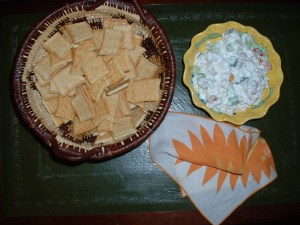
cottage cheese/apricot/green onion dip

Let healthy, creative dips enhance your holiday entertaining; two of my favorites are made in just minutes, using protein-rich cottage cheese for a base.  One, which only adds salsa, dates back to my profound, childhood experience at a restaurant in Tucson, Arizona (see “About”).  The other was inspired by my recent need for additional potassium in my diet; thus, dried apricots, rich in this element, and green onions make another pleasing combination for this dairy product.

When I lived in Switzerland briefly in the 1970’s, I was captivated by their cottage cheese, which to my amazement was without the coagulated lumps that we are used to in the U.S.  Their smooth, thick, creamy substance was more like our cream cheese, though not as stiff.  These soft, uniform curds were excellent with muesli, fruits, raw vegetables, crackers, breads, and more.  (Some European cottage cheese is dry and salty, not so with my rhapsodic Swiss cottage cheese.)

In trying to learn more about this blessing from Europe, I discovered a good source for making one’s own; this site provides a recipe that produces either the creamy smooth or dry salty versions, simply by adjusting the heating time.  Access this incredible treat, which can’t be found in any U.S. grocery store, at: https://cheese.wonderhowto.com/how-to/make-your-own-cottage-cheese-european-way-352742/

Different textured and flavored cheeses are produced by variations in the temperature the milk is heated to, the diverse procedures of draining and pressing the resultant curds, and aging.  For instance, soft, semi-soft, semi-hard, and hard cheeses are often categorized according to their moisture content, which is determined by whether they are pressed or not, and if so, the pressure with which the cheese is packed in molds, as well as upon aging.

“Fresh cheeses” are the most simple of all, in which milk is curdled and drained, with little other processing.  Among these “acid-set cheeses”, cottage cheese, cream cheese, fromage blanc, and curd cheese (also known as quark) are not pressed; when fresh cheese is pressed, it becomes the malleable, solid pot cheese; even further pressing makes a drier, more crumbly farmer’s cheese, paneer, and goat’s milk chevre, for instance.  All are easy to spread, velvety, and mild-flavored.

The unpressed quark/curd cheese is common in the German-speaking countries and those of northern Europe, the Netherlands, Hungary, Belgium, Albania, Israel, Romania, as well as with the Slavic peoples.  It is also found in some parts of the United States and Canada.

Quark is usually synonymous with cottage cheese in Eastern Europe, though these differ in America and Germany, where cottage cheese has lumps (the flavor of German cottage cheese is much more sour than ours).  Curd cheese or quark is similar to French fromage blanc, Indian paneer, Spanish queso blanco, as well as the yogurt cheeses of south and central Asia and parts of the Arab world.

These (fresh) acid-set cheeses are coagulated milk, which has been soured naturally, or by the addition of lactic acid bacteria; this in turn is heated to a 20-27 degrees C, or until the desired curdling is met; then, the curds are drained, but not pressed, such as in the link above.

In America, quark, which is always smooth, differs from our cottage cheese, which has curdled chunks in it.  These lumps are large in the low-acid variant, which uses rennet in coagulating the milk, or small in the high-acid form, without any rennet. In Germany, Sauermilchkase (sour milk cheese) applies to ripened (aged) acid-set cheeses only, not to fresh ones-such as their cottage cheese, which is called Huttenkase.

The world of cheese is a complex one:  I have vivid memories of this smooth European cottage cheese, from my time in the German-speaking part of Switzerland, which has left me with a love for this dairy product.  To this day I frequently employ its American version in my diet.  Enjoy these quick dips!

References:

https://www.thespruce.com/what-is-pot-cheese-591193

https://en.wikipedia.org/wiki/Quark_(dairy_product)

https://en.wikipedia.org/wiki/Cottage_cheese

https://en.wikipedia.org/wiki/Sour_milk_cheese

https://en.wikipedia.org/wiki/Types_of_cheese#Fresh.2C_whey.2C_and_stretched_curd_cheeses

https://cheese.wonderhowto.com/how-to/make-your-own-cottage-cheese-european-way-352742/

Salsa and Cottage Cheese Dip  Yields: about 1 1/2 pint.  Total prep time: 5 min.

1 pint cottage cheese  (Whole milk is best for your health; Trader Joe’s brand is hormone and additive free.)

1/2 c salsa  (Trader’s Pineapple Salsa is superb here.)

Tortilla chips  (Que Pasa makes an organic red chip, colored with beet dye, available in nutrition center at our local Fred Meyer-Kroger-

ingredients for salsa dip

stores.)

  1. Mix cottage cheese and salsa in a bowl.
  2. Serve with chips.  (Keeps well in refrigerator.)

ingredients for apricot dip

Cottage Cheese, Apricots, and Green Onion Dip  Yields: about 1 3/4 pints.  Total prep time: 15 min.  Note: may choose to refrigerate for at least 8 hr for ideal flavor and texture.

1 pint cottage cheese

1/2 c dried apricots, minced

1 c green onion, including green part, chopped

1/2 tsp salt, or to taste  (Real Salt, pink salt, is important for optimum health; available in nutrition center at local supermarket.)

  1. Mix the above together in a bowl.
  2. Serve with a high quality cracker.  (May use immediately, but this is much better when refrigerated for at least 8 hours-the flavors not only meld, but the excess moisture in the cottage cheese is absorbed by the dried apricots, producing superb texture and taste!)

Mor Monsen’s Kaker-Norwegian Christmas Cookies

plate of mor monsen’s kaker (my mother’s cake)


I took the winter off from college in 1973, to work at Big Mountain Ski Resort in Whitefish, Montana.  In my small studio apartment’s kitchen there, I first made these incredible bars, which are known for gracing Norwegian Christmases.

The Culinary Excellence of Scandinavia

Scandinavian baking is in a class all its own.  These people are known to be masters of pastry as well as open-face sandwiches-often incorporating cardamom, rye, and saffron in their creations.   Presently, their culinary genius has reached new heights: numerous times in this past decade, Noma of Copenhagen has been the title winner of The World’s Best Restaurant; it promotes the popular New Nordic cuisine, which is a style of food that has gone beyond the boundaries of Scandinavia.

New Nordic Cuisine

New Nordic is best known by the terms local and healthy.  In Norway, with a growing season that might last from June until August, it creatively uses the ocean, wild game, root vegetables, and cold-climate berries, such as the native cloudberry, which is highly valued in this country, as it can only be foraged, not cultivated commercially.

My simple, rich recipe exemplifies the culinary excellence of Norway; these lavish bars only call for currants and almonds, amidst the flour, eggs, sugar, and typical pound of butter.

The Origin of Currants

Currants have an interesting history.  Today, these small dried seedless grapes, known as Zante currants, essentially come from the grape cultivar Black Corinth (Vitis vinifera), which is from the genus Ribes.  Related varieties, such as the White and Red Corinth (and other cultivars from the Black Corinth), are used rarely.

There are a total of about 150 categories in Ribes, including the above, as well as golden currants, gooseberries, and ornamental currants.  These various kinds are native to the northern latitudes of Europe, Asia, and North America, and within each individual species there are many cultivars-horticulturally derived plants as distinguished from natural varieties-which have been developed over time.

Currants, which are most commonly dried, are generally referred to as Champagne grapes, when sold fresh, by U.S. specialty grocers.

Historical Background of Currants

The study of the origin of the word currant helps identify the history of our tiny fruit.  Written records of it initially date back to Pliny the Elder in 75 A.D.  A millennium later, we see the Middle English term raysons of couraunte, also known as raisins of Corinth (a region in ancient Greece which produced and exported these Ribes).

The word couraunte stands for (raisins of) Corinth, taken from the name Courauntz, which is of the Norman French dialect-a variety of speech used in Normandy and England in the Middle Ages-for this Greek region; this in turn comes from the medieval Old French Corinthe; thus, the dialectal name reysons de corauntz was first used for these grapes, when they were brought to the English market in the 14th century, from which the word currants eventually evolved.

In the 1600’s trade patterns shifted from Corinth to the Ionian Islands, particularly Zakynthos (Zante); thus, this small grape became known as Zante currant.

Currants in America

In 1854, the Zante currant the Black Corinth cultivar came via a trade ship to the United States, which eventually resulted in its commercial production in California; the related varieties the White and Red Corinth were established there in 1861.  (Presently, this state is one of the four major world producers of currants, with Greece covering about 80% of this total generation.)

Actually, trade ships were bringing varieties of Ribes to our soil as early as the 16th and 17th century; natural Corinth raisins, however, were indigenous here as well; the Native Americans had been harvesting them from the wild, long before any Europeans arrived, using them for medicines and dyes.

These Zante currants,  which were initially reported at the time of Christ, are presently hard to find.  In earlier days, I could find boxes of dried currants in many local supermarkets, but recently I can only find them in bulk at such upscale grocers as the national chain New Seasons, which also carries the seasonal, fresh Champagne grapes.

Try adding this dried delight to your next Waldorf salad, a batch of scones (see Scottish Oat Scones), or these superb Norwegian Christmas cookies.  Expect wonders!

References:

https://ag.umass.edu/sites/ag.umass.edu/files/fact-sheets/pdf/currants.pdf

https://en.wikipedia.org/wiki/Zante_currant

https://1historyofgreekfood.wordpress.com/2007/10/02/raisins-currants-sultanas/

https://www.huffingtonpost.com/entry/best-scandinavian-cookbooks_us_5756c7e2e4b07823f951302c

http://www.cookingbythebook.com/cookbook-reviews/cookbook-review-scandinavian-baking-by-trine-hahnemann/

cutting bars in triangles

Mor Monsen’s Kaker-Norwegian Christmas Cookies  Yields: 4 dozen bars.  Total prep time: 60 min/  active prep time: 30 min/  baking time: 30 min.   Note: these freeze extra well, to have on hand throughout the holidays.

1 lb plus 2 tbsp unsalted butter, softened

2 c sugar  (Organic is best; available at Costco and Trader Joe’s.)

4 lg eggs

1 tsp vanilla

2 c flour  (Bob’s Red Mill organic unbleached white flour is ideal; may also grind 1-1/3 c organic soft winter white wheat berries to make 2 c fresh-ground flour.)

distributing currants on dough

1 tsp salt  (Real Salt is important for optimum health; available in nutrition center at local supermarket.)

3/4 c almonds, chopped small (May purchase almond slivers for easy chopping.)

1 c dried currants

A large 11” x 16” cake pan*, or a 12” x 16” jelly roll pan  (May use a 9” x 11” pan, in addition to a 9” x 9” square pan.)

  1. Preheat oven to 375 degrees.
  2. Grease pan-see optional sizes listed above-with 2 tbsp butter; set aside.
  3. Cream pound of butter with sugar, until light and fluffy, using an electric mixer.  Add eggs one at a time, beating well with each addition; mix in vanilla.
  4. distributing almonds on top of currants

    Blend flour and salt easily, by shaking vigorously in a sealed gallon-size storage bag; then, add this to butter mixture, beating only until all is incorporated, to keep cookies from toughening; set aside.

  5. Chop almonds fine with a sharp knife, or use a food processor, by repeatedly pressing down on the pulse button, cutting any big chunks in half with a sharp knife.  Set aside.
  6. Spread batter evenly on greased pan; sprinkle surface FIRST with currants; see photo in list of ingredients; then, distribute almond pieces over the top of these; see photo above.  Press nuts and currants down into batter slightly with fingers, so they are embedded; see photo below.  (This keeps them from falling off the baked bars in crumbles.)
  7. Bake for 20-35 minutes, or until golden brown, time varies with pan-size.
  8. While bars are still hot-using an 11” x 16” pan-cut 4 rows across the width and 6 rows across the length; then, cut these squares in half; see photo of cutting technique at top of recipe.  (Amount of rows may vary with differing pan

    pressing almonds and currants into dough, to embed them before baking

    sizes.)

  9. These freeze really well, to have on hand throughout the holidays.  They are a treat!

“Cuban” Holiday Rolls

holiday rolls

In the early 1980’s when I first began catering historical foods (see Scottish Oat Scones), I was inspired by the enduring works of such renown writer/chefs as Julia Child, James Beard, Jacques Pepin, and Graham Kerr, to mention a few.

The Written Works of America’s Great Chefs

It was actually their written works, rather than those of food TV that influenced me so greatly.  My mother often sent clippings of their receipts, which were profuse in the media; this is how I got this bread recipe, which I started using, even before my own work began in 1982.

Many Versions of Cuban Bread

A number of these food authorities gave slightly varying directions for making Cuban bread; I don’t recall in these various versions the crucial lard or the palmetto leave, used to form the seam down the center of every authentic loaf; rather, that which I took from them is a simple bread recipe, using only 2 teaspoons each of salt and sugar plus flour, yeast, and water.

I wondered why so many of these chefs were publishing this same recipe, each utilizing specific alterations; I queried: which recipe is actually accurate?  In that period, I didn’t have the glorious bounty of facts for discovering food history, which internet provides at our fingertips today.

One Copyrighted Recipe: Begin Baking in a Cold Oven

One chef, I don’t’ recall which one, wrote that the baking of this loaf need start in a cold oven, which I erroneously attributed to the Cuban baking process; a number of them also covered the pan with corn meal, on which a free-formed loaf was placed; hence, I employed these directions and unknowingly professed them as being national, which today I know were not genuine.  Note: you may access the real deal for Cuban bread at https://icuban.com/food/pan_cubano2.html

Guidelines for Copyrighting

I learned about the legality of copyrighting recipes, when embarking on my journey as a food historian, after graduating with my Masters Degree in 1991. (My degree is in Pacific Northwest history, in which I specialized in food history, for there were no schools offering a degree in this unique subject, when I began my studies.)

Graduate school taught me the highest respect for avoiding plagiarism; thus, I sought the expertise of the leading copyright lawyer in Portland, Oregon in the early 90’s.

Dressed to the nines on a hot summer day, I stepped into one of multiple air-conditioned elevators, which took me to this qualified man’s office, with its pent-house view.  There this skilled expert patiently listened to my heart, as I fervently expressed my need for safety, in the writing and performing of my treasured work; it became apparent to me that all its colorful detail was holding him spell-bound.

Instructions Must Vary

Much to my relief, his directives were: ingredients in recipes may always be the same, but to be legally protected, instructions must vary.  I was exuberant, for I, like my beloved famous chefs, could take any promising receipt and produce it as my own, simply by improving on its directions, with my own culinary wisdom and historical knowledge.

My joy over this freedom was immense; there is more, however, for with his heart seemingly expanding, as was mine, the following words came out of this great lawyer’s mouth: “My services this day are free!”  (God’s favor perpetually blesses a grateful heart.)

I don’t profess this to be Cuban bread, but rather my simple recipe for delicious holiday rolls.  Enjoy!

finished product

Holiday Rolls  Yields: 14-16 rolls or 1 loaf.  Total prep time: 2 hr & 20 min/  active prep time: 20 min/  inactive prep time: 2 hours/  baking time: 20 min.  Note: this method utilizes a food processor, producing quick, mess-free bread, the greatest!

4 cups flour  (May blend 3 cups whole wheat flour with 1 cup unbleached white flour; better yet, grind 2 2/3 cup organic hard red spring wheat berries, to make the required 4 cups of fresh-ground flour.)

1/4 cup tepid water  (110-115 degrees in temperature.)

3 tsp yeast, or 1 individual packet  (Red Star Active Dry Yeast comes inexpensively in a 2-pound package at Costco; this freezes well in a sealed container for long-term use.)

2 1/4 tsp sugar

2 tsp salt  (Real Salt is important for optimum health; available in nutrition section at local supermarket.)

1 1/8-1 1/3 cup tepid water (110-115 degrees in temperature).

Coconut spray oil  (Coconut is best for quality and flavor; Pam is available in most grocery stores; our local Winco brand, however, is much cheaper.)

  1. grinding flour with Kitchen Aid attachment

    If grinding your own flour, begin to do so now (see photo).

  2. Place 1/4 cup lukewarm water-110 to 115 degrees-in a small bowl; stir in yeast and 1/4 tsp sugar.  Let sit in a warm place, until nearly double in size, about 10 minutes.  Note: frozen yeast will take somewhat longer to proof.
  3. Place the flour, 2 tsp sugar, and salt in processor; blend well, stopping machine and stirring once with hard plastic spatula.
  4. When yeast is proofed, add it and 1 1/3 cup tepid water to flour mixture (with fresh-ground flour, however, only 1 1/8 cups of water is needed, as the grind is coarser).  Turn machine on and knead for 35 seconds; turn off and let dough rest for 4 minutes (see photo below of dough, after this first kneading in machine, using fresh-ground flour).  This resting period cools dough, which is essential as processing increases heat, and too much heat will kill the yeast.
  5. After pausing for 4 minutes, turn on the processor; knead dough for 35 seconds; let rest for 4 minutes.
  6. Take out and knead by hand for 5-7 minutes, or until satiny smooth.  As wet dough readily sticks to hands, rinse them as needed to facilitate easy kneading (store-bought flour is finer; therefore, it absorbs the moisture more

    dough after initial kneading in processor, using fresh-ground flour

    readily and won’t be as sticky); see photo below for dough before and after kneading by hand.  Ideally it should be firm and pliable when finished.  (Note: dough may be somewhat wet and sticky at first, but much moisture is absorbed with kneading by hand; this is especially true with fresh-ground flour.  These instructions should be foolproof, but IF needed, do the following: if dough remains quite wet and sticky, after kneading by hand for several minutes, slowly add more flour to your board as you knead; if it is too stiff to knead by hand easily, place back in processor; knead in 1 tbsp water.  If called for, repeat this step until severe stiffness is gone, it is flexible, and kneading by hand is facile, carefully resting dough so as not to overheat.  See before and after photo below.

  7. Place prepared dough in a well-oiled 13-gallon plastic bag; let rise in a warm place for 50-60 minutes, or until double; time varies depending on room temperature.  (To facilitate proofing in a cold kitchen, you may place it in a warm oven, which has been heated for 20-30 seconds only.  Be careful to only take edge off cold, as too much heat will kill the yeast.)
  8. dough before and after kneading by hand

    Spray a cookie sheet with oil.  Without punching down, form risen dough into 14-16 rolls or an oblong loaf; place on pan.  Loosely cover with a piece of plastic wrap, which has also been sprayed with oil-this keeps dough moist.

  9. Let rise until doubled, for about 50-60 minutes.  To insure oven is ready when it is time to bake, preheat it to 400 degrees, 30 minutes into rising process.  IMPORTANT NOTE: if proofing rolls in oven, be sure to remove them, before preheating.
  10. When doubled, bake rolls for 20 minutes-a loaf will take up to 30 minutes-or until bread sounds hollow when tapped on bottom.  Enjoy this excellent staff of life!

Nutty Coconut Pie-a Variation of Blum’s Coffee Toffee Pie

nutty coconut pie

This nutty coconut pie is my sister’s inspiration from 1980, during her days of running our family’s restaurant, in Montana’s Glacier National Park.

A Variation of Blum’s Coffee Toffee Pie

Among Maureen’s sumptuous creations, this coconut pie was one of my favorites.  It is her modification of Blum’s coffee toffee pie-a recipe we received in 1968, when I had a serious eye operation in San Francisco (see Blum’s Coffee Toffee Pie).  Maureen ingeniously produced multiple variations of this basic receipt, which likewise thrill; their unique directions will follow over time.

Origins of Coconut

As a child, I loved coconut: my father’s coconut cream pie, the favored coconut Russell Stover Easter eggs in our yearly baskets, and fresh coconut-to mention but a few of my titillating experiences with that food.

This fruit of the Cocos nucifera has been regarded as the jewel of the tropics; in which it often has been called the tree of life, for their people have depended on it not only for food, but shelter, and much more-every part of it has been used for both culinary and non-culinary purposes.

The Spreading of Coconut by Nature and Man

The powerful coconut originated in India and Southeast Asia; with the floating properties given by its light shell, it apparently made its way independently by marine currents, to every subtropical coastline in both hemispheres.

Historians also agree that it traveled the world at the hands of men; sea-faring Arab traders most likely brought this treasure to East Africa long ago (they actively were obtaining it from India by the 8th century AD).  These same traders were responsible for its introduction to Europeans on the trans-Asian Silk Road; the Venetian adventurer Marco Polo was among those who encountered this food; he named it “Pharaoh’s nut” in Egypt in the 13th century.  Beginning in the early 1500’s, this prized fruit made its way back to Europe following such explorer-colonizers as Portuguese Vasco da Gama.

Our prolific coconut evidently floated to the New World shores, where it prospered in its tropical lands; in addition, the European adventurers brought it to the Caribbean and Brazil, from whence it further spread to the American tropics.

The Arrival of Coconut in the United States

For instance in 1878, the merchant vessel Providencia-carrying this fruit from Trinidad-ran aground the coast of Florida; this resulted in a drastic change in the landscape, which became inundated with palm trees; nevertheless, the coconut didn’t change the economy much here, as was the frequent occurrence in other locales, where multi-products resulted.

The Important Coconut Product: Oil

The coconut product, which interests me most, is oil, for I use this extensively in my cooking.  Many believe that this is the healthiest of all oils for our internal bodies, as well as being ideal in external beauty regimens.  It is held that among its helpful health benefits are: weight loss, boasting the immune system, and “oil pulling” in detoxifying and cleansing the body.

Coconut Oil’s Resistance to Oxidation When Heated

Here, however, I choose to elaborate on its exceptional cooking qualities, for it has the greatest resistance to oxidation (spoilage)-when heated-of any oil on earth; this is due to its 92% saturated fatty acids, which represents the highest percentage in any oil.  This effectual make-up provides extraordinary protection against heat and the formation of free radicals, which are associated with many diseases, such as cancer.  How is this?

Make-up of Saturated Fats

Saturated fats are full of hydrogen atoms in their carbon atom chain, giving them a durable molecular structure; thus, they can be heated to high temperatures, resisting oxidation.  They are crucial for maximum health for this reason-among other sound benefits, which I haven’t room to address in this entry.

Monounsaturated and Polyunsaturated Fatty Acids

On the other hand, monounsaturated fatty acids lack a pair of hydrogen atoms, while polyunsaturated fatty acids are missing two or more.  Monounsaturated and polyunsaturated fatty acids are highly unstable and prone to oxidation, without the durable molecular structure, as found in all saturated fatty acids.

Trans Fat and Interesterified Fat

Trans fat and interesterified fat are manufactured fat molecules that don’t exist in nature; they were generated in an attempt to get more solid, stable fatty substances (examples are shortening and margarine).  Both these types should be avoided all together (for more on the history of Crisco, see 1880’s Ozark Honey-Oatmeal Cookies).

The Most Saturated of All Oils-Coconut Oil

In a natural way, coconut oil achieves these objectives, which man was seeking by forming these fake fats.  Coconut, as the most saturated of all oils, is superlative both in being naturally stable/solid and in having an abundance of health attributes, over and above all other oils on the market, in my estimation.

As I have always loved the taste of coconut, I additionally find this oil enlarges the flavor of my foods.

Coconut in Today’s Recipe

Unsweetened dried coconut enhances our already delightful nutty coconut recipe.  By reducing this pie’s over-all sweetness, it allows for the full impact of the fruit.  (This unsweetened flake is available in bulk in many upscale grocery stores, as well as at our local, inexpensive Winco.)

May I encourage you to slow down and smell the roses: allow yourself the luxury of the time required to produce this memorable pleasure-a gift from God, made with the ease of my sister’s foolproof directions.

References:

  1. Harold McGee, On Food and Cooking (New York: Scribner, 1984, 2004), pp. 508, 509.
  2. Reay Tannahill, Food in History (New York: Three Rivers Press, 1988, 1973 by Reay Tannahill), pp. 141, 220n.
  3. http://www.coconut-oil-central.com/
  4. http://www.aramcoworld.com/en-US/Articles/January-2017/Cracking-Coconut-s-History
  5. https://www.livescience.com/54901-free-radicals.html

a piece of nutty coconut pie

Nutty Coconut Pie, a Variation on Blum’s  Yields: 1-9” pie, 8 servings.  Active prep time: 1 1/2 hr/  inactive prep time for setting up: 1/2 hr.  Note: can be kept in the freezer for long-term use, cutting off pieces as needed; serve partially thawed for a favored ice cream-like texture.

1 1/2 c nuts, chopped small and roasted

1 3/4 c unsweetened coconut flakes, toasted  (Available inexpensively in bulk at our local Winco.)

1 c unbleached white flour  (Optional: may grind 2/3 c organic soft winter white wheat berries to make a total of 1 c fresh ground flour.)

1/2 tsp salt  (Himalayan, pink, or Real Salt is critical for optimum health; a fine grind Himalayan salt is available cheaply at Costco.)

1/2 c plus 3-4 tbsp butter, softened

1/4 c brown sugar, packed down  (Organic is best; available sometimes at Costco and always at Trader Joe’s.)

1 oz unsweetened chocolate, grated  (Baker’s will do.)

1 tbsp water

1 tsp vanilla extract

3/4 c cane sugar  (Organic is ideal; best buy is at Costco; also available in a smaller quantity at Trader’s.)

2 lg eggs, at room temperature  (If sensitive to raw eggs, may use pasteurized eggs for extra safety; available at some grocery stores.)

1 c heavy whipping cream

1/3 c powdered sugar  (High quality organic is available at Trader’s.)

3 tbsp, or more, instant vanilla pudding mix, only if needed as a stabilizer  (Be sure to have on hand for quick correction.)

Ganache

1 c heavy whipping cream

8 oz semi-sweet chocolate chips, or semisweet chocolate of your choice  (These chocolate chips are available at Trader Joe’s.)

1 tsp vanilla

  1. finished ganache

    If grinding fresh flour, do so now.

  2. Preheat oven to 350 degrees.  Place nuts on a cookie sheet in hot oven for 7 minutes, watching closely as not to burn; set aside to cool.
  3. Distribute coconut in a pan with edge; bake until golden brown, about 5-7 minutes, stirring mid-way; set aside.  Leave oven on.
  4. Place bowl for whipping cream in freezer to chill; this greatly facilitates the whipping process (keep beaters at room temperature for filling).
  5. Make ganache-see list of ingredients above-by bringing cream to a very low simmer, over med/low heat (should be hot-steaming-not boiling); add chocolate pieces and continue to cook, beating with a wire whisk, until mixture is glossy/shiny.  Remove from heat, add vanilla, set aside (see photo above).
  6. filling beaten to perfection

    Combine flour and salt in a large bowl; blend a scant 4 tbsp butter with a fork, until mealy in texture (only 3 tbsp will be needed if using fresh-ground flour).

  7. Mix together with flour: brown sugar, 3/4 c cooled nuts, and 1 oz unsweetened chocolate, which has been grated with a sharp knife.  Blend in water and 1 tsp vanilla.
  8. Butter a pie plate generously; press pie dough in pan firmly with fingers. Bake for 18 minutes in preheated oven at 350 degrees; cool in freezer.
  9. Beat 1/2 c butter in a large bowl with an electric mixer until creamy.  Gradually add 3/4 c cane sugar, beating well with each small addition.
  10. Add 1 egg; mix on medium speed for 5 minutes; beat in second egg

    layer of ganache on crust

    for 5 minutes more.  This filling should be like fluffy whipped butter or soft whipped cream when done; see above photo. (The following makes this preparation foolproof.  It is so important to have ingredients at room temperature; if your kitchen is either very hot or cold, this mixture may curdle.  This is easily corrected, by beating in 3 tbsp of instant vanilla pudding mix-more may be needed-to reach the desired soft, full-bodied consistency.  In this way, you will never fail with this recipe!)

  11. Wash and freeze beaters, along with bowl, for whipping cream with exceptional ease.
  12. Pour a thin layer of ganache on bottom of cooled pie crust-about 1/2 inch thick (see photo above); set the rest aside for garnish (leftover ganache can be refrigerated indefinitely in a glass jar; great, when warmed, over ice cream).  Place crust back in freezer for several minutes.
  13. Fold 3/4 c nuts and coconut into filling, SAVING 1/4 c coconut for garnish.
  14. filled pie

    Spoon filling evenly into pie crust (see photo); let mixture set-up by freezing for 1/2 hour.

  15. Meanwhile, using ice-cold utensils, beat cream until it starts to thicken; add powdered sugar and vanilla; continue beating until stiff.
  16. When filling is set, cover pie with whipped cream; drizzle ganache over top; garnish with toasted coconut (see very top photo).
  17. If keeping for long-term use, be sure to freeze uncovered; then, cover extra well with plastic wrap.  I love serving this partially frozen for optimum pleasure.

Turkey with Shallots, Cauliflower, and Bell Pepper

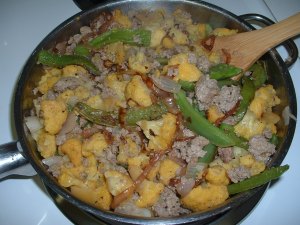
turkey with shallots, cauliflower, and bell pepper

It’s that time of year again for turkey,  Learn about the history of this bird and access a great recipe using either leftover roasted fowl or its ground version, which comes in one pound packages at any food market; the latter makes this dish accessible year-round.

Background of Turkey

Turkey is in the genus Meleagris, which is native to the Americas; the Mexicans domesticated it by 800 BC.  It was either introduced to Southwest U.S., or tamed here independently, by 200 BC; these indigenous people used its feathers for ceremonies, as well as in making robes and blankets; they didn’t, however, consume it as a meat until around 1100 AD.

Cortes Brought Turkey to Spain

This bird arrived in Europe in 1523-24, when the Spanish conquistador Hernando Cortes brought certain foods back from Mexico; in Spain, it was known as gallopavo (peacock).  There is some confusion concerning the exact derivation of its subsequent name turkey; most likely this was taken from our American bird’s mistaken resemblance to the African guinea fowl, which the Europeans knew as turkey fowl, as these were imported from Turkey.

England Adopted Turkey

Many believe that English navigator William Strickland introduced this food to England; indeed a tribute was made to him in 1550, in that he was granted a family coat of arms, including a “turkey-crop in his pride proper”; this coat of arms, with its turkey crest, is still in use today.

Christmas “Goose Clubs” Established in England

Until recent times, this bird was considered an extravagance in Europe, where native grouse and pheasant were cheaper alternatives.  In the 19th century, the English working class aspired to partake of goose for their holiday celebrations; Christmas “goose clubs” were established in England in the 1800’s, so these impoverished people could insure the necessary savings for their festive meal.

“The Christmas Carol” Goose Replaced by Turkey Today

One of the first mentions in literature, of turkey becoming this celebratory roast, is Charles Dickens’ vivid portrayal in A Chistmas Carol: a resultant, decadent Christmas dinner occurred, when the reformed Ebenezer Scrooge replaced Bob Crachit’s meager goose with a massive turkey.  Nevertheless, only since World War II, as growing conditions for turkey became less expensive, has this developed into the holiday fowl of choice in England.

Turkey Would Have Been a Better National Bird

In U.S. history, Benjamin Franklin was disappointed when turkey was not selected for our national bird; he argued that it is a true original native, whereas the eagle can be found in all countries.

“Heritage” Birds

With our present heightened fascination in high cuisine, “heritage” birds are gaining in popularity.  These are traditional breeds, much like Strickland and Dickens encountered, which can trace their ancestry to the earliest domesticated animals.  They have a ratio of dark to white meat of about 50/50.

Broad Breasted Whites have been sold predominantly in grocery stores for decades; these were bred to have a ratio of 65% white meat to 35% dark, while weighing up to 50 pounds; the maximum weight of a wild turkey is 25 pounds, which is also the upper weight of the traditional heritage birds.  These latter come with such colorful names as Bourbon Red, Royal Palm, and Midget White; even with their gamy taste, people are willing to pay $9, or more, per pound to partake of this delicacy, while Broad Breasted Whites are often given away free, as promotional deals, at local supermarkets nowadays.

You may call me penurious, but I made this dish with all-natural Foster Farms ground turkey, which is close to $3 a pound; my recipe, however, is great for Thanksgiving leftovers, whether they be of a Broad Breasted White or a heritage breed.

References:

  1. James Trager, The Food Chronology (New York: Henry Holt and Company, Inc., 1995), pp. 86, 87, 180.
  2. http://www.history.com/news/hungry-history/turkey-talk-the-story-behind-your-thanksgiving-bird
  3. http://www.historyextra.com/article/premium/turkeys
  4. https://en.wikipedia.org/wiki/Turkey_(bird)

flavorful onions caramelized with vinegar

Turkey with Shallots, Cauliflower and Green Pepper  Yields: 5-6 servings.  Total prep time: 50-60 min.

5 tsp oil  (Coconut or avocado oil is best for health; olive oil is carcinogenic, when heated to high temperatures.)

1 med yellow onion, cut in even 1/8” slices

4 oz shallots, chopped in 1” pieces

1 tbsp butter

1 lb natural ground turkey  (May use leftover roasted turkey, broken in bite-size pieces.)

Salt to taste  (Real Salt is critical for good health; available in nutrition center at local supermarket.)

Fresh ground pepper to taste

2 lb cauliflower  (Yellow or orange cauliflower is sometimes available, in the organic section, at our local Fred Meyer-Kroger-stores.)

1 lg bell pepper  (In particular, it is important that peppers be organic, as they readily absorb pesticides.)

3-4 tbsp flavored vinegar  (I used elderberry vinegar, which I purchased in Montana.)

  1. For caramelizing, peel and cut onion in even 1/8” slices.  Heat 1 tsp oil in a large sauté pan over medium heat; when a small piece sizzles in oil, reduce heat to medium/low; add rest of onions and slowly cook, stirring every 2 minutes, until color begins to form.  (It is important to not crowd pan, or add too much oil, as

    cutting shallots in 1″ pieces

    this will slow down the cooking process.)  When a light golden color is beginning to form, start stirring every minute, until dark brown.  Deglaze pan of onions-scrape fond, browned, cooked-on-juices, off bottom of pan with a spatula-by adding 1-2 tbsp of the vinegar (see above photo of caramelized onions with vinegar).  Go to the next steps, while onions are cooking.

  2. Spray cauliflower and pepper with an inexpensive, effective produce spray (combine 97% distilled white vinegar with 3% hydrogen peroxide in a spray bottle); let sit for 3 minutes; rinse well.
  3. Peel shallots, cut large ones in 1” pieces, and set aside (see photo above).
  4. In another frying pan, melt butter; add shallots; and cook over medium heat, until they are translucent.  Add raw turkey, salt and pepper generously, cook until pink is gone-see photo below.  (If your turkey was previously frozen, there will be lots of juices, but if cooking fresh-ground, you may need to deglaze hot pan with 1-2 tbsp of vinegar; if using roasted turkey pieces, just stir these into shallots-do not cook.)  Set turkey/shallots aside in a large bowl.
  5. cooked turkey and shallots

    Cut peppers into 1” x 3” strips, set aside.

  6. For ease in dividing the cauliflower into bite-size florettes, first break chunks of cauliflower off the head; next, cut off all excess stalk from these bigger sections; then, make small knife-cuts in the stems of these pieces, gently pulling apart small florettes with fingers; set aside separately in a bowl.
  7. Heat 1 tsp of oil over medium heat in the above, empty meat pan; when a  piece sizzles in hot oil, add the remaining peppers; cook until somewhat soft, but still crisp.  Deglaze hot pan, with a tbsp of vinegar-may have to deglaze with water instead, for only a total of 3-4 tbsp of vinegar should be used for all deglazing, in entire recipe; vinegar adds delightful flavor, but too much is overpowering.  Put peppers in with bowl of meat.
  8. When onions are done, mix together thoroughly with meat/shallots/peppers.  Heat last tbsp of oil in this pan, over medium heat; after a small piece sizzles in hot oil, add rest of cauliflower; salt and pepper florettes, distributing oil evenly among them.  Add 1/4 c water, cover pan, and cook until soft, stirring occasionally.
  9. finished product

    Blend turkey and vegetables into soft cauliflower, adjust seasonings, and heat thoroughly (see photo).  Serve with anticipation!

1880’s Ozark Honey-Oatmeal Cookies

Ozark honey-oatmeal cookies

Here we will look at the detailed history of shortening and the background of early cook books in America, including Miss Parloa’s New Cook Book, 1880; this cook book gives us these delicious Ozark honey-oatmeal cookies.

Early American Cook Books

My library holds many old cook books, some copyrighted in the 1800’s; I also have a number of facsimiles, exact reproductions of the originals.  These latter aren’t considered costly with collectors, but are highly valuable to me, with their precise historical evidence required for my work.

A number of these republications help me with my need for early U.S.A. food history.  For instance one illuminates the 18th century: American Cookery, by Amelia Simmons; this was the first truly U.S. cook book, with such strictly American dishes as Indian pudding, Indian slapjack (pancakes), and johnnycake (flat corn cakes).  1

All early cook books, that were published on our soil, prior to this 1796 publication, were actually reprints of English cook books, none of which contained American ingredients such as: cranberries, clams, cornmeal, shad (fish of the genus Alosa), terrapin (turtles), etc.  2

Interestingly, recipe books were not in demand in our young country, where rivaling colonial plantations jealously guarded their family’s treasured receipts, and rich city dwellers adhered to their individual Old World cooking traditions.  (See Ropa Vieja, for more on the development of American cuisine.)  3

Washburn-Crosby Co. Publishes Miss Parloa’s New Cook Book

In a recent cooking class, I taught Ozark Honey-Oatmeal Cookies from one of my facsimiles: the Silver Dollar City Edition of Miss Parloa’s New Cook Book, which Washburn-Crosby Co. published in Boston originally, in 1880.  Its facsimile was issued at an unknown date during the 20th century, by General Mills, the successor to Washburn-Crosby Co.  Access the fascinating history of Maria Parloa and her cook books, these two flour mills, and this period cuisine at my following entries: 1800’s Escalloped Salmon1880’s Minced Cabbage, and 1880’s Philadelphia Clam Chowder.  4

The History of Shortening

These cookies call for shortening; its definition is fat used in cooking, made from animal, vegetable, or compound manufactured substances.  Examples of the latter are margarine, discovered in France in 1869, and Crisco, which is a hydrogenated vegetable oil, created in America in 1911; Crisco usually comes to mind when shortening is mentioned today.  5

The term shortening, however, first surfaced in the early half of 18th century; it is considered to be American.  As far as cook books are concerned, it appeared in several of Amelia Simmons’ recipes in American Cookery, 1796, such as johnnycake and “another plain cake”, though she doesn’t define the word shortening, which for her purposes probably meant butter or lard.  6

In the April 6, 1892 edition, the New York Times promoted Cottolene, as a “New Shortening…a vegetable product far superior to anything else for shortening and frying purposes”.  This, the first hydrogenated vegetable oil, was primarily used as a cooking medium, in some households.  7

In June of 1911, Procter and Gamble began selling hydrogenated cottonseed oil, as Crisco (short for “crystallized cottonseed oil”); they discovered this shortening in their quest to generate a raw material for soap, through a technique that had its origins in 1897 France.  8

Because of an intense promotional campaign, it became the first popular national shortening product of its kind (this ingredient is extremely prevalent in 20th century recipes).  To this day, Crisco remains the best known brand for this item in the U.S.; there are other well-known brands in a number of other countries.  9

Healthy Ingredients in Ozark Honey-Oatmeal Cookies

These Ozark Honey-Oatmeal Cookies allow for a healthy means to satisfy our sweet tooth, for they are made with such powerful foods as: organic oats, semi-sweet chocolate chips, organic raisins, unsweetened coconut flakes, pumpkin seeds, nuts, raw honey, etc.  In place of required refined sugar, I use the healthy alternative coconut sugar.

The recipe, from this 1880’s cook book, calls for shortening, which probably referred to either butter or lard initially, though those baking from its facsimile, in the 20th century, would have used then popular Crisco.  I leave this choice up to you.

This recipe is easy to make and is extremely good!  Enjoy.

References:

  1. Facsimile of Amelia Simmons, American Cookery, 1796 (Grand Rapids, MI: William B. Eerdmans Publishing Co., 1965), pp. 57, 58.
  2. Esther B. Aresty, The Delectable Past (New York: Simon and Schuster, 1964), pp. 183-186.
  3. Ibid.
  4. Silver Dollar City Edition of Maria Parloa, Miss Parloa’s New Cook Book (Minneapolis: Washburn-Crosby Co., 1880); this facsimile was reproduced by General Mills at an unknown date  in the 20th century.
  5. http://www.foodtimeline.org/shortening.html and https://en.wikipedia.org/wiki/Shortening
  6. Ibid.
  7. Ibid.
  8. Ibid.
  9. Ibid.

mixing oatmeal into dough in stages

1880’s Ozark Honey-Oatmeal Cookies  Adapted from a recipe in General Mills’ 20th century Special Silver Dollar City Edition of Miss Parloa’s New Cook Book, originally published in 1880.  Yields: 4 1/2 dozen.  Total prep time: 1 hr.

1 3/4 cup flour  (May grind 1 1/3 cups organic hard red spring wheat berries, a berry with a high protein content; this makes 2 cups of flour.  (BE SURE to remove 1/4 cup of flour, after it is ground, for the required 1 3/4 cup.)

1/2 c butter, or shortening

1 1/4 c sugar  (Coconut sugar has the most health benefits; see The Best Zucchini Bread for details.)

2 lg eggs

1/3 c honey

1 tsp baking soda

1 tsp salt  (Himalayan, pink, or Real Salt is critical for optimum health; an inexpensive fine grind Himalayan salt is available at Costco for $4.95/5 lbs.)

2 c oats  (Organic is only slightly more expensive; so much healthier.)

1/3 c unsweetened coconut flakes  (Available inexpensively in bulk at our local Winco.)

1/3 c pumpkin seeds

1/3 c nuts, chopped

1/3 c raisins  (Organic is important; available reasonably at Trader Joe’s.)

1/2 c chocolate chips  (High quality, semi-sweet chocolate chips are available at Trader’s.)

Parchment paper, wax paper, and 2 cookie sheets

  1. Preheat oven to 375 degrees.
  2. If grinding your own flour, begin to do so now.
  3. In a large bowl, cream butter and sugar with a fork; beat in eggs, one at a time; blend in honey.
  4. shaping dough in rough rounds

    Stir salt and baking soda into flour, in another large bowl.  (Instead, may place these ingredients in a sealed gallon-size storage bag and shake vigorously.)

  5. Mix this flour mixture into the shortening/sugar/eggs; do not over beat the dough, as this makes cookies tough.
  6. Stir coconut, pumpkin seeds, nuts, chocolate chips, and raisins into this mixture, distributing evenly.
  7. Mix half the oats into this dough gently; then, add other half (see photo at top of recipe); stir with a large rubber spatula or spoon, just until blended.
  8. Using a teaspoon, drop dough 2 inches apart on parchment-paper-covered cookie sheet, shaping rounds roughly with fingers, as you go (see above photo).
  9. Place pan in preheated oven for about 9-10 minutes, or until golden brown.
  10. Meanwhile, start shaping dough-rounds on a second parchment-lined pan.
  11. When first pan is done, immediately start baking this second pan.
  12. cookies baked to perfection

    Cool baked cookies on cookie sheet for 2 minutes (see photo).   Remove and place them on a large piece of wax paper.

  13. Using a new piece of parchment paper, prepare the third pan of cookies, to be ready for the oven as soon as second batch is done (pans should be cool before spooning dough on them-may place them in the refrigerator).  Repeat until all the dough is used.
  14. These freeze well, to have on hand for healthy snacks.